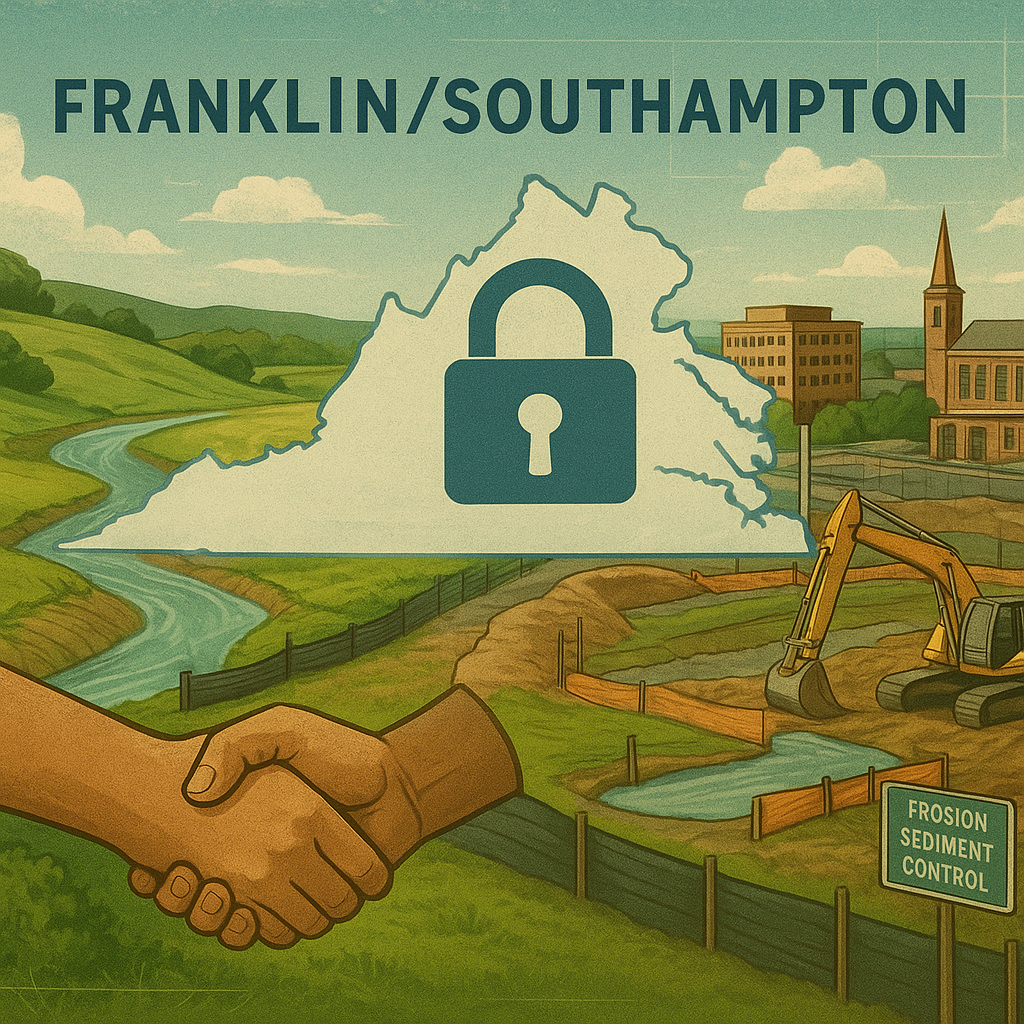
If you’re planning any kind of land-disturbing project in Franklin, Virginia, or nearby Southampton County, you may have heard the term “erosion and sediment control surety bond” pop up. Perhaps it was tucked into a permit checklist, or mentioned casually by your contractor. However it reached you, the very name can make something fairly simple sound overwhelming. Let’s change that.
Think of this bond as a promise you make to the local community—a promise backed by a financial guarantee. It’s there to say, “I’ll take care of the soil and water while I work, and if I don’t, there’s a safety net.” No jargon, no runaround. Just a straightforward way to protect the rivers, streams, and land we all share in this beautiful part of Virginia.
What Exactly Is an Erosion and Sediment Control Surety Bond?
At its core, an erosion and sediment control surety bond is a three-party agreement. You, the developer or property owner, are the principal. The city or county requiring the bond—like Franklin or Southampton County—is the obligee. And a surety company is the third party that provides the financial backing. The bond guarantees that you’ll follow approved erosion and sediment control plans during construction. If you don’t, funds from the bond can be used to fix the problems, clean up runoff, or restore damaged areas.
A helpful analogy: it’s much like a security deposit on an apartment. You don’t lose that money unless you leave the place in bad shape. Here, the “apartment” is the land and waterways around your site. The bond sits safely in the background while you work, and once you’ve met all the requirements, the obligation goes away.
Why Franklin and Southampton County Require These Bonds
Virginia has always taken soil and water quality seriously. The state’s Erosion and Sediment Control Law was one of the first of its kind in the country. But local rules really drive the point home. Franklin sits along the Blackwater River, and Southampton County is crisscrossed by creeks, wetlands, and farmland. Uncontrolled dirt from a construction site can quickly wash into those waterways, clouding the water, damaging habitats, and clogging drainage systems. That’s not good for anyone—farmers, boaters, anglers, or folks who simply love a clear stream.
So, the localities require bonds as a practical tool. Instead of hoping every contractor will do the right thing, the bond system creates real accountability. If erosion control measures like silt fences, sediment basins, or temporary seeding aren’t installed or maintained properly, the bond gives the county a way to step in without spending taxpayer money. It’s a proactive, neighborly approach to keeping our shared environment healthy.
Who Needs an Erosion and Sediment Control Bond?
If you’re getting ready to break ground on a project that disturbs a certain threshold of land—often 10,000 square feet or more in many Virginia localities—you’ll almost certainly need an approved erosion and sediment control plan. And as part of that plan’s approval, a bond may be required. This applies to:
- Residential subdivisions and new home construction.
- Commercial developments, from shopping centers to office parks.
- Infrastructure projects, including road widening or utility lines.
- Any land clearing, grading, or excavation that could result in soil leaving the site.
Even smaller projects can trigger the requirement if they sit near sensitive areas, like a riverbank or steep slopes. In Franklin and Southampton County, the local stormwater or engineering departments will let you know the exact trigger, but it’s best to assume you need one anytime earth is being moved in a significant way.
How Does the Bond Process Actually Work?
It’s less complicated than it feels at first glance. Here’s a step-by-step look:
1. Plan Submission. You or your engineer draw up an erosion and sediment control plan showing exactly how you’ll trap soil on site. The locality reviews and approves it.
2. Bond Amount Calculation. The reviewing agency calculates a bond amount based on the disturbed acreage and the estimated cost of installing and maintaining the controls. Often it’s a per-acre dollar figure, but it can reflect the total cost of the control measures.
3. Bond Acquisition. You apply for the surety bond through a licensed bond agency. The surety company will check your credit and financial strength, but for these bonds, approval is usually quick and straightforward.
4. Bond Filing. Once issued, the bond is filed with Franklin or Southampton County. Now your permit can become active, and you can start moving dirt.
5. Maintaining Compliance. During construction, you keep those silt fences standing and sediment basins cleared. Inspectors may visit. If all goes well, the bond stays untouched.
6. Release or Renewal. After the land is stabilized—usually when vegetation is established and the site is no longer a sediment risk—you request a release. If the project stretches over years, you may need to renew the bond annually.
What Affects the Cost of a Bond in Franklin VA?
The final bond amount is set by the locality, but the premium you actually pay is only a small percentage of that total. For erosion and sediment control bonds, premiums often range from 1% to 3% of the bond amount per year. So, if your required bond is $50,000, you might pay $500 to $1,500 annually. It’s not a huge line item, but it matters.
Your credit score plays a role, though usually a minor one for these particular bonds. Many sureties write them quickly because the risk is relatively low—the bond only pays out if you truly neglect the site. Still, a strong financial history can nudge the rate lower. Also, the size and complexity of your project can influence things. A 100-acre subdivision will have a larger bond and a higher total premium than a single home lot. But proportionally, the rate stays very manageable.
Common Misunderstandings (and the Truth)
One big point of confusion is mixing up a bond with insurance. They are not the same. Insurance protects you against losses from unexpected events. A bond protects the public and the government. If a claim is paid out, the surety will come to you for reimbursement. It’s a credit-based product, not an insurance policy. You’re on the hook for every penny that gets used, so it pays to comply from day one.
Another myth is that once you have the bond, you’re done. In reality, active stewardship matters. Failure to maintain erosion controls can lead to stop-work orders, fines, and bond claims. The bond is not a “set it and forget it” item; it’s an ongoing promise.
How to Get an Erosion and Sediment Control Bond in Franklin and Southampton County
Your first stop should be the local permitting office. They’ll tell you exactly what they need, the required bond form, and the calculated amount. Armed with that, you reach out to a surety bond agency that writes bonds in Virginia. Many agencies can handle this over the phone or online within a day or two. You’ll provide basic business or personal information, the bond amount, and the obligee details. Then the bond is issued, often electronically for quick delivery.
It’s wise to work with an agent who knows Virginia’s erosion control landscape. They can spot potential hiccups, explain any unique local requirements, and sometimes even get the bond approved when you have credit challenges.
Local Nuances to Keep in Mind
Franklin is an independent city, while Southampton County wraps around it. The two jurisdictions cooperate on some services but have separate ordinances at times. One might require a blanket bond for multiple small lots, while the other could want individual bonds per lot. Always clarify which rules apply to your specific address. Don’t guess—reach out to the Franklin Department of Community Development or the Southampton County Planning and Engineering office. Their staff can save you weeks of frustration by pointing you to the right form and process.
Also, be aware that if your project is near a Chesapeake Bay Preservation Area—common in this region—additional stipulations might be layered onto your erosion control plan. The bond still functions the same, but the plan you’re bonded to may hold stricter standards.
Frequently Asked Questions
Can I use a letter of credit instead of a bond?
Some localities allow alternate forms of financial assurance, like a cash bond, certified check, or irrevocable letter of credit. However, a surety bond is often preferred because it doesn’t tie up your capital. Check with the specific locality to see what they accept.
What happens if I don’t get the bond?
Without the required bond, your land-disturbing permit will not be issued. Starting work without a valid permit can lead to stop-work orders, heavy fines, and even legal action. It’s simply not a corner you can cut.
How long does the bond remain in effect?
The bond stays active until the locality formally releases it. This normally happens after the site is stabilized, final inspections are passed, and vegetation is established. For multi-phase projects, partial releases might be possible as each phase is completed.
What if my credit isn’t perfect?
Erosion control bonds are among the friendlier bonds in the surety world. Many agencies offer programs that overlook minor credit blemishes. Even with challenged credit, you can usually secure the bond, albeit possibly at a slightly higher rate. The key is to apply and see.
Protecting More Than Just the Job Site
When you step back and look at it, this bond is about something bigger than a piece of paper in a file cabinet. It’s about being a good steward of Franklin’s land. It’s the commitment that the red clay from your property won’t turn the Blackwater River murky after the next thunderstorm. It’s the assurance that downstream neighbors, farmers, and wildlife won’t bear the cost of your construction project.
Securing an erosion and sediment control surety bond in Franklin or Southampton County, Virginia, might feel like one more hoop to jump through. But in truth, it’s a straightforward, affordable way to show you take your responsibility seriously. Work with the local offices, lean on a knowledgeable bond agent, and keep your site clean. The process will be behind you before you know it, and the land—and community—will be better for it.