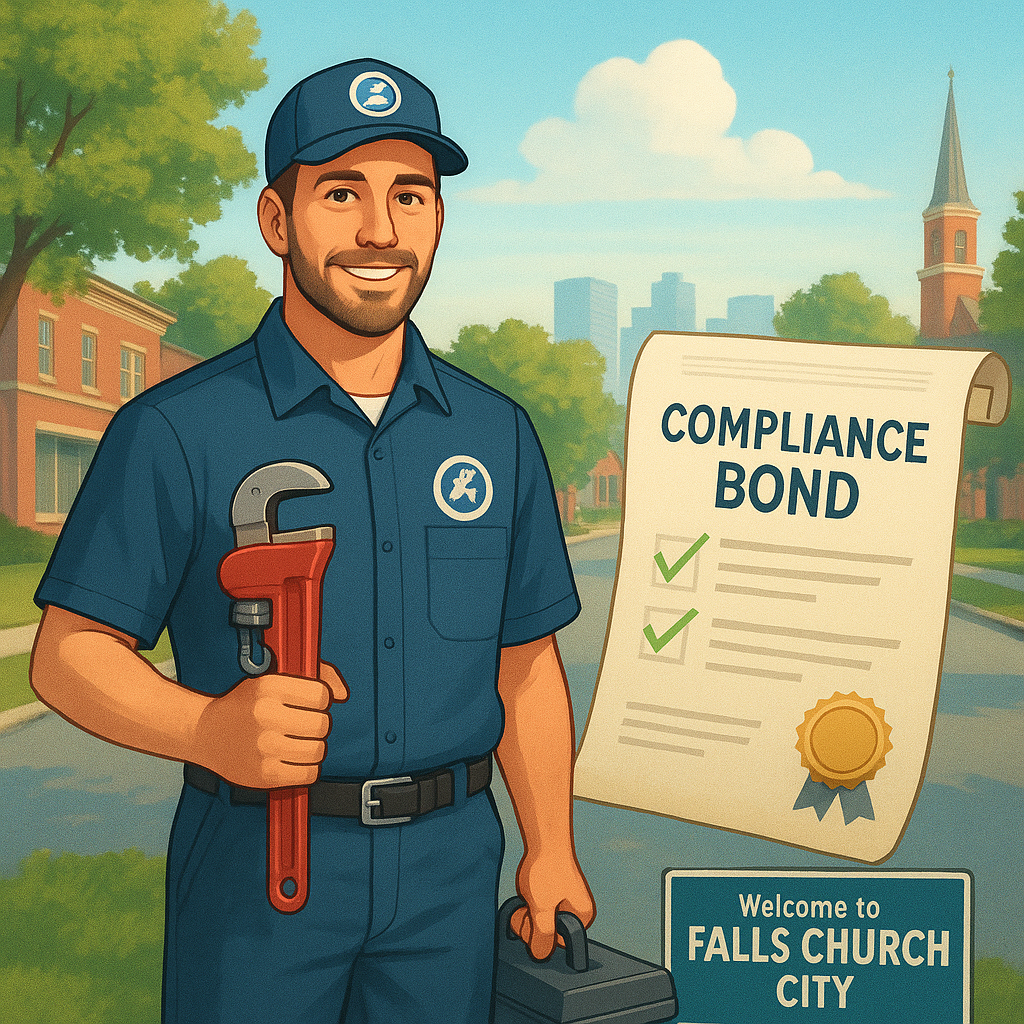
Let’s be honest—when you hear the word “bond,” your mind might jump to secret agents or high finance. But if you’re a plumber in Falls Church City, Virginia, there’s a different kind of bond you need to know about. It’s not glamorous, but it’s absolutely essential for staying compliant and protecting your business. This is your down-to-earth guide to the City of Falls Church VA Plumber’s Bond. We’ll cut through the confusing paperwork and explain exactly what it is, why it matters, and how you can check that box marked “compliance only” without breaking a sweat.
What Exactly Is a Plumber’s Bond, Anyway?
Think of a plumber’s bond as a financial safety net with three key players. First, you have the plumber (that’s you, the principal). Second, there’s the City of Falls Church (the obligee) which requires the bond. Third, there’s the surety company that issues the bond. The bond is a promise: if you fail to follow the city’s plumbing codes, rules, or permit requirements, the surety will compensate the city or an injured party up to a set amount. But—and this is a big but—you’ll eventually have to pay the surety back. It’s not insurance for you. It’s a guarantee that you’ll play by the rules.
Why Does Falls Church City, Virginia, Require This Bond?
Imagine the city as a homeowner who hires a plumber to fix a tricky pipe. The city wants to make sure the work is done right, that messy permits aren’t ignored, and that if something goes sideways, there’s money to fix it. The Falls Church City VA Plumber’s Bond protects the community. It ensures that every licensed plumber operates with a layer of financial accountability. If a job causes property damage or violates building codes, the bond helps cover the costs of corrections. It’s a “compliance only” tool—designed purely to enforce local regulations, not to pad anyone’s pockets.
Breaking Down “Compliance Only” – What Does That Mean?
You might have seen the phrase “Plumber – Compliance Only” listed next to this bond requirement. That’s a straightforward way of saying this bond is strictly about following the rules. It doesn’t replace your general liability insurance. It doesn’t cover your tools or your truck. It simply tells the City of Falls Church, “I will stick to the plumbing codes, pull the right permits, and do business the right way.” If you’re scratching your head wondering if you need extra coverage, the answer is yes—this bond works alongside your insurance, not instead of it.
Who Needs to Carry a Plumber’s Bond in Falls Church?
Not every handyperson with a wrench needs one. The requirement typically applies to anyone performing plumbing work as a licensed professional within the city limits. If you’re a master plumber, a journeyman operating a business, or a plumbing contractor pulling permits for jobs in Falls Church City, Virginia, pay close attention. Even if you live in a neighboring town, any plumbing project inside city lines likely triggers the bond requirement. The best move? Check with the Falls Church City permits office or review your license conditions. But assuming you’re a working plumber here, plan on securing this bond before your next job.
How the Bond Protects Everyone—Not Just the City
At first glance, you might think this bond only benefits the bureaucrats. Dig a little deeper, and you’ll see it’s a win-win. For customers, it’s peace of mind knowing a bonded plumber has skin in the game. For honest plumbers, it levels the playing field. When everyone follows the same rules and carries the same bond, the pros who cut corners or skip permits can’t underbid you by dodging costs. Ultimately, the bond raises the standard of work across Falls Church. When code violations drop and customer complaints shrink, your reputation as a bonded professional gets a quiet boost.
Decoding the Bond Amount and Cost
The City of Falls Church sets the required bond amount. It’s often a relatively modest figure—perhaps $5,000 or $10,000—but you’ll need to confirm the exact number with the city’s licensing division. Don’t mistake that amount for what you’ll pay, though. The cost of the bond (the premium) is only a small percentage of that total. If you need a $10,000 bond, you might pay somewhere between $100 and $300 annually. Your credit score, business history, and the surety provider you choose will influence that price. Even with less-than-perfect credit, many surety companies offer competitive rates, so don’t assume you’ll be priced out.
Step-by-Step: Getting Your Falls Church City VA Plumber’s Bond
The process sounds intimidating, but it’s actually a few straightforward steps. First, find a reliable surety bond provider. Many independent agents and online platforms specialize in contractor bonds. Next, complete the application—usually a simple form asking about your business, license number, and personal details. Then, the surety company runs a quick check and quotes your premium. Once you pay, they issue the bond document. Finally, take that bond (or a certificate) to the City of Falls Church as part of your licensing or permit package. Keep a copy for your records, and mark your calendar to renew it before it expires. Lapsed bond? You could face fines or a suspended license.
Don’t Confuse Bond Renewal With License Renewal
Here’s where busy plumbers trip up. Your city business license might renew every year, but your bond might be on a slightly different schedule. Perhaps your bond is tied to a two-year term, or vice versa. Set multiple reminders. A gap in bond coverage, even for a few days, can put you out of compliance and expose you to penalties. The phrase “Compliance Only” is a big hint—continuous compliance matters. If you’re ever unsure about your status, call the City of Falls Church. They’d rather you ask than guess wrong.
What Happens if a Claim Is Filed Against Your Bond?
No one likes to think about bond claims, but understanding them helps you avoid trouble. A claim could arise if a customer complains about code violations, or the city discovers unpermitted work. The surety will investigate. If the claim is valid, the surety pays out up to the bond limit. Then, they’ll turn to you for reimbursement. This is why it’s not insurance—you’re ultimately responsible. To avoid this headache, always pull permits, document your work, communicate with inspectors, and fix mistakes proactively. Most claims are completely avoidable with a little extra care.
Common Myths About Plumber’s Bonds in Virginia
You’ve probably heard a few tall tales. “The bond protects me if a customer doesn’t pay.” Nope—that’s what a mechanic’s lien or collections process handles. “My handyman insurance covers me, so I don’t need a bond.” Wrong. Insurance is for accidental damage and injuries; the bond addresses regulatory compliance. “The bond is just another tax on small businesses.” While it is an added cost, it’s a minimal investment that keeps your license active and protects the whole industry’s reputation. Think of it like a membership fee to a club that proves you’re a serious professional.
Real-Life Scenario: Why This Matters
Picture this: A Falls Church homeowner hires a plumber to install a new water heater. The plumber doesn’t pull the required permit. Months later, a slow leak causes mold damage, and the homeowner discovers the unpermitted work. With a bonded plumber, the city and homeowner have recourse through the bond to help cover repairs and bring the work up to code. Without the bond, the homeowner is stuck fighting a legal battle, and the city misses an opportunity to enforce its standards. That simple piece of paper—the bond—makes all the difference.
How to Use Your Bonded Status as a Marketing Advantage
Being bonded isn’t just a bureaucratic box to tick. It’s a trust signal. In your advertising, on your truck, on your website, don’t be shy: “Bonded and Insured—City of Falls Church Compliant.” Customers in Northern Virginia are savvy; they know to look for these credentials. It instantly separates you from unlicensed handymen and fly-by-night operators. Include a brief explanation in your estimates: “We carry the required Plumber – Compliance Only bond to protect you and ensure all work meets Falls Church City codes.” That kind of transparency builds confidence before you even cut the first pipe.
Staying Ahead of Changes in City Regulations
Local requirements can shift. Bond amounts might increase, or the definition of “plumbing work” might expand. Falls Church City can update its codes and ordinances, so the smartest move is to check the city’s official website or subscribe to contractor license newsletters from Virginia’s DPOR (Department of Professional and Occupational Regulation). Networking with other local plumbers or joining a trade association also keeps you in the loop. Being proactive not only keeps you compliant—it saves you from scrambling at the last minute when a permit is denied.
Quick Tips for First-Time Bond Seekers
If you’re applying for the Falls Church City VA Plumber’s Bond for the first time, keep these pointers in mind. Always verify the exact bond form the city requires—don’t assume a generic bond will be accepted. Compare quotes from multiple surety bond agencies; prices can vary. Ask about multi-year discounts if you plan to stay in business for the long haul. And finally, double-check the spelling of your business name and license number on the bond document. A tiny typo can cause big delays at the permits counter.
The Bigger Picture: Building a Professional Legacy
Sure, a bond feels like a small, paper-pushing requirement. But step back and think about the message it sends. Every time you comply with bond rules, you’re helping build a community in Falls Church where quality plumbing work is the norm, not the exception. You’re telling customers, inspectors, and fellow tradespeople that you take pride in your craft. Over time, that reputation pays off in repeat business, referral calls, and fewer sleepless nights worrying about code enforcement. The City of Falls Church VA Plumber’s Bond isn’t a hurdle—it’s a stepping stone to a more respected career.
Final Thoughts and Next Steps
Understanding plumber’s bond compliance doesn’t require a law degree. It’s simply a promise to the City of Falls Church that you’ll work honestly and follow the rules. Being a bonded plumber protects your customers, your business, and your peace of mind. If you haven’t checked your bond status recently, today is a great day to do it. Reach out to a trusted surety provider, ask questions, and get that documentation squared away. When your compliance is rock solid, you can focus on what you do best: keeping the water flowing and the pipes tight across Falls Church City, Virginia.