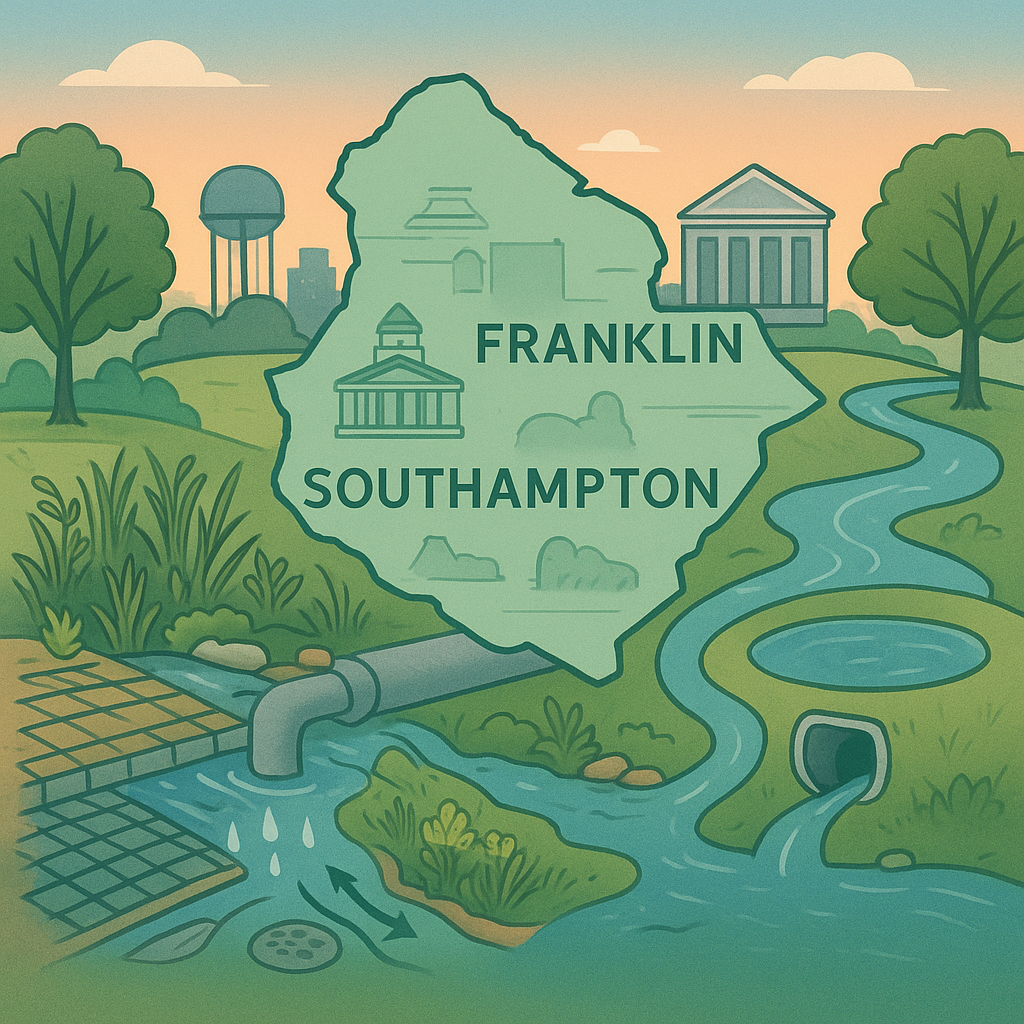
Have you ever watched a construction crew carve out a new neighborhood or shopping center and wondered what keeps the nearby streams from turning muddy? In Franklin and Southampton County, Virginia, the answer often ties back to a small but mighty document—a stormwater management surety bond. If you are a developer, contractor, or even a curious homeowner, understanding this bond can help you see how our local waterways stay protected while growth continues.
What Exactly Is a Stormwater Management Surety Bond?
Let’s break it down without the legal fluff. A surety bond is a three-party promise. Think of it like a cosigner on a loan. You (the contractor or developer) are the principal. The local government—here, the City of Franklin and Southampton County—acts as the obligee that requires the promise. The surety company is the financial backer that guarantees your work.
A stormwater management surety bond specifically guarantees that you will install and maintain all the required stormwater control measures on a project. That might include retention ponds, silt fences, grassy swales, or underground filtration systems. If you do everything correctly, the bond eventually goes away. If you don’t, the surety steps in to fix the problem or provide funds so the county can hire someone else to do it. No muddy runoff, no clogged drains, and no headaches for the community.
Why Franklin and Southampton County Take Stormwater Seriously
If you’ve spent time in this part of Virginia, you know how much we value our natural beauty. From the Blackwater River to the network of creeks feeding into the Albemarle Sound watershed, clean water is a big deal. When developers disturb soil, rain can easily wash sediment, oil, and debris into storm drains and local waterways. That hurts fish, degrades water quality, and can even lead to costly flooding downstream.
That’s why both the City of Franklin and Southampton County enforce strict stormwater ordinances. The bond acts as a security net. It tells the community, “We trust you to manage the rainwater running off your site, but we also have a backup plan if something goes wrong.” This system aligns perfectly with Virginia’s broader stormwater management goals, ensuring that local rules meet state standards.
Who Actually Needs This Bond?
You might be surprised how many projects trigger the requirement. If you are breaking ground on any land-disturbing activity that exceeds a certain size—often as little as one acre—you will likely need a stormwater management plan and a corresponding bond. This includes:
- Residential subdivisions and apartment complexes
- Commercial retail centers and office parks
- Industrial sites and warehouses
- Road widening and public infrastructure projects
- Even large institutional buildings like schools or churches
Essentially, if your project changes how rainwater flows and soaks into the ground, you’re probably on the hook. The bond is usually a condition for obtaining your grading permit or land disturbance permit. Without it, the bulldozers stay parked.
How a Stormwater Bond Protects Everyone Involved
Many people think surety bonds only protect the government. In reality, the protection flows in several directions. Let’s look at what happens when things go right—and when they go wrong.
Protecting the Developer
The bond isn’t designed to punish you; it’s designed to build trust. With a bond in place, the county feels confident issuing your permit quickly. You get to start your project on schedule. And because the surety company has prequalified you, the bond also signals to investors and lenders that you are a reliable partner.
Safeguarding the Community
The most obvious beneficiary is the environment and the people who live nearby. If a sudden storm washes out an incomplete retention basin and dumps sediment into a neighborhood creek, the county can call on the bond. The surety company pays to restore the area and complete the unfinished work. This reaction happens without the county having to dip into taxpayer money or wait for a lengthy court battle.
Encouraging Quality Work
Because the surety company will have to pay up if you default, they will check your track record carefully. That gentle pressure encourages contractors to do the job right the first time. It’s a quiet accountability partner that keeps standards high all around.
The Cost: Much Less Than You Think
One of the biggest misconceptions is that you must pay the full bond amount out of pocket. That’s not how it works. The bond amount is set by the county—often tied to the estimated cost of the stormwater facilities. For a typical commercial site, this might be $50,000 or more. But you only pay a small premium, usually between 1% and 3% of the total bond amount. Your personal and business credit play a big role, but even someone with less-than-perfect credit can often secure a bond with a slightly higher rate.
Let’s use an analogy. The bond is like a security deposit on an apartment. The landlord might want $1,000 as a deposit, but you don’t pay a third party $1,000 just to have the deposit exist. Here, the surety is essentially vouching for you, and you pay a fee for that voucher. The catch is that unlike a refundable deposit, the premium is earned each year the bond remains active.
What Happens After the Bulldozers Leave?
The bond doesn’t disappear the day you finish construction. Franklin and Southampton County generally want proof that the stormwater features not only exist but also work long enough to handle real rain events. You must complete a maintenance period—often two years or more—where you inspect and repair the ponds, filters, and channels. Only after the county approves the final as-built conditions will the bond be released. This ensures that those pretty stormwater basins you see in new subdivisions actually function as designed.
Navigating the Bonding Process Step by Step
Getting a stormwater management bond might sound like a maze, but breaking it into bite-sized steps makes it approachable.
1. Know Your Requirements: Contact the City of Franklin or Southampton County’s engineering or community development department. They will tell you the exact bond amount based on your approved stormwater plan.
2. Gather Your Paperwork: Have your project details, site plans, and business financials ready. Surety companies want to see that you can handle the work.
3. Shop for a Bond: Work with a surety bond agency that understands Virginia’s regulations. They can compare rates from multiple carriers.
4. Pay the Premium: Once approved, you pay the annual premium. The bond is then issued and filed with the county.
5. Keep the Bond Active: Mark your calendar. Most bonds renew yearly until the county releases them. Missing a renewal could halt your project.
Common Questions From Contractors and Developers
“Is the bond the same as insurance for my business?”
Not exactly. General liability insurance protects you if something gets damaged. The surety bond protects the county and the public if you fail to meet permit obligations. If the surety pays out on your behalf, you must reimburse them. It’s a financial guarantee, not an insurance policy that simply covers your losses.
“What if I already have a contractor’s license bond?”
That’s a great start, but it covers different responsibilities. A contractor’s license bond ensures you follow building codes and regulations broadly. A stormwater bond is site-specific and only relates to managing rainwater runoff. In Franklin and Southampton County, you will likely need both.
“Can I get a bond with bad credit?”
Yes, though your premium percentage may be higher. Some surety companies specialize in working with contractors who are rebuilding their credit. The key is to be upfront about your situation. An experienced bond agent can find a program that fits.
The Bigger Picture: Growth Meets Responsibility
Franklin and Southampton County are special places where rural charm blends with steady economic progress. Every new business and housing development brings jobs and vitality, but it also carries a responsibility to protect the landscape that makes our region attractive. The stormwater management surety bond is a quiet backbone of that balance. It says, “We want you to build here, and we will help you do it responsibly.”
Next time you see a digger scooping earth along Armory Drive or a new crew spreading straw near Courtland, remember the invisible promise behind the scenes. That bond isn’t just a piece of paper. It is a commitment to keep our water clean, our streams clear, and our communities thriving—today and well into the future.