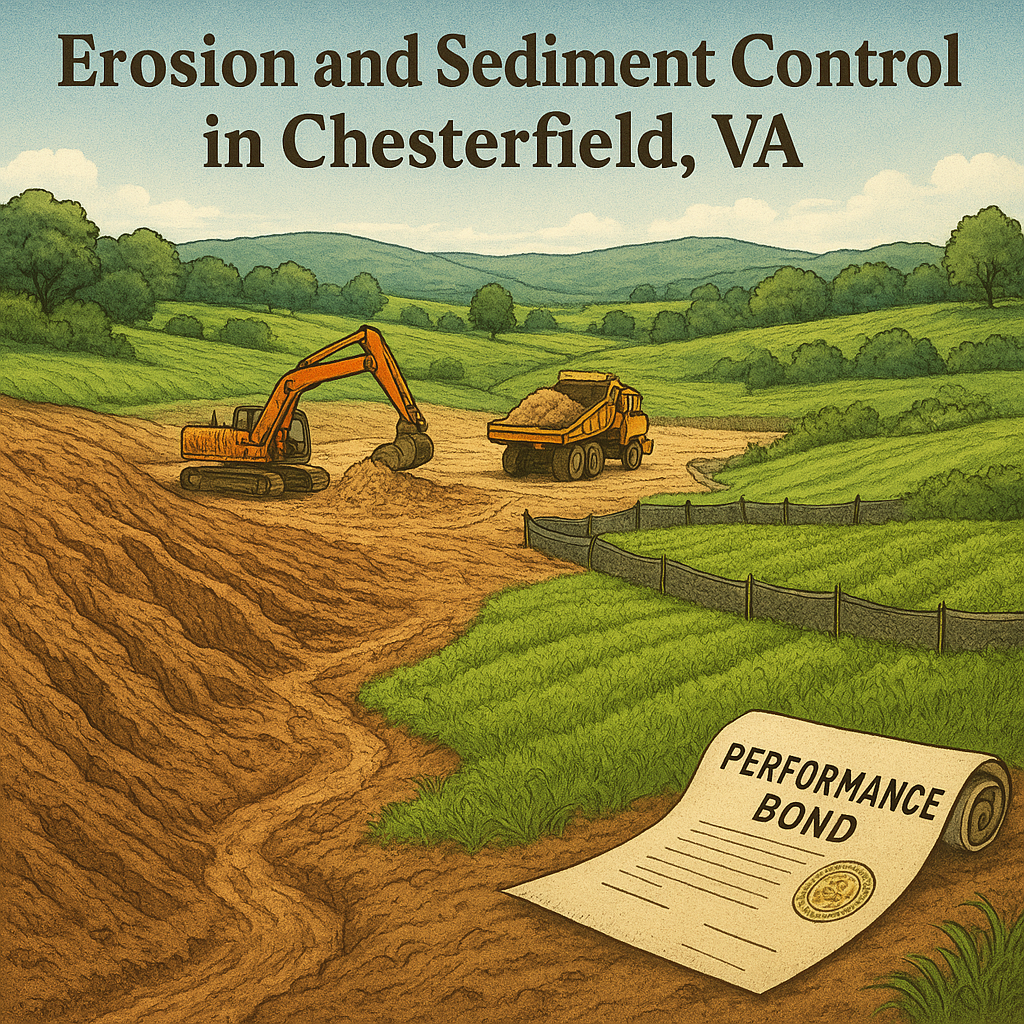
If you’re a developer, contractor, or homeowner breaking ground in Chesterfield County, Virginia, you’ve probably come across the term Erosion and Sediment Control Performance Bond. It sounds like a mouthful, doesn’t it? But don’t worry—by the time you finish reading this, you’ll know exactly what it is, why it exists, and how it affects your project. More importantly, you’ll see how it protects our waterways and keeps our community safe from preventable environmental damage.
What Exactly Is an Erosion and Sediment Control Performance Bond?
Let’s break it down into simple pieces. Imagine you’re planning to clear land, grade a site, or start construction. Any time you disturb the earth, rain can wash loose soil, mud, and debris off your property and into nearby streams, storm drains, or neighboring yards. That’s not just messy—it’s harmful to the environment and can cause serious flooding.
Chesterfield County requires you to have a plan to control that erosion and sediment before you start. That plan includes things like silt fences, sediment traps, straw mulch, and stormwater basins. A performance bond is a financial guarantee that you’ll actually install and maintain those control measures according to the approved plan. Think of it like a security deposit on a rental car. The county trusts you to follow the rules, but they hold onto a bond just in case you don’t.
Why Does Chesterfield County Require These Bonds?
Chesterfield County, like much of Virginia, is growing quickly. New homes, businesses, and roads mean more land disturbance. Without strict erosion and sediment controls, our rivers and reservoirs would fill up with silt, aquatic life would suffer, and stormwater systems would clog. The bond requirement is a smart, proactive way to put real accountability behind those environmental protections.
The county follows state regulations, particularly the Virginia Erosion and Sediment Control Law, and the local ordinances in Chesterfield. The bond ensures that if a contractor walks away or a project stalls, the county has funds to hire someone else to stabilize the site. That protects you, your neighbors, and everyone downstream from a muddy mess.
A Quick Analogy: The Construction Insurance Policy
Think of the performance bond as an insurance policy where the county is the beneficiary. You’re promising, “I’ll do this land work responsibly.” The bond company backs that promise. If you don’t deliver, the county can make a claim on the bond to fix the problem. It’s not a penalty—it’s a safety net.
Who Needs an Erosion and Sediment Control Performance Bond?
Not every backyard project triggers the requirement, but if you’re involved in any of the following, you’ll likely need one:
- Residential subdivision developers – building a new neighborhood requires large-scale grading and temporary drainage.
- Commercial site contractors – retail centers, office parks, or industrial warehouses all involve significant land clearing.
- Public works projects – schools, fire stations, and road expansions fall under the same rules.
- Individual lot builders – even constructing a single home can require a bond if the site is part of a larger approved plan.
- Landowners doing significant grading – maybe you’re creating a pond, leveling a field, or regrading a steep slope.
Generally, if your project disturbs more than 10,000 square feet of land, or if it’s part of a common plan of development, you’ll need to go through the county’s erosion and sediment control permitting process—and that usually means securing a bond.
How Does the Bond Process Work Step by Step?
The bureaucracy can feel a little intimidating, but it’s a predictable path. Here’s how it unfolds in Chesterfield County:
1. Prepare Your Erosion and Sediment Control Plan
A professional engineer or a certified plan designer will map out exactly how you’ll capture silt, divert clean water, and stabilize exposed soil. This plan gets submitted along with your land disturbance permit application.
2. The County Reviews and Approves
Chesterfield’s environmental engineering staff reviews the plan to make sure it meets state and local standards. They’ll check the details—like the type of silt fence, the size of sediment traps, and how quickly you’ll get grass growing again.
3. Determine the Bond Amount
The bond amount isn’t random. The county calculates it based on the estimated cost of installing the erosion and sediment controls shown on the approved plan, plus a contingency for maintenance and potential failure. They’ll give you a figure that represents what it would cost the county to finish the job if you disappeared.
4. Obtain the Bond
Here’s where you contact a surety bond company or your insurance agent. You’ll provide the bond amount and the county’s bond form (Chesterfield has specific requirements). The surety company will evaluate your credit and financial strength, then issue the bond. You pay a premium—usually a small percentage of the total bond amount—and the bond is delivered to the county.
5. Start Work and Maintain Controls
Once the bond is on file, your permit is issued and you can break ground. Throughout the project, you must inspect and repair those erosion controls as needed. If a big storm washes out a silt fence, you fix it immediately. The county will perform inspections too, so don’t let things slide.
6. Final Stabilization and Bond Release
When construction is complete and the site is fully stabilized—with permanent grass, mulch, or other ground cover—you request a final inspection. If everything looks good and no off-site sediment damage has occurred, the county releases the bond. The obligation ends, and you get that financial guarantee back off your books.
Common Pitfalls and How to Avoid Them
Even experienced builders can stumble. Here are a few things that trip people up:
- Underestimating the bond amount. Make sure your engineer’s cost estimate is thorough. If the county thinks the plan will cost more to build, they’ll set a higher bond amount, and you might be scrambling to get approved for that larger sum.
- Ignoring maintenance. A silt fence that’s collapsed and full of mud isn’t doing its job. County inspectors can issue stop-work orders, and repeated violations can lead to a claim on your bond.
- Extending without updating the bond. If your project timeline stretches, communicate with the county. They may require the bond to stay in effect longer or for the amount to be adjusted.
- Using the wrong bond form. Chesterfield County has its own bond form. An off-the-shelf generic bond might be rejected, causing permit delays.
What Happens If a Claim Is Made Against Your Bond?
Nobody wants this to happen, but it’s important to understand. If the county determines that you’ve failed to install or maintain the required erosion controls—and you haven’t corrected the issue after notice—they can draw on the bond. The surety company pays the county up to the penal sum of the bond, and then comes to you for repayment. This isn’t free money; it’s like co-signing a loan. You’ll have to reimburse the surety, and your credit and ability to get future bonds will take a hit.
That’s why it’s so critical to stay on top of things. A little mud leaving your site might not seem like a big deal, but it can cascade into an expensive claim, legal trouble, and bad publicity.
How Much Does a Performance Bond Cost?
The cost of the bond itself—the premium you pay—depends on several factors: your credit score, the bond amount, the project duration, and the surety company’s rates. For most applicants with decent credit, premiums range between 0.5% and 3% of the bond amount. So for a $50,000 bond, you might pay $250 to $1,500. That’s a small price for the right to move dirt and the trust of the community.
Why This Matters to You, Even If You’re Not a Contractor
Maybe you’re reading this as a homeowner whose property borders a construction site. Or you’re a resident who fishes or kayaks in Swift Creek or the Appomattox River. Sediment is the number one pollutant in Virginia’s waterways by volume. It carries nutrients that cause algae blooms, destroys fish spawning habitat, and fills in valuable reservoir capacity. The performance bond system is one of the strongest tools localities have to prevent that damage before it starts.
When a developer or builder secures a bond, they have a real financial incentive to do things right. That translates to cleaner creeks, fewer flooding problems, and a healthier environment for everyone.
Frequently Asked Questions
Can I use a letter of credit instead of a performance bond?
Chesterfield County often accepts alternatives like an irrevocable letter of credit or a cash escrow, but you must get pre-approval. These options lock up your own funds, so many businesses prefer a surety bond to preserve working capital.
How long does the bond remain in effect?
The bond stays active until the county formally releases it in writing. That’s after final stabilization is verified, which could be weeks after the last grass seed goes down, depending on the season. Don’t assume it’s automatically cancelled.
What if my site is perfectly flat—do I still need erosion controls?
Flat sites still generate runoff during heavy rain, and disturbed soil can wash away. The bond requirement applies based on total land disturbance, not slope alone. Your plan just might look different than a hillside project.
Final Thoughts
An Erosion and Sediment Control Performance Bond in Chesterfield, Virginia, is more than a bureaucratic checkbox. It’s a partnership between the developer, the county, and the environment. By guaranteeing that protective measures are installed and maintained, the bond keeps our local streams clear, our infrastructure safe, and our community growing responsibly.
Whether you’re pouring a foundation for your dream home or grading land for a major commercial center, approaching the bond process with knowledge and preparation will save you time, money, and headaches. And when you drive past a construction site with a neat line of silt fence and a grass-covered slope, you’ll know that behind that simple scene is a well-oiled system keeping everything in balance.
Ready to start your project? Reach out to Chesterfield County’s Environmental Engineering Department for the latest bond form and requirements. And if you need help securing the bond itself, a local surety bond agent who knows Virginia’s rules can walk you through the process in plain English. Because at the end of the day, the goal is simple: build what you need to build, while protecting what we all share.