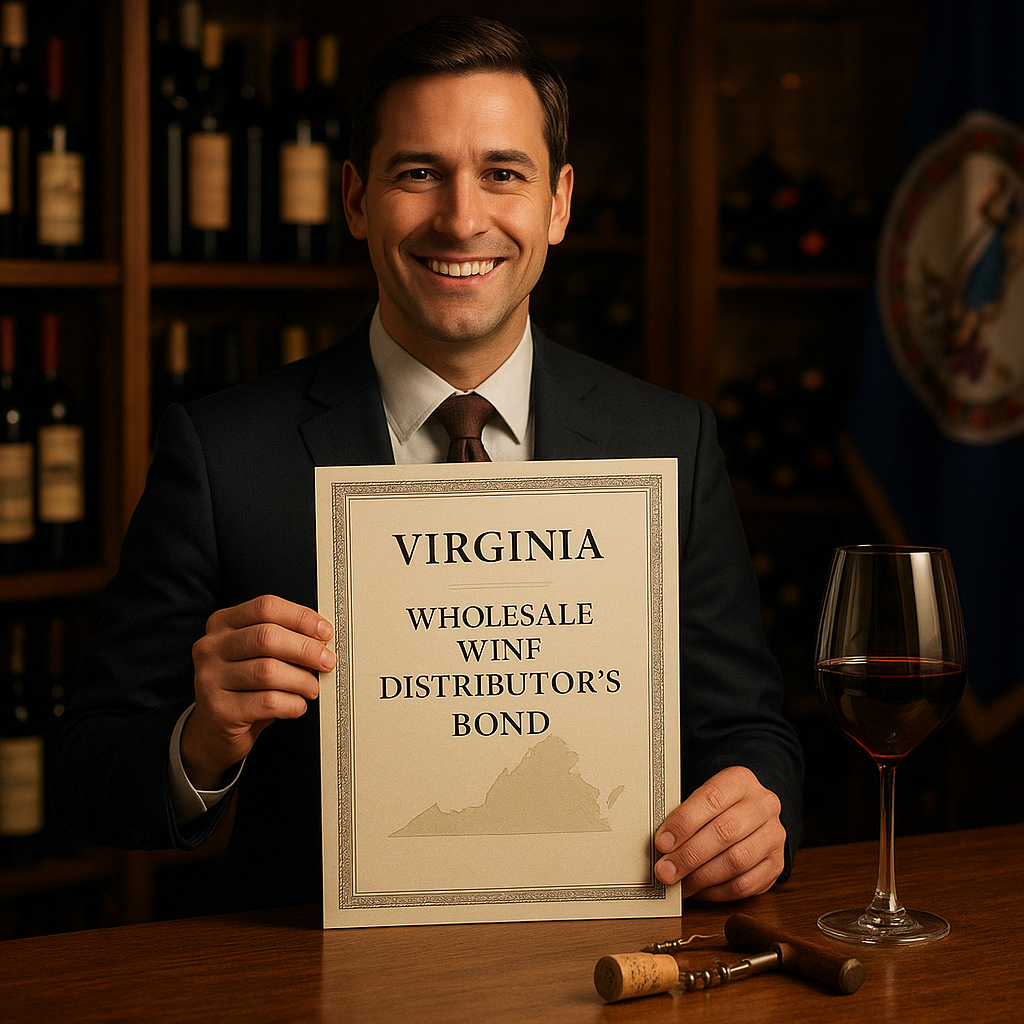
So, you’re thinking about diving into the world of wine distribution in Virginia. Maybe you’ve already got a line on some incredible vineyards, or perhaps you see a gap in the market for boutique labels. Either way, you’re bumping into something called a “wholesale wine distributor’s bond.” It sounds like a dusty legal document, but it’s actually the key that unlocks your business license. Let’s break it all down in plain English, like we’re chatting over a cup of coffee.
What Exactly Is a Virginia Wholesale Wine Distributor Bond?
Imagine you’re lending a valuable item to a friend, but you ask for a small deposit, just in case something goes wrong. That’s the heart of a surety bond. A Virginia wholesale wine distributor bond is a three-party promise. You, the distributor (the principal), promise to play by the rules. The Virginia Alcoholic Beverage Control Authority (Virginia ABC), which is the state agency requiring the bond, is the obligee. And a surety company is the financial backer that guarantees your promise.
It’s not insurance for your business. Instead, it’s a safety net for the state and the public. If you fail to pay your taxes, violate ABC regulations, or stiff a wine supplier, the bond can cover those financial losses up to the bond amount. Essentially, it’s a trust deposit that says, “We’re good for our obligations.”
Why the Commonwealth of Virginia Requires This Bond
Virginia takes its alcohol distribution very seriously. The Commonwealth operates under a control model for distilled spirits, but wine enjoys a bit more flexibility. Still, wholesale distributors sit in a powerful position between the winery and the retailer. A bond ensures you’ll handle that power responsibly. The primary reasons are pretty straightforward:
- Tax Collection Assurance: The Virginia ABC collects state excise taxes on wine. The bond guarantees you’ll remit those taxes on time and in full. No bond, no license—it’s that simple.
- Consumer Protection: It helps protect retailers and, by extension, consumers from fly-by-night operators who might take payment for wine they never deliver.
- Regulatory Compliance: The bond acts as a financial incentive to follow all the rules in Title 3 of the Virginia Administrative Code. If you break those rules, the state has a way to recover monetary damages without chasing you through a lengthy court battle.
Who Needs One? The License Connection
Not every wine enthusiast needs a bond. This requirement lands squarely on anyone applying for a Virginia Wholesale Wine License. If your business buys wine from a winery or another wholesaler and then sells it to restaurants, grocery stores, or wine shops, you’re in bond territory. Even if you’re a farm winery that wants to self-distribute beyond your own tasting room, you might step into this requirement. The Virginia ABC will not issue or renew your license until you’ve got that bond documentation firmly in place.
Decoding the Bond Amount: How Much Is It?
Here’s where things get specific. The required bond amount isn’t a random figure. The Virginia ABC bases it on the volume of wine you plan to move. It’s directly tied to your expected monthly tax liability. The standard bond amounts are:
- For distributors with a monthly tax liability of less than $1,000: A $10,000 bond.
- For distributors with a monthly tax liability of $1,000 or more: A bond equal to three times your average monthly tax liability, with a minimum set by the board.
Think of it like a security deposit on an apartment that scales with the rent. If you’re just starting out and your projections are modest, you’ll likely land in the $10,000 category. As your business grows and your tax payments increase, the ABC may ask you to bump up that bond figure. It’s a way to keep the protection proportional to your footprint in the Commonwealth.
What You Actually Pay: The Premium, Not the Full Amount
This is the most common point of confusion. You do not pay the full $10,000 (or more) out of pocket. You pay a yearly premium, a small percentage of that total bond amount. For well-qualified applicants, that premium might be just 1% to 3% of the bond. So, for a $10,000 bond, you could be looking at $100 to $300 per year. That’s a manageable business expense, not a fortune-draining startup cost.
How does the surety company decide your exact rate? They’ll peek at a few personal and business factors, including your personal credit score. Strong credit signals that you’re a low financial risk, so you’ll snag that lower end of the premium range. Even applicants with less-than-perfect credit can usually get bonded, though the premium might be a bit higher. Some programs specialize in helping people in exactly that situation, because your credit history doesn’t define your ability to run a stellar wine distribution company.
Stepping Through the Bonding Process
Getting your bond doesn’t have to be a headache. It often happens faster than you’d think. Walk through these steps:
- Apply for your license with Virginia ABC. The authority will inform you of the exact bond amount required based on your business plan.
- Contact a reputable surety bond agency. You can go with a national provider that understands Virginia’s specific ABC requirements.
- Submit a quick application. You’ll provide basic business details and your social security number for the credit check. It’s straightforward.
- Receive your quote and pay the premium. Once approved, you’ll get the official bond form to sign.
- File the bond with the Virginia ABC. The surety company often handles this directly, sending a sealed copy to the licensing division. You keep a copy for your records.
The whole thing can be wrapped up in a day or two, sometimes even within hours, as long as your paperwork is in order.
What Happens if a Claim Pops Up Against Your Bond?
Let’s get real for a second. Nobody wants a claim. But life happens. Maybe a bookkeeping error leads to underpaid taxes, or a supplier claims you didn’t pay for a shipment. If a valid claim comes in, the surety company will investigate. If the claim is justified, they’ll pay the damages up to the bond’s full amount. But here’s the catch you must remember: a bond is not insurance for you. The surety will then come to you, hat in hand, demanding full reimbursement for every penny they paid out, plus any legal fees. You personally signed an indemnity agreement, so you are ultimately on the hook. This is why staying compliant isn’t just good ethics—it’s your financial shield.
Keeping Your Bond and License in Good Standing
Once you’ve secured the bond, your work continues. You’ll need to renew it annually, paying the premium each year to keep continuous coverage. If you let it lapse, the surety company is obligated to notify the Virginia ABC. The authority can then suspend your wholesale license, which would stop your business in its tracks. Do not let that happen.
Also, keep a sharp eye on your tax liabilities. If your wine sales volume jumps significantly, the ABC might require an increased bond amount. It’s a sign of success, but it also means you’ll need to adjust your coverage. A simple call to your bond agent can usually scale the bond up seamlessly.
A Practical Analogy to Tie It All Together
Think of your wholesale wine distributor bond as the guardrail on a winding mountain road. Most of the time, you drive perfectly, and the guardrail is just there, invisible and unneeded. You might forget it even exists. But if you swerve unexpectedly—miss a tax deadline, violate a regulation—that guardrail keeps you from plunging into a financial chasm with the state. It catches the initial damage, but then the state (and the surety) will gently steer you back onto the road to make things right. It’s a required piece of infrastructure that lets everyone travel safely through the Commonwealth’s wine economy.
Final Thoughts Before You Pour Ahead
Navigating the world of alcohol distribution in Virginia might feel like you’re decoding ancient laws, but at its core, the bond requirement is just good business sense. It builds trust with the state, your suppliers, and the retailers you hope to serve. Once you see the bond premium as a minor line item on your startup budget, it becomes far less intimidating. Secure your bond, file it with the Virginia ABC, and then get back to what you do best: connecting wonderful wines with the Virginians who’ll love them. The Commonwealth’s rules are clear, the path is well-trodden, and now you’ve got a map to navigate it all.