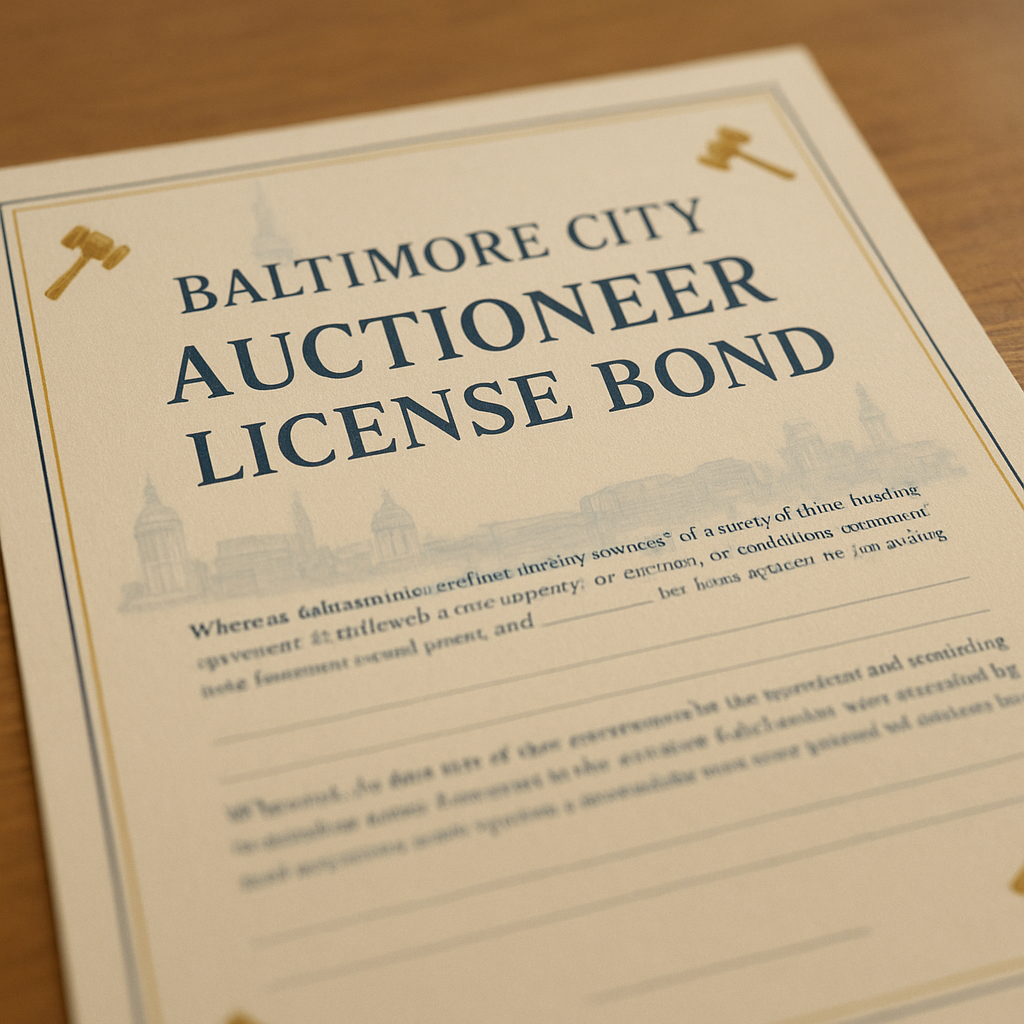
If you’re planning to hold auctions in Charm City, you’ve probably heard something about a “license bond.” Maybe you’re a seasoned auctioneer moving into Baltimore, or maybe you’re just starting out and the whole thing feels like a confusing maze of paperwork. Don’t worry—you’re in the right place. Let’s walk through what the Baltimore City Auctioneer License Bond really is, why it matters, and how you can check this box without breaking a sweat.
What Exactly Is an Auctioneer License Bond?
Think of a license bond as a kind of safety net. It’s not insurance for you—it’s a financial guarantee for the people you do business with. The City of Baltimore requires auctioneers (other than livestock auctioneers) to post this bond before they can get a license. If something goes wrong—say, you accidentally misrepresent an item or fail to pay a consignor on time—the bond gives the harmed party a way to recover their losses.
In simple terms, it’s a three-party promise. You, the auctioneer, are the principal. The City of Baltimore is the obligee (the one requiring the bond). And a surety company is the third party that backs you up financially. If you break the rules, the surety pays the claim up to the bond amount—but then you’re responsible for paying the surety back. It’s like having a co-signer on a lease who trusts you to make things right.
Who Needs This Bond in Baltimore City?
If you’re conducting auctions within Baltimore City limits and you’re not exclusively selling livestock, this requirement applies to you. That covers a huge range of auctioneers: estate sales, fine art, antiques, heavy equipment, charity galas, storage unit contents, you name it. Even if you only hold a few auctions a year, the city still wants that bond on file before you open your gavel.
It’s easy to overlook the “other than livestock” note. Livestock auctioneers have their own set of rules in Maryland, but for everyone else, Baltimore City’s licensing department looks for proof that you’ve secured the proper bond. Think of it as your entry ticket to doing business here.
Why Does the City Require It?
Picture this: you’re at a crowded auction. A bidder wins a vintage diamond ring for a steal, pays cash, and later discovers it’s cubic zirconia. The auctioneer shrugs and disappears. Without a bond, that buyer might be out of luck. Baltimore wants to prevent that scenario. The bond requirement protects the public by making sure auctioneers operate fairly and honestly. It’s also a way to weed out fly-by-night operators who might give the industry a bad name.
On a larger scale, the bond shows that you’re serious about your business. It’s a badge of credibility. When consignors see that you’re bonded, they feel more comfortable handing over valuable items. It’s a win-win.
How Much Does the Bond Cost?
First, let’s clear up a common misconception. The bond amount is not the price you pay. The required bond amount for Baltimore City auctioneers is typically set by local ordinance. Often it’s around $10,000 or $20,000—but you won’t need to fork over that entire sum. You only pay a small percentage, called the premium. For most auctioneers with decent credit, that premium can be as low as 1% to 5% of the bond amount. So a $20,000 bond might cost you just $200 to $1,000 per year.
What affects your premium? Your credit score is a big one. The surety company wants to see that you’re financially responsible. If your personal credit history is strong, you’ll snag a lower rate. If you’ve had some bumps, you might pay a bit more—but you can still get bonded. Some sureties also look at your experience in the industry, your business financials, and whether you’ve had any past claims on other bonds.
Can I Get Bonded With Bad Credit?
Absolutely. Bad credit doesn’t mean you’re out of the game. You might pay a higher premium, but there are surety companies that specialize in helping people with less-than-perfect credit. The key is to work with a bond agency that understands the Maryland market. They can shop around to find you an option that fits.
Step-by-Step: How to Get Your Auctioneer Bond
Getting your bond doesn’t have to be a headache. Here’s a straightforward path:
- Know your numbers. Confirm the exact bond amount required by the Baltimore City licensing office. Rules can change, so give them a quick call or check their website.
- Find a reputable surety bond provider. Look for an agency that’s licensed in Maryland and has experience with auctioneer bonds. They’ll guide you through the application.
- Complete the application. You’ll provide basic personal and business information. The application often takes just a few minutes.
- Get a quote. The surety runs a soft credit check (usually doesn’t affect your score) and gives you the premium amount.
- Pay the premium and sign. Once you accept the quote, you’ll sign an indemnity agreement. Then the bond is issued.
- File the bond with the city. Your bond provider will typically send you the original bond form. You take that to Baltimore City’s licensing department along with the rest of your license application materials.
Pro tip: Some bond agencies can file the bond directly with the city for you. Ask about that to save a trip downtown.
What Documents Will You Need?
While the bond application itself is simple, having a few things handy speeds things up: your driver’s license or state ID, Social Security number, business license number if you already have one, and possibly a copy of your business registration. The surety agent will let you know exactly what’s required.
Keeping Your Bond Active and Avoiding Claims
Once your bond is in place, you’re not done forever. Bonds typically renew annually. You’ll get a renewal notice before the expiration date. Pay the premium on time to keep your coverage continuous. If you let it lapse, Baltimore City can suspend or revoke your auctioneer license. Nobody wants that interruption right before a big sale.
Avoiding claims is mostly about running an honest, organized operation. Keep accurate records of every transaction. Pay consignors promptly. Represent items truthfully—if you’re unsure about a piece, say so. Many claims arise from simple misunderstandings or poor communication. A clear contract with your sellers and buyers can save a world of trouble. Also, remember that if a claim is filed against your bond, you’re responsible for the full amount, even if the surety pays out initially. Protecting your bond is protecting your wallet.
Common Questions Auctioneers Ask
Let’s tackle a few real-world head-scratchers.
“I only do online auctions. Does that count?” Yes. Even if your gavel is a mouse click, you’re still an auctioneer in the eyes of the law if you’re operating within Baltimore City. You’ll need the bond.
“What if I also sell a few farm animals occasionally?” If your business is primarily non-livestock auctions, the standard auctioneer bond applies. If you branch heavily into livestock, look into the separate livestock auctioneer requirements. When in doubt, ask the licensing office.
“Is this bond the same as liability insurance?” Not at all. Liability insurance protects you if someone gets injured at your auction site, for example. The bond protects the public against your financial misconduct. You may need both for full protection.
Why This Bond Is Actually Good for Your Business
It’s tempting to see the bond as just another bureaucratic hoop. But step back and you’ll notice it’s a powerful trust-building tool. When you advertise your auctions, you can proudly mention that you’re licensed and bonded. That small phrase tells potential bidders and consignors that you stand behind your work. In a competitive industry like auctioneering, trust is everything. A bond is the city’s stamp of approval that you’re accountable and professional.
Think of it like a seatbelt. You buckle up not because you expect a crash, but because it’s a smart precaution that makes everyone safer. Your bond does the same for your business relationships.
Ready to Take the Next Step?
Now you know the ins and outs of Baltimore City’s auctioneer license bond requirement. It’s a manageable piece of doing business here, and once it’s set up, you can focus on what you do best—engaging the crowd and closing deals. Whether you’re planning a high-end estate auction in Roland Park or a storage unit sale in Hampden, having your bond locked in opens doors and builds confidence.
So, what’s holding you back? Reach out to a surety bond specialist who knows the Maryland landscape, get your quote, and cross that item off your to-do list. Your next great auction is waiting.