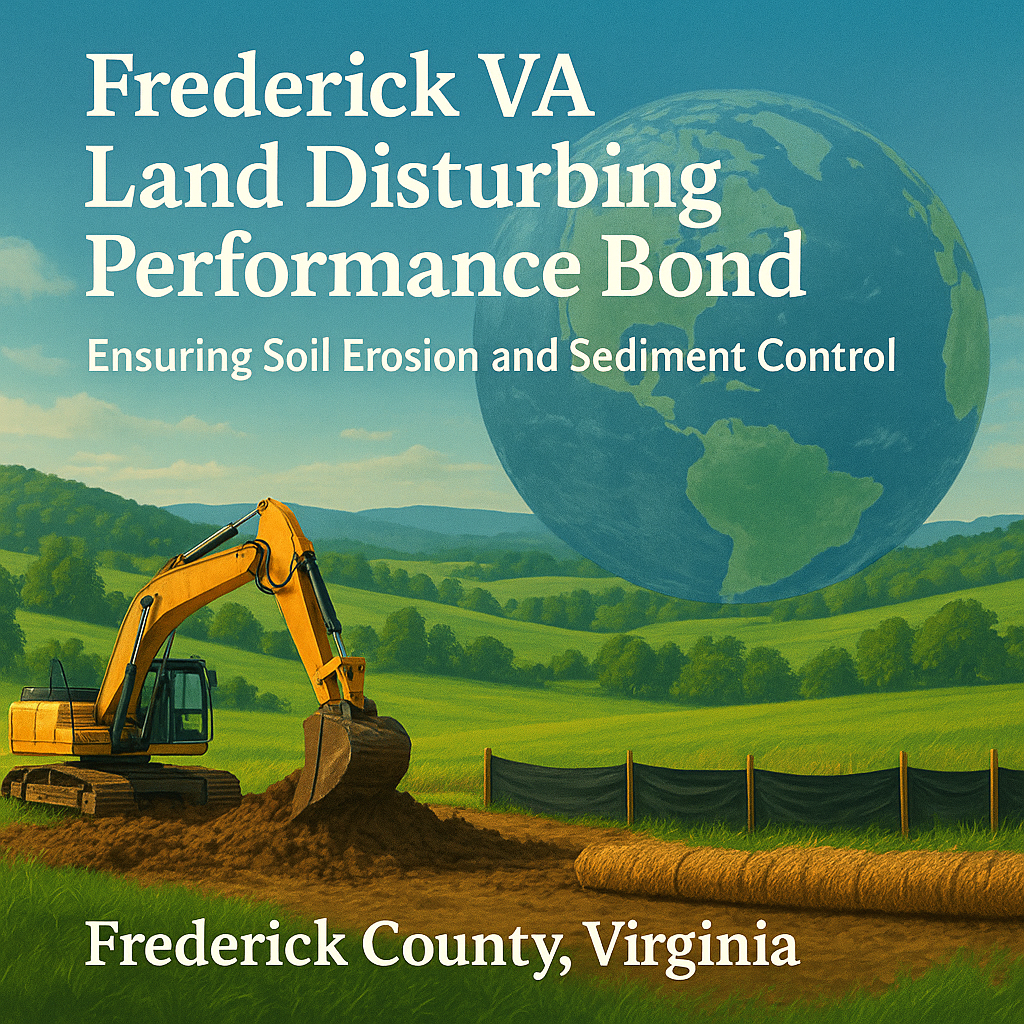
Have you ever watched a construction site transform a bare patch of earth into a new neighborhood or shopping center? It’s exciting to see progress take shape. But there’s a hidden challenge that comes with all that digging and grading—keeping the soil where it belongs. When rain hits exposed land, muddy water can wash into streets, clog storm drains, and harm local streams. That’s where Frederick County steps in with a smart safeguard: the land disturbing performance bond.
What Is a Land Disturbing Performance Bond, Really?
Think of this bond like a security deposit on a rental apartment. When you move in, you give the landlord a deposit as a promise you’ll leave the place in good shape. If you trash the carpet, the landlord keeps part of that money to fix it. A land disturbing performance bond works the same way. It’s a financial guarantee that a developer or contractor will follow through on their soil erosion and sediment control plans. If they don’t, the county can use the bond funds to repair any damage.
In Frederick County, Virginia, this bond is a specific requirement for anyone who disturbs a certain amount of land during construction. It’s not just a piece of paper—it’s a promise backed by real money, held by a surety company. The goal? Protect the community’s natural resources, especially the streams and groundwater that make this corner of the Shenandoah Valley so beautiful.
Why Frederick County Cares So Much About Dirt
You might wonder, “It’s just dirt. Why the big fuss?” The truth is, uncontrolled soil erosion causes a ripple effect that touches everyone. Sediment clouds streams, smothers fish habitats, and carries pollutants like fertilizers or oil straight into waterways. Over time, that sediment fills up channels, increasing flood risks. Frederick County’s rolling farmland, busy development corridors, and the headwaters of the Potomac River all need protection from runoff. That’s why local ordinances don’t just suggest erosion control—they require it, and they back it up with bonds.
When a contractor clears land for a new subdivision, a commercial pad, or even a large backyard project, the exposed soil becomes vulnerable. A sudden summer thunderstorm can wash away tons of topsoil in minutes. The performance bond ensures that someone is financially accountable for installing and maintaining controls like silt fences, sediment basins, and mulch blankets until the ground is permanently stabilized with grass or other cover.
Who Needs This Bond in Frederick County?
Not every homeowner digging a garden needs a land disturbing performance bond. It comes into play when a project crosses a threshold set by the Virginia Erosion and Sediment Control Law and local codes. Generally, if your project disturbs 10,000 square feet or more of land—roughly a quarter of an acre—you’ll likely need a land disturbance permit, which then triggers the bond requirement. Some smaller projects in sensitive areas might also be pulled into the process. It’s always smart to ask the Frederick County Department of Planning and Development early on: “Does my job need a bond?”
Typical bond applicants include homebuilders, civil contractors, commercial developers, and even public works projects. If you’re planning a new driveway that cuts through a steep slope, or you’re grading for a barn on a large rural lot, don’t assume you’re exempt. The county’s engineers review each plan to see how water will flow and what erosion risks exist.
How the Bond Amount Is Calculated
You won’t find a flat dollar figure that fits every job. The bond amount is custom-fit to your project, based on the estimated cost of installing and maintaining all required erosion and sediment controls. Let’s say your approved plan includes 500 linear feet of silt fence, a rock construction entrance, and a sediment trap. The county will add up what those items would cost to build and maintain, then set the bond at or near that total. If the contractor walks away mid-project, the bond covers the expense of hiring someone else to finish the controls and clean up any mess.
This approach keeps things fair. A small infill lot in Stephens City might require a bond of a few thousand dollars, while a massive industrial park near Winchester could see a bond in the tens of thousands. The bond isn’t a punishment—it’s an insurance policy for the community.
The Human Side: What Happens When Things Go Wrong?
Picture this: a developer starts clearing land in early spring. They put up silt fences as required. But after a windy week, several sections blow down. Before they can fix them, a heavy downpour sends a chocolate-brown plume of mud into a nearby creek where kids like to catch crayfish. A neighbor reports it. The county inspector visits, takes photos, and issues a notice of violation. If the developer ignores the notice or can’t afford the repairs, the county can file a claim against the bond. The surety company then pays out so the county can hire a crew to restore the site and clean the stream.
It’s a safety net that shifts the financial burden from taxpayers to the people creating the risk. For the contractor, it’s a powerful motivator to keep silt fences in good shape and seed bare areas quickly. Nobody wants a claim on their record—it can make future bonds more expensive or harder to get.
The Step-by-Step Journey to Obtaining a Bond
If you’re a contractor new to Frederick County, the process might feel intimidating. But let’s break it down into simple stages.
1. Prepare Your Erosion and Sediment Control Plan. Before you touch a shovel, you need a detailed plan stamped by a certified professional. This map shows where controls will be placed, how water will be diverted, and when each phase of stabilization happens.
2. Submit the Plan for Review. Take that plan to Frederick County’s planning office. They’ll check it against the local ordinance and Virginia’s standards. Expect questions and possibly revisions—this is a collaborative effort to get things right.
3. Receive the Bond Estimate. Once the plan is approved, the county calculates the bond amount. You’ll get an official form stating that number.
4. Secure the Bond from a Surety Company. You don’t pay the full bond amount like cash. Instead, you work with a bonding agent, much like an insurance broker. They’ll evaluate your credit and business history. You’ll pay a premium—typically 1% to 3% of the bond amount—and the surety issues the bond.
5. Deliver the Bond and Get Your Permit. Hand over the bond paperwork to the county. They’ll issue your land disturbance permit, and you can finally break ground—legally.
Common Misconceptions That Trip People Up
Let’s clear the air on a few points that often confuse folks.
Myth: “The bond is just another tax I’ll never see again.”
Reality: The bond premium is a small fee for a service. The bond itself is released once you complete all stabilization measures and pass final inspection. You get it back fully unless there’s a claim.
Myth: “This is the same as my general liability insurance.”
Reality: Liability insurance might cover third-party property damage, but it won’t guarantee that you’ll install a silt fence properly. The performance bond is specific to erosion control promises made to the county.
Myth: “I only need a bond if I’m building near a river.”
Reality: Every site with enough disturbed area is a potential source of sediment, even if the nearest stream seems far away. Stormwater runoff travels through pipes and ditches. Frederick County looks holistically at the watershed.
Real-World Analogies That Make It Stick
Think of the county’s erosion control rules like a seatbelt law. Before those laws existed, people could ride without belts—some got lucky, others didn’t. The law steps in to prevent the worst-case scenario. A performance bond is the mechanism that makes sure you actually buckle up. Or consider a wedding ring: it’s a visible symbol of a promise to stick around and do the right thing. The bond is your project’s ring, signaling you’re committed to leaving the land in good condition.
How This Bond Benefits You, the Local Resident
Even if you never move a bucket of dirt, these bonds protect your quality of life. They keep swimming holes clear, protect drinking water sources from siltation, and maintain property values by preventing unsightly mud flows into streets. Next time you see a silt fence around a construction site, you’ll know there’s a financial backbone holding it upright.
For contractors, a solid bonding history can actually become a marketing advantage. You can tell clients, “We’re fully bonded and fully compliant with Frederick County’s erosion control laws.” That builds trust and sets you apart from fly-by-night operators.
What If You’re Just a Homeowner with a Big Project?
Let’s say you’re not a developer but you want to grade a large garden area or build a long private road. You might be the “land disturber” who needs a bond. You can still work with a surety agent individually. Many agents are happy to guide first-timers. The cost might be modest compared to the peace of mind that you’re protecting your own land and downstream neighbors. And remember, if you hire a licensed contractor, they typically bring their own bonding capability to the table—ask about it before signing a contract.
Keeping the Process Smooth: Practical Tips
- Start early. Bonding can take a few days to a couple of weeks, especially if your credit file needs review. Don’t wait until the day before you want to move dirt.
- Build a relationship with a local surety agent. Someone familiar with Frederick County’s requirements can anticipate snags and speed things up.
- Maintain your controls obsessively. A weekly walk-through can catch a sagging silt fence before a storm turns it into a violation. Take photos as proof of maintenance.
- Communicate with county inspectors. They’re not there to punish you; they’re there to help you succeed. Ask questions if you’re unsure about stabilization deadlines.
- Plan for final stabilization early. Get seed and straw on the ground as soon as earthwork stops. The quicker you establish permanent vegetation, the sooner you can request bond release.
Looking Ahead: Why These Measures Are Here to Stay
Frederick County is growing, and growth means more roofs, more parking lots, and more disturbed soil. Climate patterns are shifting too, bringing intense rain events that test our drainage systems. The land disturbing performance bond isn’t a bureaucratic hoop—it’s a forward-thinking tool that marries development with conservation. By tying financial accountability to environmental performance, the county encourages everyone to build smarter.
You might even see these principles seeping into everyday landscaping. More homeowners are installing rain gardens and swales to keep their own soil at home. When whole communities adopt this mindset, the cumulative benefit is enormous: cleaner water, healthier fisheries, and a landscape that can handle whatever weather rolls through.
So next time you hear about a performance bond, picture that security deposit, that seatbelt, that wedding ring. It’s a simple pledge with powerful results—keeping Frederick County’s red clay where it belongs and its streams running clear.
If you have questions about your specific project, the Frederick County planning staff are ready to help. A quick call or visit to their office can save you time, money, and a whole lot of mud. After all, we all share the same water, the same land, and the same responsibility to leave it a little better than we found it.