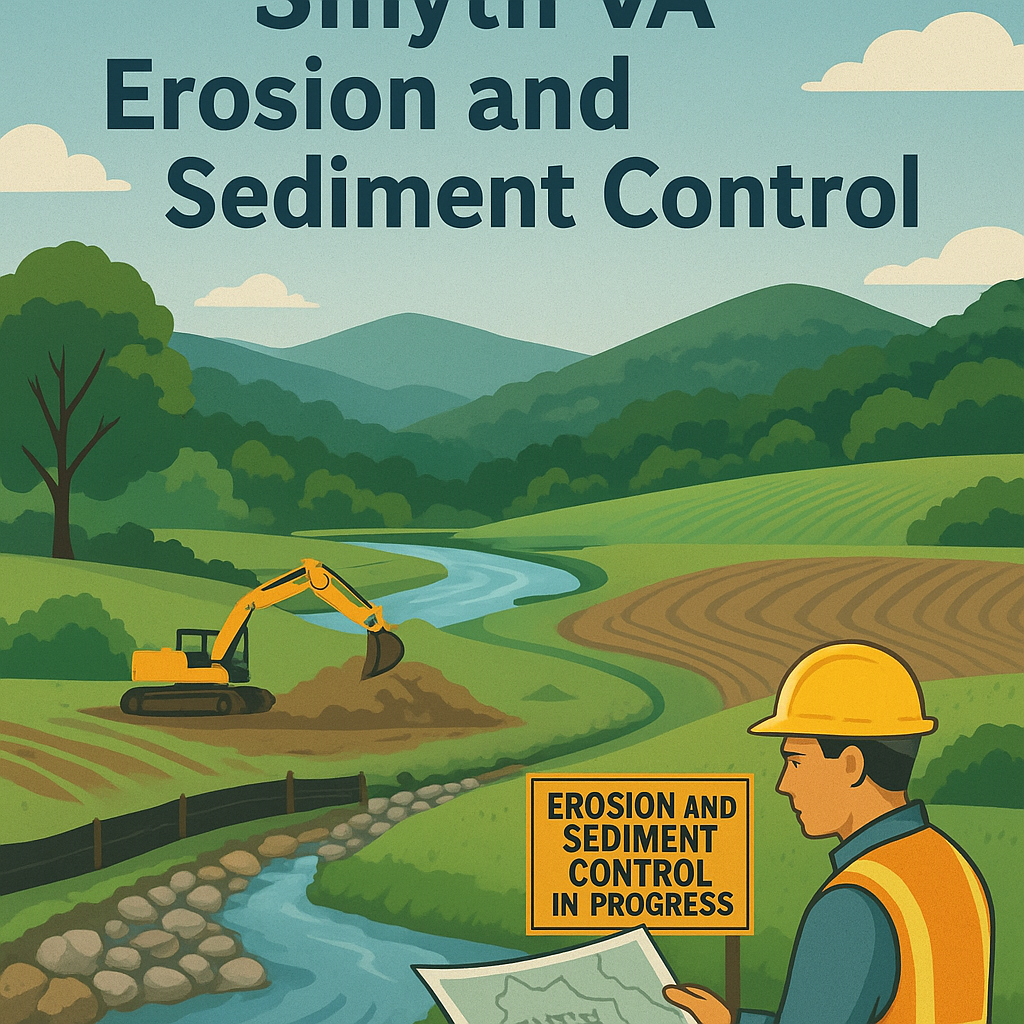
Have you ever watched a heavy rainstorm turn a construction site into a muddy river, with soil flowing straight into nearby streams and roads? It’s not just an eyesore—it’s an environmental and financial headache. That’s exactly why Smyth County, Virginia, has put a sharper focus on something called an erosion and sediment control bond. If you’re a builder, a homeowner planning a project, or just someone who loves clean creeks and clear mountain views, this matters more than you might think.
In recent months, Smyth County has been quietly strengthening the way it handles soil erosion and sediment control. The goal isn’t to create red tape—it’s to protect the land, keep waterways healthy, and make sure that everyone plays by the same sensible rules. Let’s unpack what’s happening, why it’s a smart move, and how it might affect your next project in Smyth, VA.
Why Soil Erosion Is a Bigger Deal Than You Realize
Picture a scoop of topsoil. It might not look like much, but that dark, crumbly layer is where plants anchor their roots, where rainwater gets absorbed, and where an entire underground world of microbes does its quiet work. When construction or grading loosens that soil without proper safeguards, rain can sweep it away in minutes. Suddenly, you’ve lost fertile ground, and the sediment ends up somewhere it doesn’t belong—creeks, rivers, or storm drains.
Sediment is actually one of the most common pollutants in Virginia’s waterways. It clouds the water, clogs fish gills, smothers aquatic habitats, and carries other pollutants like fertilizer or oil along for the ride. Left unchecked, a single unprotected building site can dump truckloads of soil into a nearby stream over the course of a season. That’s not a hypothetical; it happens far too often. Smyth County’s landscape, with its rolling hills and meandering creeks, is especially vulnerable when ground is disturbed.
Enter the Erosion and Sediment Control Bond
So, how does a county encourage builders to take erosion seriously without constant policing? That’s where the Smyth County erosion and sediment control bond comes in. Think of it like a security deposit on an apartment—only instead of protecting against a scratched floor, it protects against a scarred landscape.
Before a developer or homeowner begins any land-disturbing activity over a certain size, they must submit an erosion and sediment control plan. If the plan is approved, the county may require a bond—a financial guarantee that the controls described in the plan will actually be installed and maintained. If the silt fences, sediment traps, or seeding isn’t done right, the county can use the bond money to fix the problem. If everything stays in good shape, the bond is released once the ground is stable. Simple, right?
What’s Changing in Smyth County?
Smyth County has always required erosion and sediment control measures for larger projects, but recent updates are tightening the system. The county is now more consistent in requiring Smyth VA erosion and sediment control bonds for both public and private projects, and the dollar amounts are better matched to the potential risk of the site. This means a small residential lot might see a manageable bond figure, while a sprawling subdivision or commercial development will post a bond that reflects the higher stakes.
The county has also invested in clearer inspection checkpoints. Instead of waiting until a project is finished to see if any damage was done, inspectors are more likely to swing by during key phases—after grading, after installing controls, after a big storm. This proactive rhythm helps catch issues early, when they’re still cheap and easy to fix.
How the Bond Works in Plain Language
If you’re about to break ground on a project in Smyth County, here’s the friendly, no-jargon version of what you can expect:
- Submit a plan: Before moving dirt, you’ll need an erosion and sediment control plan designed by someone who understands the lay of the land. This shows where silt fence will go, how stormwater will be managed, and what temporary seeding will hold the soil in place.
- County review: The plan gets checked against local ordinances and state regulations. If something looks iffy, they’ll ask for revisions. Once it passes, you’ll get the green light—along with a bond requirement.
- Post the bond: The bond might be a cash deposit, a letter of credit, or a surety bond. It’s held by the county as a safety net. You don’t lose a dime as long as you keep your erosion controls in working order.
- Install and maintain: Here’s where boots hit the ground. Controls must go in before major disturbance begins, and they need to be maintained weekly and after every rain event that causes flow. If a silt fence collapses, you fix it fast.
- Final inspection and release: Once the site is stable—usually when vegetation covers 70% or more of the exposed soil—the county inspects one last time. If all is well, the bond is returned or cancelled.
This might sound like a lot of steps, but most responsible builders already follow these practices. The bond just adds a gentle layer of accountability.
Why This Is Good News for Everyone
You might be wondering, “Is this just another hoop to jump through?” In reality, stronger erosion and sediment control measures are a win across the board.
For homeowners and neighbors, clean ditches and clear streams mean better drainage on your own property. Less sediment on the road means safer driving after a storm. For builders and developers, having a solid plan reduces the risk of costly stop-work orders or fines down the line. It also protects their reputation—nobody wants to be known as the company that trashed a creek. For the community, healthy waterways support recreation, fishing, and the kind of natural beauty that draws visitors to Virginia’s mountains.
There’s also a longer-term financial angle. Cleaning up sediment from municipal stormwater systems is expensive. Every pound of soil that stays on the construction site is a pound taxpayers don’t have to pay to remove later. The bond system simply ensures that the people doing the earthwork bear that responsibility, not the general public.
Real-Life Example: A Hillside Driveway
Let’s paint a picture. A family in Smyth County wants to build a new driveway up a gentle slope to their future homesite. In the past, a small operator might have scraped the path, left the soil bare, and hoped for the best. A couple of heavy rains later, the driveway looks like a gully, and the neighbor’s pasture below is buried in orange mud. Nobody is happy.
Under the strengthened rules, that same project would start with a simple plan: a gravel construction entrance to knock mud off tires, a silt fence along the downhill edge, and a small rock check dam to slow water flow. A modest bond—maybe a few hundred dollars—would be filed. The work gets done, the grass grows back on the edges, and the bond is released. The family gets their driveway, the neighbor’s field stays clean, and the county’s waters stay clear. That’s the kind of outcome these measures are designed to create, over and over again.
Common Questions About the Smyth County Erosion and Sediment Control Bond
Who needs one? Any person or company undertaking land-disturbing activity that exceeds the county’s threshold—typically 10,000 square feet or more—will likely need a plan and a bond. Even smaller projects near sensitive areas like creeks may be asked to comply if the risk of erosion is high. When in doubt, a quick call to the Smyth County planning or environmental department can clear things up.
How much does it cost? The bond amount varies based on the area disturbed, the slope, the proximity to water, and the predicted soil loss. Often it’s calculated per acre or per disturbed square foot. The good news: it’s not a fee that disappears. It’s your money, and you get it back when the job is done right. The only non-refundable costs might be small administrative charges or the premium on a surety bond.
What happens if I don’t comply? If controls fail and you don’t make corrections, the county can draw down the bond to hire a contractor to clean up the mess. Additionally, you could face fines, permit revocation, and legal headaches. It’s far less expensive—and far less stressful—to maintain your controls from day one.
Are there any exceptions? Routine agricultural activities, some forestry operations, and very small single-family home projects might be exempt or subject to lighter requirements. But because rules can change, always verify with the county before assuming you’re off the hook.
What Builders Can Do Right Now
If you’re a contractor or a developer eyeing a project in Smyth County, a little preparation goes a long way. Start by connecting with a qualified professional who can draft your erosion and sediment control plan—often a civil engineer or a landscape specialist familiar with Virginia’s Erosion and Sediment Control Handbook. Walk the site early to spot any trouble areas, like steep banks or wet-weather springs. Budget for both the bond amount and the actual control materials; silt fence and straw wattles are cheap compared to emergency cleanup.
Also, keep good records. Take photos before, during, and after installation. Document your maintenance visits, especially after rainstorms. When the inspector comes by, you’ll have evidence that you’ve been on top of things. This kind of diligence not only protects your bond money but builds a reputation as a builder who cares about the land—something that resonates with customers in a place like Smyth, VA, where natural beauty is part of everyday life.
Looking Ahead: A Greener, Cleaner Smyth County
Smyth County’s renewed focus on soil erosion and sediment control isn’t about making life difficult. It’s about growing in a way that doesn’t wash away the very things that make the region special. Every project, from a tiny house extension to a new commercial strip, leaves a mark. With the right planning and the right safeguards, that mark can be a positive one.
The County of Smyth erosion and sediment control bond might not be the most glamorous topic, but it’s one of those quiet, behind-the-scenes tools that keep a community healthy. It reminds us that soil isn’t just dirt—we all depend on it staying where it belongs. So next time you see a stretch of silt fence flapping in the breeze on a construction site, you’ll know it’s part of a much bigger story, one that keeps Virginia’s mountains green and its waters clear for generations to come.