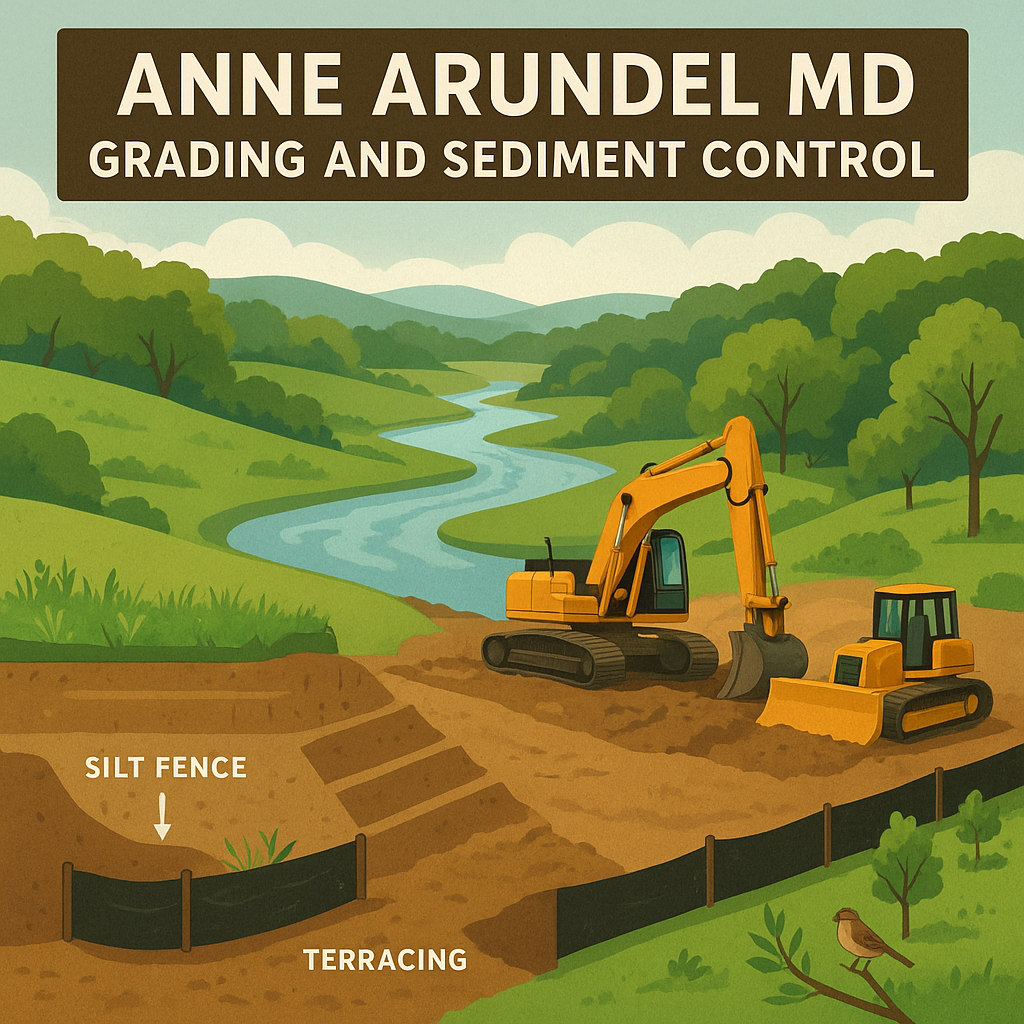
Picture this: you’re ready to break ground on a new home addition, a commercial site, or even a simple landscaping overhaul in Anne Arundel County. The plans are drawn, the crew is lined up, and then someone at the permit office mentions a “grading and sediment control bond.” For many, that’s the moment the excitement meets a wall of confusion. What is this bond, why is it needed, and how do you get one without losing your mind? Let’s walk through everything you need to know about Anne Arundel County Maryland’s grading and sediment control measures in plain, everyday language.
What Is a Grading and Sediment Control Bond, Really?
Think of a grading and sediment control bond as a promise backed by money. When you start moving dirt around—whether you’re leveling a slope, digging a foundation, or clearing land—there’s a risk that loose soil will wash into nearby streams, storm drains, or your neighbor’s yard. A sediment control bond is a financial guarantee that you’ll follow the county’s rules to prevent that from happening. If you don’t, the county can use the bond to fix any damage or clean up the mess.
In simple terms, it’s like a security deposit for the environment. You’re telling Anne Arundel County, “I’ll do this work responsibly, and here’s a financial backup to prove it.” The bond covers the cost of installing and maintaining erosion and sediment control measures—things like silt fences, check dams, and stabilized construction entrances—until the ground is stable again.
Why Does Anne Arundel County Require This Bond?
Maryland, and especially Anne Arundel County with its miles of Chesapeake Bay shoreline, takes soil erosion seriously. Loose sediment is one of the biggest pollutants in local waterways. When it rains, uncontained dirt washes off construction sites and into creeks, rivers, and eventually the Bay. That sediment clouds the water, harms fish habitats, and carries other pollutants along for the ride. The grading and sediment control bond is a key tool the county uses to make sure developers, contractors, and even homeowners don’t skip the important step of protecting the land.
But there’s another practical reason. Without a bond, the county would have to chase down violators through court orders and fines, which is slow and costly. Having a bond in place means immediate funds are available to correct a problem if the responsible party walks away or refuses to comply. It puts teeth behind the regulations and keeps our shared environment safer.
Who Needs to Get This Bond in Anne Arundel County?
You might think bonds are only for big construction companies, but that’s not the case here. If your project involves grading, filling, excavation, or clearing that disturbs a certain amount of soil—often as little as 5,000 square feet—you’ll likely need a grading permit and a corresponding sediment control bond. This applies to:
- Homeowners putting in a swimming pool or major patio.
- Builders working on a new housing development.
- Commercial developers erecting an office building or shopping center.
- Road crews and utility companies doing trenching work.
- Anyone clearing land for agricultural use or timber harvesting (in some cases).
Even if your project is smaller, local laws can change. Always check with the Anne Arundel County Department of Inspections and Permits before you start moving dirt. The last thing you want is a stop-work order because you overlooked a bond requirement.
How the Bond Process Works Step by Step
Getting an Anne Arundel County MD grading and sediment control bond isn’t as complicated as it sounds. Let’s break it down.
1. Plan Preparation and Permit Application
First, you’ll need an erosion and sediment control plan. For small residential jobs, a simple sketch might do, but larger projects require plans stamped by a professional engineer. This plan shows how you’ll keep soil in place during and after construction. Submit the plan with your grading permit application to the county.
2. Bond Estimate and Approval
Once the county reviews your plan, they’ll estimate the cost to install all the required sediment control measures and to stabilize the site. That estimate becomes the bond amount. It’s not a guess—the county uses standard unit costs for items like linear feet of silt fence or acres of seeding. You can’t set the amount yourself; the county determines it based on your specific project.
3. Securing the Bond
Now you take that dollar figure to a surety company or your insurance agent. The bond works like an insurance policy: you pay a premium, and the company issues the bond. The premium is usually a small percentage of the total bond amount—often between 1% and 5% for applicants with good credit. If your project is large, the surety may require collateral or a credit check. For smaller homeowner bonds, it’s often a quick and painless process.
4. Submitting the Bond to the County
You’ll deliver the original bond document to Anne Arundel County as part of your permit paperwork. The county holds it until your project is complete and the site is stable. No bond, no permit—it’s that straightforward.
5. Release of the Bond
This is the part everyone looks forward to. After construction and final grading, when grass is growing or the ground is permanently stabilized, you request an inspection. If everything checks out, the county releases the bond. Many bonds have a defined term, but you can get an extension if weather or delays prevent final stabilization. Keep in mind, the bond isn’t released until the county is satisfied that the soil won’t wash away next time it rains.
How Much Does a Grading and Sediment Control Bond Cost?
The cost depends on two things: the bond amount the county requires and the premium rate you get from the surety. As a rule of thumb, smaller residential projects might see bond amounts in the $2,000 to $10,000 range, while large commercial developments could reach $100,000 or more. Your premium might be $100 to $500 for a small bond, but it varies. The good news? The premium is a one-time fee for the bond’s term, and you don’t have to tie up cash if you use a surety bond rather than a cash deposit alternative.
Some people ask: “Can I just give the county a cash deposit instead of a bond?” In many cases, yes—Anne Arundel County may accept a cash escrow or letter of credit. However, that ties up your money until the project’s completion, which can be a strain on cash flow. A surety bond keeps your cash free for project needs.
Common Mistakes That Delay Bond Release
No one wants to wait months for a bond release. Here’s where projects often stumble:
- Skipping maintenance. Silt fences tear, sediment traps fill up. If the county inspector finds failed controls during a storm, you’ll be fixing them on the spot. Regular site checks save time.
- Rushing final stabilization. Throwing down grass seed on bare dirt right before winter without mulch or erosion blankets is asking for trouble. Make sure the vegetation takes hold before calling for a final inspection.
- Ignoring off-site impacts. If sediment escapes to the street or a neighboring property, the county can hold your bond and require cleanup. Good housekeeping during the entire project is the best defense.
- Not renewing the bond. Bonds have expiration dates. If your project stretches longer than expected, contact the surety to renew or extend coverage. A lapsed bond can bring work to a halt.
What Happens If a Violation Occurs?
Imagine this: a heavy thunderstorm hits while your lot is still bare, and a muddy torrent washes into the storm drain. A county inspector documents the problem and issues a notice of violation. You’ll be given a short window to fix the controls and clean up the sediment. If you don’t, the county can file a claim against your bond. The surety then pays the county up to the bond amount to hire someone else to do the cleanup and repairs. Afterward, the surety will come to you for reimbursement, because unlike insurance, a bond is a form of credit—you ultimately bear the cost.
That’s the teeth behind the system. But it’s also a motivator to stay on top of erosion control from day one.
Real-Life Analogy: The Rental Car Deposit
Still fuzzy on how the bond works? Think about renting a car. The rental company asks for a security deposit on your credit card. They don’t take the money unless you return the car damaged or with an empty tank. The grading and sediment control bond is that deposit for the land. You do the work, leave the site stable, and the county never touches the bond. Mess it up, and they’ll use those funds to make it right. Simple as that.
How This Fits into Maryland’s Bigger Picture
Anne Arundel County’s bond requirement didn’t appear out of nowhere. It’s part of Maryland’s comprehensive stormwater and erosion control laws, which follow the federal Clean Water Act. The Chesapeake Bay restoration effort drives much of this, with states and counties working to reduce sediment and nutrient pollution. By requiring bonds, the county ensures that everyone developing land has a stake in protecting water quality. You’re not just following a rule; you’re contributing to a cleaner Bay and healthier local streams.
Pro Tips for a Smooth Grading and Sediment Control Experience
- Talk to the county early. Before you finalize project plans, schedule a pre-application meeting with the Inspections and Permits staff. They can give you a realistic idea of bond amounts and required practices.
- Work with a local surety agent who knows Maryland bonds. They’ll understand the specific forms Anne Arundel County demands and can speed up the process.
- Document everything. Take photos of installed controls, repair dates, and final stabilization. These can be worth gold if a dispute arises about site conditions.
- Watch the weather. Plan earthmoving around dry spells, and always have materials ready to cover exposed slopes if rain is in the forecast.
- Budget for the bond premium early. It’s a project cost just like lumber or concrete. Factor it into your estimate so there are no surprises.
Connecting the Dots for Homeowners and Contractors
Whether you’re a homeowner building a dream garage or a general contractor managing a subdivision, the grading and sediment control bond for Anne Arundel County Maryland is a manageable step when you understand it. It’s not a punishment; it’s a tool that aligns everyone’s interests—yours, the county’s, and the environment’s. You get to complete your project, the county keeps its waterways clean, and fish and wildlife downstream don’t suffer from preventable mudslides.
Next time you hear “bond required,” remember it’s just a promise to keep the dirt where it belongs. With a little planning and the right partners, you’ll be breaking ground and breathing easy, knowing that your site won’t become a muddy mess—and your bond will be released on schedule.