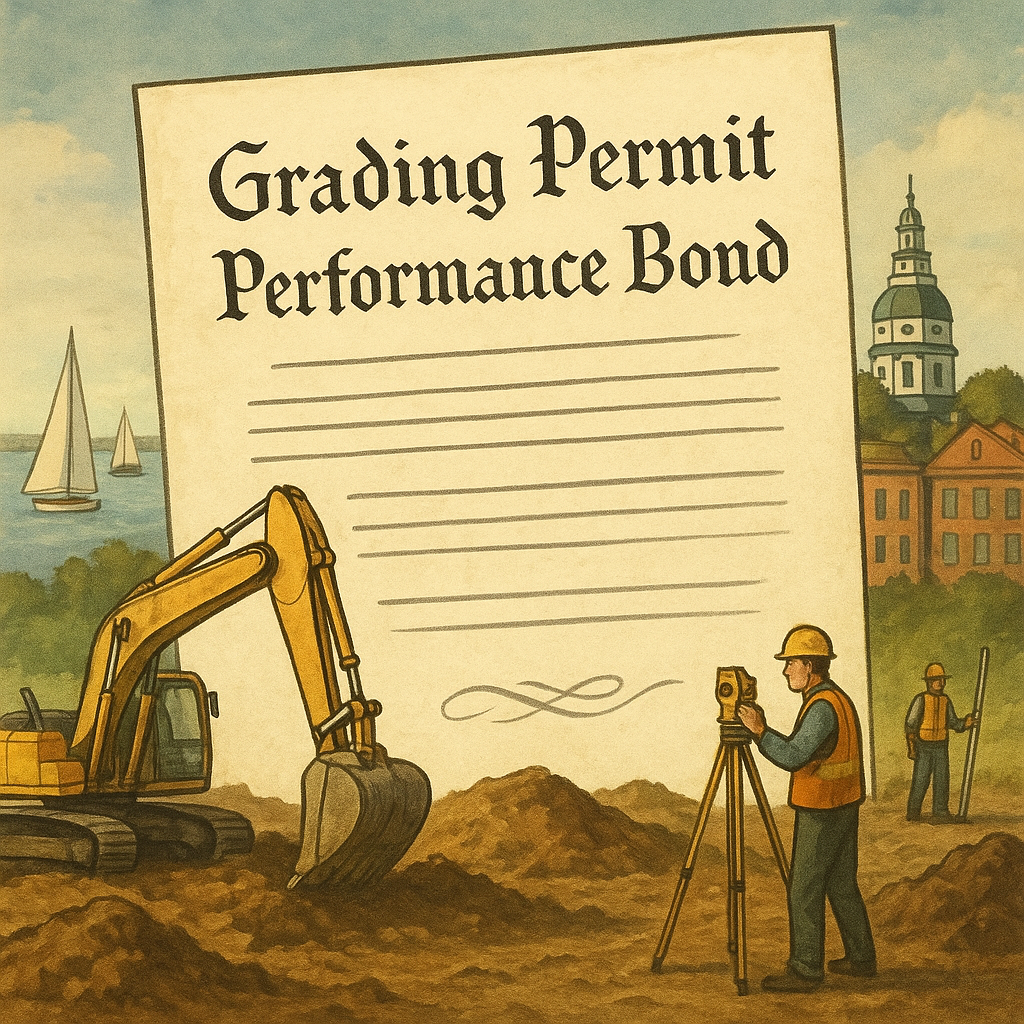
Picture this: you’re a contractor ready to transform a rough patch of land in Annapolis, Maryland, into a beautiful building site or a well-graded parking lot. You’ve lined up the bulldozers, you’ve got your crew ready, and you’re holding a fresh grading permit from the City of Annapolis. But before you can move a single scoop of dirt, the city asks for one more piece of paper—a grading permit performance bond. If that phrase sounds like a mouthful, don’t worry. By the time you finish reading, you’ll understand exactly what it is, why Annapolis requires it, and how it protects everyone involved, including you.
What Exactly Is a Grading Permit Performance Bond?
Let’s break it down without the legal fog. A grading permit performance bond is a financial guarantee. Think of it as a promise backed by money. The contractor promises the City of Annapolis that the grading, clearing, or earthwork job will be completed according to the approved plans, codes, and permit conditions. If something goes wrong—say the work stops halfway, erosion control fails, or the site gets damaged—the bond steps in to cover the cost of fixing it.
In simpler terms, it’s like a deposit on a rental apartment. The landlord holds that deposit just in case you leave the place in shambles. The bond works similarly: the city holds a financial safety net so that taxpayers don’t end up footing the bill for an unfinished or messy job.
Why Does the City of Annapolis Require This Bond?
Annapolis is a city with deep historical roots, scenic waterways, and a strong sense of community. Land development here isn’t just about moving dirt; it’s about protecting the Chesapeake Bay watershed, preventing soil erosion, controlling stormwater runoff, and keeping the neighborhood safe and beautiful. The grading permit performance bond is a tool the city uses to make sure contractors follow the rules.
When you scrape away vegetation, reshape hillsides, or dig out foundations, you’re disturbing the natural balance. A sudden rainstorm on an unprotected site can send mud cascading into nearby creeks, clog drainage systems, or damage public roads. If a contractor walks away before stabilizing the land, the city—and ultimately the residents—could be left with a costly, unsightly mess. The bond gives the city the financial power to hire someone else to restore the site without spending a dime of public money.
Who Needs a Grading Permit Performance Bond in Annapolis?
The short answer: anyone whose grading permit application triggers the requirement. In practice, this typically includes:
- Clearing and earthwork contractors taking on projects that disturb a certain threshold of land area.
- General contractors whose scope involves grading, excavation, or site preparation.
- Developers working on residential subdivisions, commercial lots, or infrastructure projects.
- Homebuilders constructing a single dream home on a lot that needs significant grading.
The City of Annapolis sets specific triggers—often based on the amount of disturbed soil, proximity to sensitive areas like wetlands, or the steepness of a slope. If you’re unsure whether your project crosses that line, it’s always smart to call the city’s permit office early in the planning stage. Finding out you need a bond at the last minute can delay your start date.
How the Bond Agreement Works: The Three-Party Puzzle
Every performance bond involves three key players. Understanding their roles makes the whole thing click.
- The Principal: That’s you—the contractor or developer doing the earthwork. You’re the one required to get the bond and to fulfill the obligations.
- The Obligee: The City of Annapolis. They require the bond and are protected by it. If you don’t hold up your end of the bargain, they can file a claim.
- The Surety: The bonding company that issues the bond. They guarantee to the city that you’ll perform the work. If a claim is paid out, you’ll ultimately need to reimburse the surety—think of it as a form of credit, not insurance.
So, if the city accepts the permit and the bond, you’re essentially saying, “I promise to do this job correctly, and this surety company backs my promise.” It’s a handshake with a financial backbone.
What Does the Bond Actually Guarantee?
This isn’t just about finishing the job in any haphazard way. The bond guarantees specific performance standards, typically including:
- Completing the grading and earthwork as shown on the stamped, approved plans.
- Installing and maintaining erosion and sediment control measures correctly.
- Stabilizing slopes and restoring temporary disturbed areas with vegetation.
- Complying with all City of Annapolis stormwater management regulations.
- Repairing any damage caused to public property, such as sidewalks, curbs, or streets during construction.
If the city inspects the site and finds deficiency after deficiency, they can issue a notice to comply. If you don’t, they can tap into the bond to bring in another contractor to fix things. That’s a scenario every contractor wants to avoid.
Real-Life Example: When the Bond Saves the Day
Imagine a small clearing and earthwork company that landed a contract to grade a lot for a new coffee shop near West Street. Halfway through, the owner fell ill, the crew disbanded, and the lot sat half-graded with exposed soil piles and a broken silt fence. A heavy thunderstorm hit, washing mud across the adjacent sidewalk and into a storm drain. The city stepped in, filed a claim on the bond, and hired a different contractor to clean the sidewalk, repair the erosion controls, and seed the bare dirt. The bond covered the cost, and the city didn’t have to chase a bankrupt contractor through court. The neighborhood dodged a muddy bullet.
How Much Does a Grading Permit Performance Bond Cost?
The cost isn’t a flat fee. It depends on the bond amount set by the City of Annapolis and your financial credentials. The city calculates the bond amount based on the estimated cost of the grading work or the potential cost to remedy a default. You might see bond amounts ranging from a few thousand dollars on a small residential lot to tens or even hundreds of thousands on large commercial earthwork projects.
You won’t pay that full amount out of pocket. Instead, you pay a premium—a small percentage of the bond amount—to the surety company. For contractors with solid credit and healthy financial statements, this premium often falls between 1% and 3% of the bond amount. A $20,000 bond, for instance, might cost you $200 to $600. If your credit has some bumps, the rate could be higher, but it’s still a fraction of the total bond value. The surety is essentially extending you a line of credit, so they care deeply about your ability to stand behind your work.
Steps to Obtain Your Annapolis Grading Permit Bond
Getting bonded doesn’t have to be a headache. Here’s a straightforward path you can follow:
- Confirm the requirement: When you submit your grading permit application, the City of Annapolis will tell you the exact bond amount and any special conditions.
- Gather your paperwork: Sureties typically want your business financials, personal financial information for owners, a credit check, and details about the project. Prepare a simple package.
- Shop around: Work with a specialized surety bond agency that deals with contractor bonds in Maryland. They can compare rates from multiple sureties.
- Complete the application: Fill out the short application, sign the indemnity agreement, and pay the premium.
- File the bond: The surety will issue the bond form. You’ll submit it to the City of Annapolis along with your permit application. Once it’s accepted, you’re cleared to break ground.
What Happens When the Work Is Done?
You pour your heart into the job, the site looks pristine, and the final city inspection passes with flying colors. The bond doesn’t hang over you forever. The City of Annapolis will release or exonerate the bond once they sign off that all permit conditions are satisfied, all temporary erosion controls are removed, and the land is stable. Some bonds remain in place through a maintenance period—say, one growing season—to make sure vegetation takes root. After that, the obligation ends, and you can move on to your next project with a clean slate.
Common Questions Annapolis Contractors Ask
Does my insurance cover what the bond covers?
No. General liability insurance protects you against third-party damage or injury claims. The grading permit performance bond protects the city specifically against incomplete or non-compliant work. They’re two different shields.
Can I use a letter of credit instead?
Sometimes, municipalities allow alternatives like a cash escrow or an irrevocable letter of credit. Annapolis might accept these in some cases, but bonds are often preferred because they don’t tie up your operating capital. Check with the permit office for their current policy.
What if I disagree with a city-ordered fix?
Open communication is your best friend. Most issues can be resolved by talking through the concerns with the inspector and presenting evidence that your methods comply. If a claim seems imminent, notify your surety immediately. They may help mediate or work out a solution before the bond money is spent.
How Bonds Strengthen the Local Community
It’s easy to think of a grading permit performance bond as just another bureaucratic hurdle. But when you look around Annapolis—the clean creeks, the stable hillsides, the tidy construction sites—you’re seeing the result of smart regulations. The bond system encourages contractors to do the job right and gives the city a tool to protect the environment without litigation. It levels the playing field, too: quality contractors aren’t undercut by those who cut corners and disappear. Every responsible contractor who gets bonded is saying, “I stand behind my work.” That’s a powerful message to homeowners, developers, and municipal leaders alike.
Final Thoughts: Embrace the Bond, Don’t Fear It
If you’re a clearing and earthwork contractor in Annapolis, the grading permit performance bond isn’t a punishment—it’s a mark of professionalism. It tells the city and your clients that you’re reliable, financially backed, and serious about the environment. Yes, there’s some paperwork and a premium to pay. But that small investment opens the door to bigger projects and builds a reputation that can last decades.
Next time you pull a grading permit, see the bond as your silent partner, ready in the background to guarantee your promise. Understand it, respect it, and use it to show the Chesapeake Bay region that Annapolis takes its land—and its contractors—seriously. The dirt will move, the grass will grow, and you’ll leave behind something solid and lasting. That’s the real performance in a performance bond.