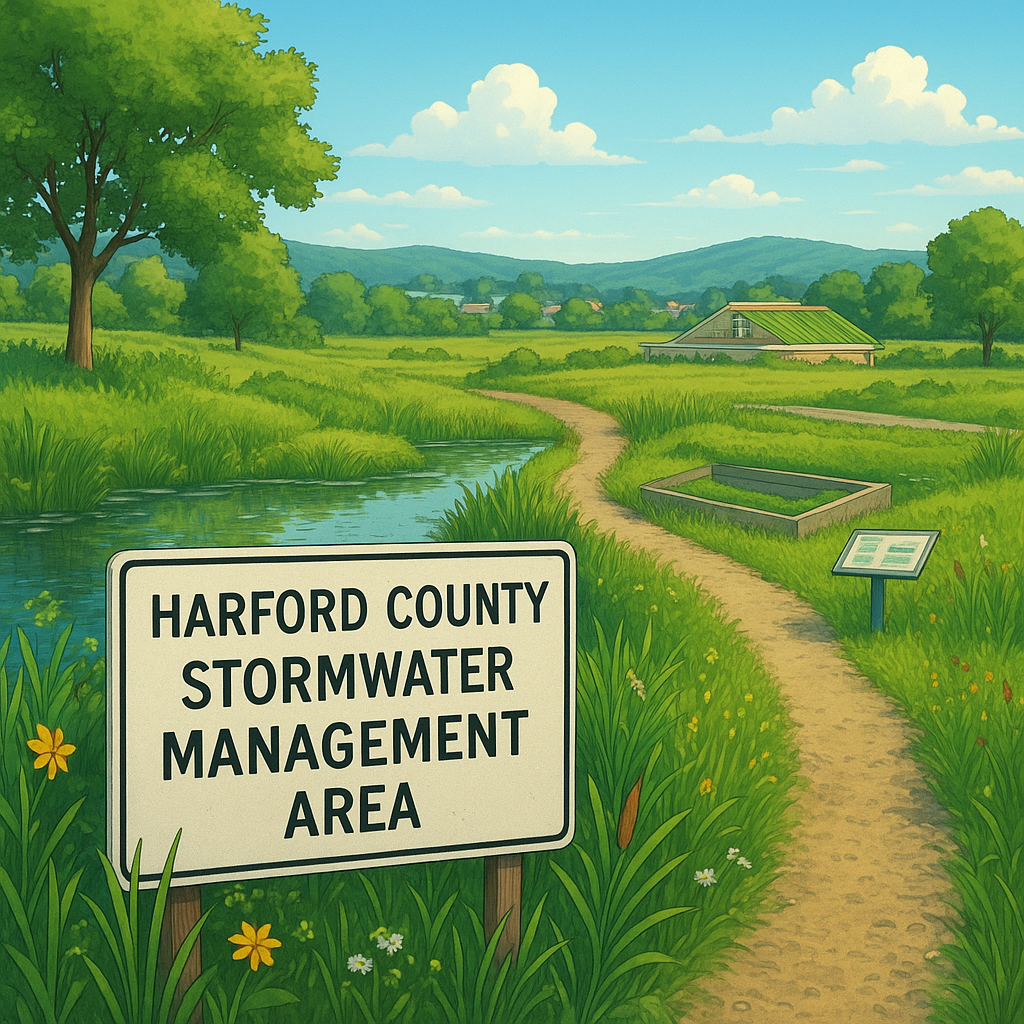
Have you ever watched a heavy rainstorm flood a street corner and wondered, “Where does all this water go?” It’s a simple question that touches on something every community deals with. In Harford County, Maryland, local leaders are tackling that challenge head-on with a fresh approach. A new stormwater management initiative centered around performance bonds is quietly reshaping how the county protects its neighborhoods, streams, and future growth.
We usually hear about infrastructure in terms of bridges and highways, but the way we manage rainwater is just as critical. This is not just a technical issue for engineers. It’s about keeping your basement dry, your local creek clear of pollution, and your tax dollars working as they should. Let’s break down what’s happening, why it matters, and how a simple financial tool is boosting Harford County’s infrastructure from the ground up.
Understanding Stormwater: The Hidden Highway Under Our Feet
Think of a natural forest. When rain falls, the soil soaks it up like a giant sponge. Trees and plants drink a portion, and the rest slowly filters into underground aquifers. Hardly any water rushes off the surface. Now, picture a shopping center parking lot or a new subdivision. Roofs, driveways, and paved roads are not sponges—they are more like plastic sheets. Rain hits them and instantly turns into fast-moving runoff.
This sudden rush of water is the heart of the stormwater problem. It scours stream banks, carries motor oil and lawn fertilizer straight into the Chesapeake Bay, and often overwhelms old drainage pipes. Harford County, with its beautiful rolling hills and growing communities, sits right at the intersection of progress and preservation. Every new home or business adds more hard surfaces, which means more runoff.
So, stormwater management is essentially the art and science of giving that rain a safe place to go. Ponds, underground chambers, rain gardens, and special permeable pavements all help slow the water down, clean it, and let it soak into the earth naturally. But building these systems correctly—and making sure they last—is where the real challenge begins.
The Challenge: Great Plans, Wobbly Follow-Through
Here’s a common story. A developer submits a beautiful set of plans showing a detention pond that will handle a 100-year storm. The county approves it. Construction happens, the homes sell, and everyone moves on. But what if the pond was never compacted properly? What if the vegetation died off two years later and nobody replanted? Suddenly, that neighborhood downstream is flooding during a typical summer thunderstorm.
Local governments have long held a tool called a maintenance bond or a letter of credit, but the process can be slow and full of red tape. Harford County saw an opportunity to modernize the guarantee. By refining its stormwater management performance bond requirements, the county is ensuring that builders have real skin in the game from day one.
What Exactly Is a Stormwater Management Performance Bond?
If you’ve ever rented an apartment, you understand the concept of a security deposit. You give the landlord a chunk of money. If you leave the place a mess, that money pays for repairs. A performance bond works under a similar principle, but on a much larger scale and with three parties involved.
In Harford County’s initiative, the developer (the builder) obtains a bond from a surety company (a specialized insurance firm). This bond is a written promise to the county (the public) that the stormwater management facility will be built to exact specifications and will function perfectly for a set period after construction. If the developer fails to deliver—if the pond washes out, or a key pipe collapses—the county does not have to chase the builder through a lengthy court battle. Instead, the county can file a claim against the bond. The surety company then steps in financially to fix the problem, either by hiring a new contractor or providing the funds to the county to do the work.
This simple shift of financial responsibility changes the entire dynamic. It’s no longer about trusting that a developer will voluntarily fix a hidden defect years later. The money is already set aside, locked in, and ready to protect the community.
Why This Bond Is Different from a General Construction Bond
You might wonder, “Don’t all big projects already have bonds?” Yes, many do for roads and sidewalks. But those bonds are often released once the asphalt is down. Stormwater systems are living, breathing infrastructure. A newly planted swale of native grasses might take three years to establish a healthy root system. Harford County’s performance bond initiative specifically extends that guarantee across that critical establishment window. This ensures the plants are thriving, the underground pipes are settled, and the water is truly being managed—not just theoretically managed on paper.
Boosting Infrastructure from the Ground Up
Infrastructure isn’t just concrete and steel. It’s confidence. When a county improves its stormwater bond program, it creates a cycle of trust that touches everyone.
For the homeowner, it means peace of mind. You buy a new house, and you rightfully expect that the drainage easement behind your yard won’t turn into a swamp or a roaring river during a light rain. If something does go wrong, the mechanism to fix it is already funded. No special tax assessments, no angry meetings at town hall—just a clear path to a solution.
For the environment, the benefits are immediate. The Chesapeake Bay is a national treasure, and Harford County streams feed directly into it. A performance bond guarantees that those grassy buffers and sediment traps are built and maintained, filtering out nitrogen and phosphorus before they cause algae blooms downstream. Cleaner water in the bay starts with uncompromising promises upstream.
And what about the developers? It might sound like a burden, but a clearly defined, modern performance bond program is actually a developer’s best friend. It sets a crystal-clear expectation. Reputable builders who take pride in quality can use the performance bond as a stamp of reliability. They can tell potential buyers, “This entire neighborhood is backed by a financial guarantee that the stormwater works.” It levels the playing field, ensuring that corner-cutting competitors can’t secretly underbid a job by skimping on the drainage.
A Day in the Life of Runoff: Before and After the Initiative
Let’s make this real. Imagine a 20-acre field just off Route 22. A developer wants to build a charming cluster of townhomes with a small playground and a central rain garden. Before the new initiative, the process might end with a quick final walk-through. If the rain garden was full of weeds six months later, the Homeowners Association (HOA) might inherit an expensive headache.
With the new performance bond framework, the story changes. The builder secures a performance bond for the full value of the stormwater system—say $150,000. The county holds that bond for a two-year maintenance period. During that time, the builder has a powerful financial incentive to swap out dying plants, regrade any sunken soil, and keep the system pristine. In year two, a series of strong Nor’easters hit. A section of the inlet pipe settles and cracks. The HOA calls the county, the county checks the bond, and within weeks, a certified crew is on site fixing the pipe—paid for by the surety bond, not by resident dues. The rain garden flourishes, children play, and the creek below the property runs clear.
How Does Harford County Make This Work Smoothly?
You might worry that this sounds like extra bureaucracy. But Harford County has worked hard to integrate the performance bond requirement into the existing permit review process. The goal is not to add endless paper, but to add genuine assurance.
- Clear Checklists: The county provides straightforward, non-technical guides on exactly what triggers a bond and how much it should cover. This removes guesswork for builders.
- Defined Triggers: The bond is not released automatically. The county conducts an inspection and confirms in writing that the vegetation is established, the structural components are stable, and the system has survived the harsh reality of Maryland weather.
- Local Control: Because the performance bond is held by Harford County, decisions are made locally by people who know the soils, the rain patterns, and the specific creek valleys of the region. This is not a one-size-fits-all state template. It’s tailored to the unique landscape of Harford County.
What Happens When Something Goes Wrong?
Nobody wants to think about failure, but the beauty of the performance bond is that it works quietly in the background until it’s needed. If a developer goes bankrupt or simply refuses to comply, the county doesn’t face a budget crisis. The surety company is on the hook. The county can immediately direct funds to a pre-approved list of local contractors who can step in and fix the issue. The community doesn’t skip a beat.
The Ripple Effect: Building a Resilient Future
When a county strengthens its stormwater management performance bond program, it’s making a statement. It’s saying that current residents will not pay the price for poorly built development. It’s saying that the streams we hand to our kids will be as healthy—or healthier—than the ones we inherited.
This initiative also helps Harford County stay ahead of regulatory pressures from the state and federal levels. Maryland’s ambitious Bay restoration goals demand real, verifiable reductions in pollution. A performance bond turns a paper promise into a measurable, enforceable commitment. That positions Harford County as a leader, a place that embraces smart growth without sacrificing its natural charm.
Take a drive through Fallston, Bel Air, or Havre de Grace. The lush greenery and rolling terrain define the quality of life here. By tying financial accountability directly to environmental performance, the county protects that character. That new stormwater pond isn’t just a muddy hole—it’s an asset backed by a guarantee.
Your Role in This Watershed Moment
You might be reading this and thinking, “I’m not a developer or a county inspector. How does this touch my life?” The answer is everywhere. Do you enjoy clean drinking water? Most of it comes from surface reservoirs and groundwater influenced by stormwater runoff. Do you pay attention to your local taxes? A robust performance bond program reduces the likelihood of future emergency repair bonds or tax hikes to fix failing drainage.
Next time you see a new construction site, look for the silt fence and the marked drainage areas. Know that behind that dirt and those heavy machines, there’s a financial safety net woven into the project’s DNA because of Harford County’s proactive stance. And if you’re involved in a local community project, ask about the performance bond. Understanding this simple tool makes you a more powerful advocate for your neighborhood.
This initiative is a quiet piece of public policy that works while we sleep. It ensures that every thunderstorm is a test of infrastructure that was built to last. It protects the bottom line for families and the delicate balance of our local ecosystems.
In Harford County, the future of stormwater management isn’t just about digging deeper ditches. It’s about building better promises, and backing those promises with a bond that cannot be ignored. By pairing smart engineering with smart finance, the county is delivering something even more valuable than dry basements: it’s delivering lasting trust.