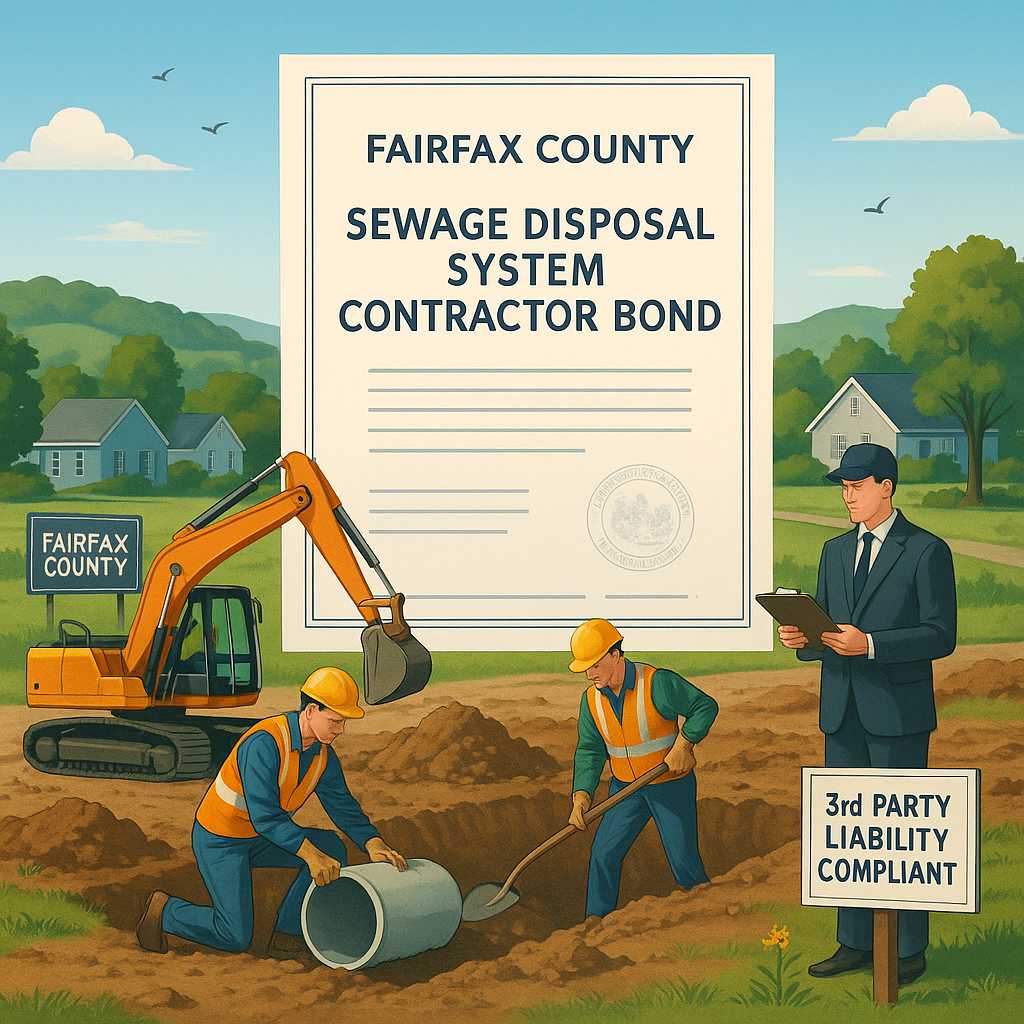
Have you ever wondered what protects you when a contractor installs a septic system on your property? In Fairfax County, Virginia, there’s a powerful tool that keeps sewage disposal contractors honest and accountable. It’s called the Fairfax County Individual Sewage Disposal System Contractor Bond. While it might sound like a mouthful, this bond is essentially a financial promise that safeguards homeowners and the community. Let’s break it down in plain English and see why it matters so much for anyone building, renovating, or maintaining a home in this part of Virginia.
What Is the Fairfax County Individual Sewage Contractor Bond?
Think of this bond as a safety net with three layers. It’s a legal agreement involving the Board of Supervisors of Fairfax County, Virginia, the contractor, and a surety company. The contractor buys the bond, but it’s not insurance for the contractor—it’s protection for you, the public. If a sewage disposal contractor does shoddy work, violates county codes, or causes property damage, the bond provides a way to recover financial losses. It’s a requirement for anyone who wants to work on individual sewage disposal systems in Fairfax County.
You might hear it called a sewer contractor bond, a third-party liability bond, or simply an individual sewage disposal system bond. All these names point to the same thing: a binding guarantee that the contractor will follow the rules. The bond amount is set by the county, and it acts as a pre-funded pool of money that injured parties can tap into when things go wrong.
Why Fairfax County Requires This Bond
Fairfax County is densely populated, and many homes rely on on-site septic systems rather than public sewer lines. A faulty sewage disposal system isn’t just an inconvenience—it can contaminate groundwater, spread disease, and lead to expensive environmental cleanups. The Board of Supervisors of Fairfax County isn’t just a bureaucratic body; they’re the elected officials responsible for keeping the community safe and healthy. Requiring a bond is one of the smartest ways they’ve found to put teeth into local regulations.
By forcing contractors to carry this bond, the county makes sure there’s a financial consequence for cutting corners. Without it, a homeowner might have to sue a contractor who has no assets or has disappeared. The bond fills that gap. It also helps level the playing field for honest contractors who already do quality work and follow the rules.
How Does the Bond Boost Accountability?
Accountability can feel like a buzzword, but when it comes to septic work, it’s as concrete as the soil under your feet. The bond creates a direct line of responsibility. If a contractor installs a system that fails inspection, damages your landscaping, or leaves a mess that violates health codes, you have a clear path to make things right. You don’t have to rely on a handshake or a vague warranty. The bond is a written, enforceable commitment.
This accountability also shapes contractor behavior before a single shovel hits the dirt. Knowing that a claim could be filed against their bond—and that the surety company will come after them to repay any payouts—motivates contractors to stick to best practices. It’s a bit like having a vigilant referee in a game. The bond encourages them to get the proper permits, use correct materials, and follow the county’s technical standards. Ultimately, this leads to third-party liability coverage that protects everyone downstream, from your family to the entire neighborhood.
Who Needs This Bond?
Not every plumber or excavation company needs the Fairfax County Individual Sewage Disposal System Contractor Bond. It’s specifically required for businesses and individuals who construct, repair, or alter individual sewage disposal systems within the county’s jurisdiction. This includes installing new septic tanks, drainfields, pump chambers, and related components. If you’re a homeowner planning a DIY septic project, you probably won’t need the bond, but you’ll still need permits and inspections. However, any professional contractor seeking a license from the county to perform this specialized work must secure the bond before pulling a permit or starting a job.
Even out-of-state contractors who take on a project in Fairfax County must comply. The bond requirement is tied to the work location, not just the contractor’s home base. If you’re a contractor reading this, think of the bond as the key that unlocks the door to legally operate in one of Virginia’s most regulated and lucrative markets.
Understanding Third-Party Liability in Simple Terms
The phrase “third-party liability” can feel abstract. Let’s make it tangible. In this context, the Board of Supervisors of Fairfax County is the first party (they require the bond). The contractor is the second party (they buy the bond). You, the homeowner, or any person or property harmed by the contractor’s work, are the third party. The bond is designed to pay out to that third party when a valid claim is made. It doesn’t cover the contractor’s own tools or business losses—it’s strictly about protecting others.
Imagine this scenario: A contractor installs a septic tank, but a month later, a heavy rain reveals the tank wasn’t sealed correctly. Raw sewage surfaces in your yard and seeps into your neighbor’s property. Both you and your neighbor have suffered harm. The bond can step in to cover the cleanup and repair costs, up to the bond’s penalty amount. That’s third-party liability in action—a financial shield for innocent people stuck in a messy situation.
The Role of the Board of Supervisors of Fairfax County, Virginia
It’s easy to overlook the governing body behind the bond. The Board of Supervisors of Fairfax County sets the rules, determines the bond amount, and enforces compliance. They don’t issue the bonds themselves, but they hold the authority to suspend or revoke a contractor’s license if the bond lapses. Their primary goal is public health and environmental protection, and the bond requirement is a cornerstone of that mission.
When you see “Board of Supervisors of Fairfax County VA Individual Sewage Disposal System Contractor Bond” on a certificate, you’re seeing a link between local government and daily construction work. It’s a reminder that even the most hidden infrastructure—like a septic system buried underground—is subject to community standards. The bond ensures those standards aren’t just words on paper.
How to Get Bonded as a Sewage Contractor
If you’re a contractor, the process is straightforward. You’ll apply through a surety bond company that is licensed to do business in Virginia. The surety will check your credit, financial strength, and experience. A strong financial history often means you’ll pay only a small percentage of the total bond amount as an annual premium—typically between 1% and 5%. The bond itself isn’t a huge expense; it’s an investment in your business credibility.
Once approved, you’ll receive a bond form that must be filed with the Fairfax County permitting office. You’ll need to keep the bond active for as long as you hold your license and perform work. Most bonds renew annually. Don’t let it lapse; a gap in coverage could lead to fines, loss of your contractor’s license, or an inability to get permits. Think of it as the heartbeat of your legal operation in the county.
What Happens When a Claim Is Filed?
No one wants to deal with a claim, but knowing the process helps everyone sleep better. If a homeowner or the county itself believes the contractor violated regulations or caused damage, they can file a claim against the bond. The surety company will then investigate. If the claim is valid and the contractor doesn’t resolve the issue voluntarily, the surety pays the harmed party up to the bond’s limit.
Here’s the crucial part that reinforces accountability: the contractor must repay every penny the surety pays out. This is called indemnity. The bond isn’t a get-out-of-jail-free card for the contractor. Ultimately, the contractor bears the financial burden of their mistakes. This system encourages contractors to fix problems directly before a claim escalates, because a paid claim can damage their reputation and future bonding ability.
Why Homeowners Should Care About This Bond
You might not be a contractor, but as a homeowner, this bond is one of your strongest allies. Before you hire someone to replace your failing septic system, always ask for proof of bonding. A legitimate contractor will be happy to show you their bond certificate. You can also verify with Fairfax County whether a contractor is in good standing.
Knowing the bond exists gives you peace of mind. It’s the difference between hoping a contractor does the right thing and having a concrete backup plan if they don’t. Combined with proper insurance and county inspections, the bond completes a circle of protection that keeps your most valuable asset—your home—safe from underground disasters.
Common Questions About the Sewage Contractor Bond
Is the bond the same as general liability insurance?
No, they serve different purposes. Insurance protects the contractor from many types of accidents and damages on the job site. The bond specifically guarantees compliance with county regulations and provides a direct remedy for violations or damages caused by the contractor’s failure to follow those rules. A contractor might have insurance, but the bond is what ties their performance directly to the county’s requirements.
What is the required bond amount?
The amount can vary, so you’ll need to check with the Fairfax County permitting office or the surety company. Historically, bonds for specialized trades like this often range from $5,000 to $25,000, but the county sets the exact figure. A higher bond amount provides more protection but may increase the premium slightly.
Can a homeowner file a claim without an attorney?
Yes, you can file a claim directly with the surety company listed on the bond. The process usually involves submitting documentation of the harm—photos, inspection reports, and any correspondence with the contractor. While you don’t need an attorney, having a clear paper trail makes your claim stronger.
Does the bond cover defective materials or just workmanship?
If a contractor uses substandard materials that lead to a system failure and that violates county codes, the bond may cover the resulting damage. The key question is whether the contractor’s actions breached the regulations they agreed to follow. The bond is meant to rectify harm caused by that breach, not to act as a general product warranty.
Accountability Beyond the Paperwork
The Fairfax County Individual Sewage Disposal System Contractor Bond might seem like just another government requirement, but its impact is real. It transforms a simple license into a binding promise. It shifts power back to homeowners and helps ensure that the invisible systems beneath our feet work safely for decades. Next time you drive through a neighborhood in Fairfax, remember that behind every properly functioning septic system, there’s likely a bond helping to keep standards high.
Whether you’re a contractor looking to build trust or a homeowner seeking protection, embracing this bond makes sense. It’s a classic win-win. Contractors gain credibility, the county meets its public health goals, and residents enjoy safer, more reliable sewage disposal. And that’s a kind of accountability we can all appreciate.