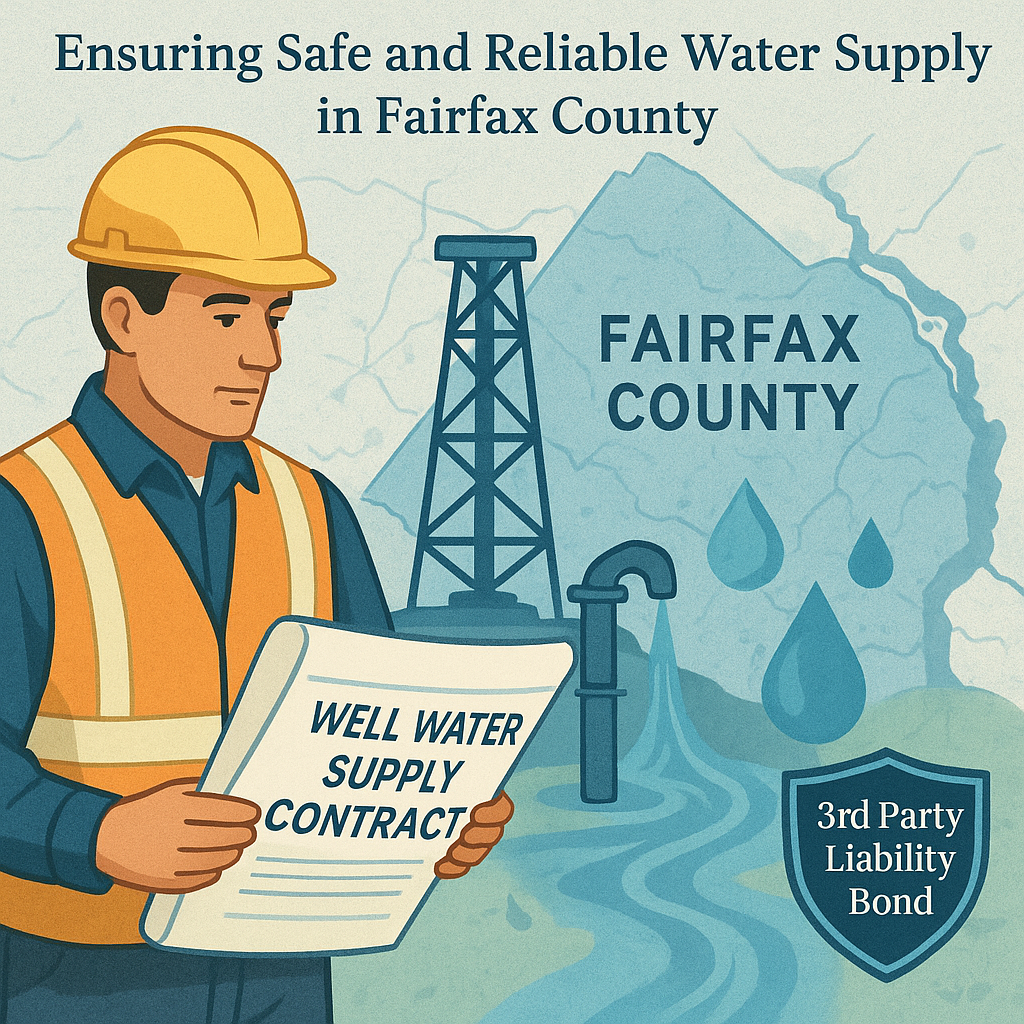
If you’re drilling, repairing, or maintaining a well in Fairfax County, Virginia, there’s a good chance you’ve already heard someone mention a “Well Water Supply Contractor Bond.” Maybe it feels like just another piece of paperwork, or maybe the name alone makes it sound complicated. It’s actually much simpler than it looks. Think of this bond as a promise you make to the county and to your customers—a financial safety net that says, “I’ll do the job right, and I’ll follow the rules.”
Whether you’re a seasoned contractor who’s been in the groundwater business for decades or you’re just starting to explore what a well contractor license requires, understanding this bond is key. Let’s unpack it in plain, everyday language, so you walk away with the clarity you need.
What Exactly Is a Fairfax County Well Water Supply Contractor Bond?
At its core, this is a type of surety bond. Don’t let the word “surety” scare you. A surety bond is not insurance for your business; it’s a three-party guarantee. The county (Fairfax County) asks you, the contractor, to purchase the bond. The bond then protects two groups: the county itself and the homeowners or property owners you serve. If something goes wrong—say, you violate a local well construction regulation or leave a job unfinished—the bond can step in to cover financial damages.
You can picture it like a security deposit you might pay when renting an apartment. The landlord holds that deposit in case the renter damages the property. Similarly, the bond is a financial assurance held by the county that you’ll comply with all ordinances related to well water supply work.
The bond is sometimes listed under names like “Well Contractor – 3rd Party Liability” bond, but the idea remains the same: it creates a layer of protection for the public and the local government.
Why Does Fairfax County Require This Bond?
Fairfax County sits on a mix of geology that makes well water a vital resource for many homes and businesses, especially in more rural pockets outside the heavily developed areas. Building or servicing a well isn’t a casual weekend project—it affects groundwater quality, public health, and the environment. One poorly sealed well casing could contaminate an entire aquifer.
The county’s requirement for a well water supply contractor bond helps ensure that:
- Contractors follow the rules. Fairfax County has detailed regulations about well location, construction standards, grouting, and abandonment. The bond backs up those rules with real financial consequences.
- Property owners aren’t left holding the bag. If a contractor performs substandard work or skips out mid-project, the homeowner has a path to recover money without a lengthy court battle.
- Public health stays protected. By enforcing compliance, the bond indirectly keeps drinking water safe for entire neighborhoods.
In short, the bond is less about red tape and more about accountability. It’s the county’s way of saying, “We trust you to drill responsibly—and this bond is proof of that commitment.”
Who Needs to Get This Bond?
Not everyone who occasionally touches a pipe needs this bond. Generally, you’ll need a Fairfax County well water supply contractor bond if you plan to install, repair, deepen, or abandon a water well within the county. This covers a range of professionals:
- Well drilling companies
- Water pump installers who are directly involved with the well system
- Geothermal drilling contractors if their work intersects with groundwater regulations
- Independent contractors performing well inspections required by real estate transactions
A good rule of thumb: if your work requires a well permit from Fairfax County or a contractor license specifically for well services, you almost certainly need the bond. The county’s Department of Public Works and Environmental Services or the Health Department can give you the exact call, but the bonding requirement is typically baked right into the licensing application.
How Does the Bond Protect Homeowners and the County?
Let’s break down the “3rd Party Liability” aspect. The bond agreement involves three parties:
- The principal: that’s you, the contractor.
- The obligee: Fairfax County, the entity requiring the bond.
- The surety: the bonding company that issues the bond and guarantees payment if a valid claim arises.
When a homeowner hires a bonded contractor, they become a third party who benefits from that protection. Imagine a scenario: you hire a well contractor to drill a new well. They start the job but hit an unexpected budget crunch, stop showing up, and leave the site a muddy mess with a half-cased hole. Without the bond, you might have to sue them directly and hope they have assets. With the bond, you can file a claim against the bond itself. The surety company investigates, and if the claim is legitimate, they pay out up to the bond’s penalty amount. The contractor then must reimburse the surety for every penny paid out. That reimbursement obligation is what keeps contractors motivated to do things right the first time.
Fairfax County is also protected. If a contractor violates a county ordinance in a way that causes environmental damage—say, improper grouting leads to contamination—the county can make a claim to cover cleanup costs or penalties.
How Much Does a Fairfax County Well Contractor Bond Cost?
This is the number-one question on every contractor’s mind. Good news: you don’t need to pay the full bond amount upfront. What you’re really paying is a small percentage of that total, called the bond premium.
While the required bond amount is set by Fairfax County—often in the range of $10,000 to $25,000, but you’ll want to verify the exact figure for your license type—your premium could be as low as 1% to 5% of that amount each year, depending on your personal credit and business financials. For example, if the county requires a $15,000 bond, you might pay between $150 and $750 annually.
Several factors influence your premium:
- Personal credit score. Strong credit often means the lowest rates.
- Business experience. Years in the industry and a clean record help.
- Claims history. A track record with zero bond claims signals reliability.
Even if your credit isn’t perfect, niche surety providers work with contractors in all kinds of situations. You’re not automatically shut out, but the price might be a bit higher.
How to Secure Your Bond in a Few Simple Steps
The process isn’t much harder than getting a quote for car insurance. Here’s the typical path:
- Verify your exact bond requirement. Contact the Fairfax County permitting or licensing office to confirm the bond amount, form language, and any specific endorsements they need.
- Apply with a reputable surety agency. You’ll provide basic business information, your social security number for a credit check, and possibly a few details about your work history.
- Receive a quote. In many cases, you can get a premium quote within hours or even minutes.
- Purchase the bond and get your official bond form. Once you pay the premium, the surety issues the bond document.
- File the bond with the county. You’ll typically submit the original bond form directly to the county as part of your license application or renewal. The bond isn’t active for the county’s purposes until they have that piece of paper in hand.
Pro tip: Keep a digital copy for your records. You’ll need to renew the bond annually, and you don’t want a lapse to stall your license renewal later.
What Happens If a Claim Is Filed Against Your Bond?
Nobody wants to think about claims, but understanding the process ahead of time can save your reputation and your wallet.
If a homeowner or the county files a claim, the surety company will open an investigation. They’ll look at contracts, inspection reports, photos, and any correspondence to determine whether the claim is valid. If it is, the surety will first try to work out a resolution—maybe you fix the deficient work directly. If that fails, the surety pays out the claim up to the bond limit. Here’s the critical part: you are legally obligated to repay the surety for every dollar, plus any legal costs. This is not like insurance where the payout ends the story. It’s more like a co-signer loan; the surety steps in temporarily, but you’re ultimately responsible.
The best claim is the one that never happens. Communicate clearly with clients, document your work thoroughly, and always pull the necessary permits. Should a disagreement arise, try to resolve it informally before it reaches the claim stage.
Is This Bond the Same as General Liability Insurance?
No, and mixing them up can be costly. General liability insurance protects your business from accidents—say, your equipment damages a client’s fence or a visitor trips on a hose. Insurance claims generally don’t require you to pay the insurer back. The well contractor bond, on the other hand, protects the public and the county from your failure to comply with laws or complete contractual obligations, and it operates as a credit line you must repay.
Many contractors hold both. In fact, the county may require a separate insurance certificate alongside the bond. Together, they form a comprehensive safety net for everyone involved.
Renewing and Maintaining Your Bond
This is a continuous requirement. Most bonds are issued for one-year terms, and you’ll need to pay the premium annually to keep the bond active. If your credit improves or your business grows over time, your premium might even go down at renewal. On the flip side, if you let the bond lapse, the county can suspend your license, and you risk having a gap in coverage that could leave you exposed if a past job triggers a late claim.
Set a reminder a month before your bond expires. Your surety agency will usually send a renewal notice, but don’t rely solely on the mail. A proactive approach keeps your business running smoothly.
Common Questions Contractors Ask
Can I use a bond from another Virginia county?
Usually not. Bond requirements are county-specific because the obligee is Fairfax County. Even if you have a similar bond for Loudoun County or Prince William County, Fairfax will want its own bond form. Always check the exact wording the county requires.
Does my bond cover work I did before I bought the bond?
Typically, bonds only cover work performed while the bond is active. If you’re renewing a bond continuously, that coverage window remains unbroken. Buying a brand new bond won’t protect you retroactively for problems from unlicensed periods.
What if I only do small well repairs—do I still need the bond?
Licensing thresholds matter. Fairfax County often requires a license and bond for anyone engaging in well construction, alteration, or rehabilitation, even if the job seems minor. Check with the county directly, but err on the side of caution. A small repair performed illegally can lead to big fines.
Key Takeaways for Your Business
The Fairfax County VA Well Water Supply Contractor Bond isn’t just another bill—it’s a powerful tool that builds trust. It tells homeowners, “I stand behind my work,” and it tells the county, “I respect the rules that keep our water safe.” Whether you’re drilling a new residential well, servicing an old hand-dug one, or decommissioning a well properly, being bonded sets you apart from unlicensed operators who cut corners.
By understanding the bond’s purpose, cost, and process, you’re equipped to navigate the licensing journey without stress. Keep your paperwork in order, choose a surety partner who explains things clearly, and remember: the bond is ultimately on your side. It’s proof that you’re a professional who takes your craft—and your community’s wellbeing—seriously.
If you’re ready to take the next step, reach out to a knowledgeable surety bond agency that specializes in Virginia contractor bonds. They’ll help you match the exact Fairfax County requirements and get you bonded quickly, often on the same day. From there, you can focus on what you do best: bringing clean, reliable water to the people who need it.