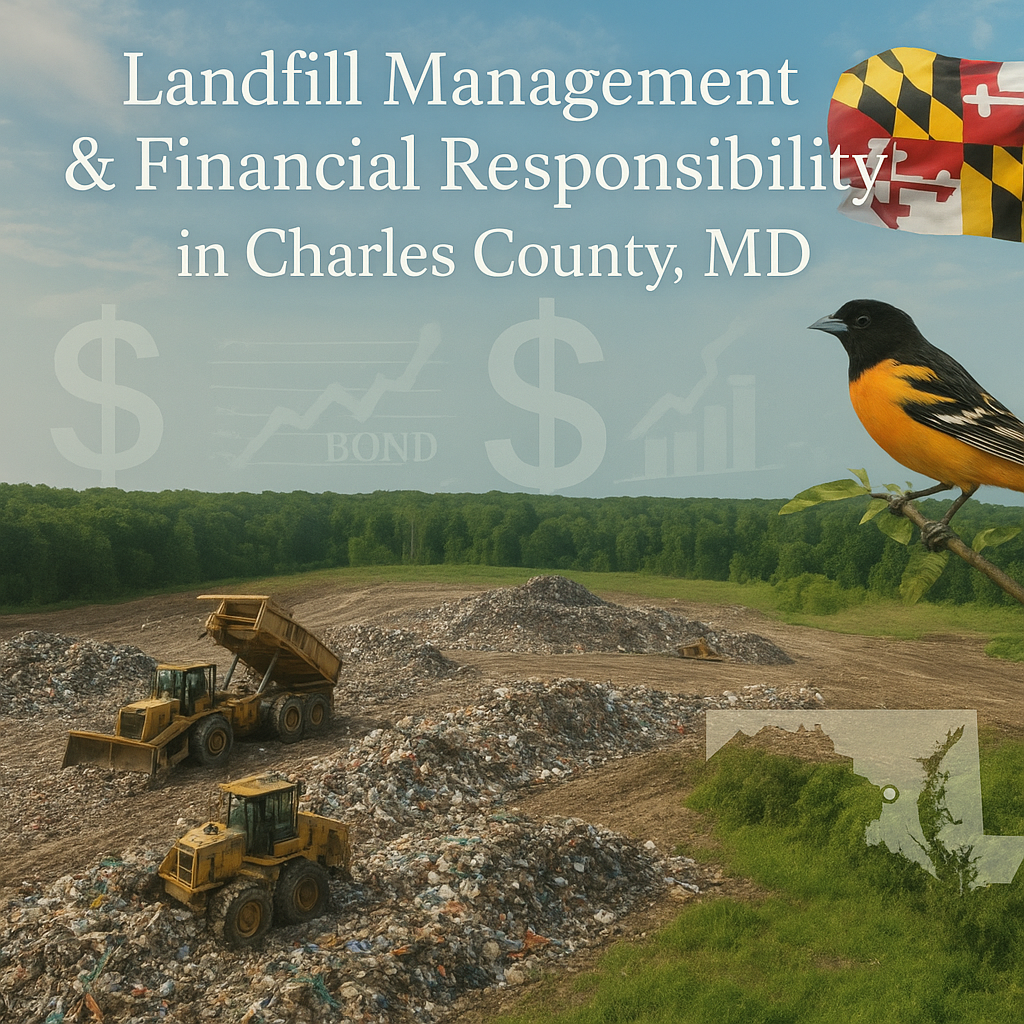
Have you ever wondered what happens to all the trash after the garbage truck rumbles down your street? For folks in Charles County, Maryland, a lot of that material ends up at a local landfill. But behind the scenes, there’s a financial safety net called a surety bond that keeps everything running smoothly. If you’re a business owner, contractor, or just a curious resident, understanding how landfill surety bonds and dumping fees work can save you headaches and money.
What Exactly Is a Landfill Surety Bond?
Think of a surety bond as a promise backed by cash. It’s a three-party agreement between the business (the principal), the government agency requiring the bond (the obligee), and an insurance company (the surety). In simple terms, the bond guarantees that a business will follow all the rules related to landfill operations or waste disposal. If the business messes up—like not paying dumping fees or failing to properly close a site—the bond money covers the costs.
For Charles County, Maryland, a landfill account surety bond is specifically tied to businesses that open an account to dump waste regularly. Instead of paying with cash or credit each time, many haulers and contractors set up an account. The bond ensures that if they rack up fees and then disappear without paying, the county won’t be left holding the bag. It’s a bit like having a security deposit on an apartment, but for trash disposal.
Why Does Charles County Require This Bond?
Picture this: a local construction company hauls dozens of loads of debris to the landfill over a month. They charge their clients, finish the job, and then… vanish. Without a surety bond, the county would have to chase down that payment through legal channels, which takes time and taxpayer money. The bond creates a quicker, more reliable way to recover what’s owed.
But it’s not just about unpaid fees. The bond also acts as an incentive for businesses to stick to environmental rules. Improper waste handling can lead to fines, groundwater contamination, and expensive cleanup efforts. By requiring a bond, Charles County adds a layer of protection for the community and the environment. It’s a safeguard that helps keep our land and water clean for future generations.
Who Needs a Charles County MD Landfill Account Surety Bond?
Not every person dropping off a single load of yard waste needs a bond. Typically, you’ll need one if you’re a business that sets up a commercial dumping account with the county landfill. This includes:
- Waste hauling companies
- Construction and demolition contractors
- Landscaping businesses that produce a lot of green waste
- Roll-off container services
If you’re just a homeowner making a one-time trip to get rid of an old sofa, don’t worry—you’ll likely just pay the gate fee and be on your way. The bond requirement is aimed at high-volume users who accumulate charges over time.
Breaking Down Landfill Dumping Fees in Charles County
Now, let’s talk about the dollars and cents. Dumping fees, often called tipping fees, are what you pay to dispose of waste at the landfill. These fees cover the cost of operating the site, maintaining equipment, monitoring the environment, and eventually closing the landfill properly. In Charles County, the fees can vary based on what you’re throwing away and how much you’re bringing.
For example, municipal solid waste—your everyday household trash—has one rate per ton. Construction and demolition debris might have a different rate. There are often separate charges for items like tires, appliances with refrigerants, or hazardous household materials. The goal is to charge fairly and also encourage recycling. After all, the less we send to the landfill, the longer it lasts and the lower the long-term costs for everyone.
How Are Fees Calculated?
Most commercial account holders pay by weight. You drive your truck onto a giant scale when you enter and again when you leave. The difference is the amount of waste you dropped off, and you’re charged accordingly. It’s straightforward—like buying produce at the supermarket by the pound, only a lot less appetizing.
Some materials might have a flat fee per item, like a mattress or a car tire. The county posts a fee schedule, so you always know what to expect. Staying aware of these fees helps businesses budget their projects and avoid surprisingly large bills at the end of the month.
The Connection Between the Bond and Dumping Fees
Here’s where it all ties together. When a business opens a landfill account, the required surety bond is often set at an amount that reflects their expected monthly usage. For instance, if a hauling company typically racks up $5,000 in tipping fees each month, the county might ask for a bond in the range of $10,000 or more. That way, if the company stops paying, the bond covers the outstanding balance plus some cushion.
This system benefits everyone. The county has a secure way to collect revenue. Honest businesses don’t have to compete with companies that skip out on their bills. And residents can trust that their local landfill is financially stable and environmentally responsible. It’s a quiet behind-the-scenes hero that keeps trash disposal fair and functional.
How to Get a Landfill Surety Bond in Charles County
Getting bonded might sound intimidating, but it’s actually a pretty smooth process. You’ll work with a surety bond agency or insurance broker. They’ll ask for some basic information about your business and your financial history. The cost of the bond—called the premium—is usually a small percentage of the total bond amount. So if you need a $10,000 bond, you might pay just $100 to $300 a year, depending on your credit and experience.
You don’t have to put up the full bond amount in cash. That’s a common misconception. The surety company provides the guarantee, and you pay them a fee for taking on that risk. It’s a lot like buying insurance, except the beneficiary is the county, not you.
Documents You Might Need
- Business license or registration
- Financial statements or credit report
- Details about your projected landfill use
- A completed bond application
Once the bond is issued, you’ll provide a copy to the Charles County landfill to activate or maintain your account. Remember to renew it on time. A lapsed bond can lead to a frozen account, meaning you can’t dump until it’s fixed. That can grind a workday to a halt.
What Happens If a Claim Is Made on the Bond?
A claim is when the county says, “Hey, this business didn’t pay their fees, so we’re tapping the bond.” If that happens, the surety company will investigate. If the claim is valid, they’ll pay the county up to the bond amount. But here’s the key point: that payment isn’t a gift. The business must reimburse the surety company for every penny. That’s what makes a bond different from insurance. With insurance, the company absorbs the loss. With a bond, you’re still on the hook.
So, a bond claim can really sting financially. It’s a powerful motivator for businesses to pay their bills on time and follow the rules. It’s far better to communicate with the county if you’re having trouble making a payment than to let it escalate to a bond claim.
Dodging Common Pitfalls with Landfill Accounts
Managing a landfill account responsibly isn’t rocket science, but a few missteps can cause trouble. Here are some practical tips:
- Track your weights and fees—Don’t rely on memory. Keep a log or use software to record every trip. It helps you catch errors and forecast expenses.
- Pay invoices on time—Set up automatic payments if possible. Late payments can trigger penalties or even a bond review.
- Separate recyclables—Many materials like concrete, metal, and clean wood can be recycled for a lower fee. It’s good for your wallet and the planet.
- Communicate with the landfill staff—If you have a slow season and expect lower volume, ask if your bond amount can be adjusted. Don’t pay for more bond coverage than you need.
Running a tight ship with your account keeps costs predictable and your bond in good standing. It also builds a positive relationship with the county, which can come in handy if an issue ever pops up.
Why This Matters to Every Charles County Resident
You might be reading this and thinking, “I don’t run a waste company, so why should I care?” The answer is simple: the cost of managing trash affects everyone. When businesses skip out on dumping fees or mishandle waste, the cleanup and lost revenue often get passed on to taxpayers through higher county expenses or even increased fees down the road. The surety bond system helps hold businesses accountable, keeping the system fair and costs stable.
Think of it like a neighborhood watch program for the landfill. Everyone does their part, and the whole community benefits from a clean, well-managed environment. Plus, understanding these mechanics can empower you if you ever hire a contractor. You can ask whether they’re properly bonded and insured—it’s a mark of a legitimate, responsible business.
Looking Ahead: Changes and Trends
As landfills fill up and environmental regulations evolve, dumping fees and bond requirements may shift. Charles County, like many areas, is focusing more on diverting waste through recycling and composting programs. Over time, this could mean lower fees for some materials and changes to how accounts are structured. Staying informed through the county’s solid waste department or their website will help you adapt smoothly.
Technology is also making landfill management smarter. Automated scale systems, online account portals, and digital billing are reducing errors and making it easier to keep tabs on your activity. If you’re a business owner, embracing these tools can give you an edge and keep you compliant without the paperwork headache.
The Bottom Line
Landfill surety bonds and dumping fees might not be the most glamorous topic, but they’re the nuts and bolts that keep our communities clean and green. In Charles County, Maryland, the system is designed to balance fairness for businesses with protection for the public. Whether you need a bond for your waste-hauling company or just want to understand the local landfill’s inner workings, knowing these details puts you ahead of the game.
Next time you see a truck piled high with debris heading to the landfill, you’ll have a deeper appreciation for the financial and environmental safeguards riding along with it. And if you’re ever in a position to set up a landfill account, you’ll know exactly what to expect—and how to keep everything running as smoothly as a freshly paved county road.