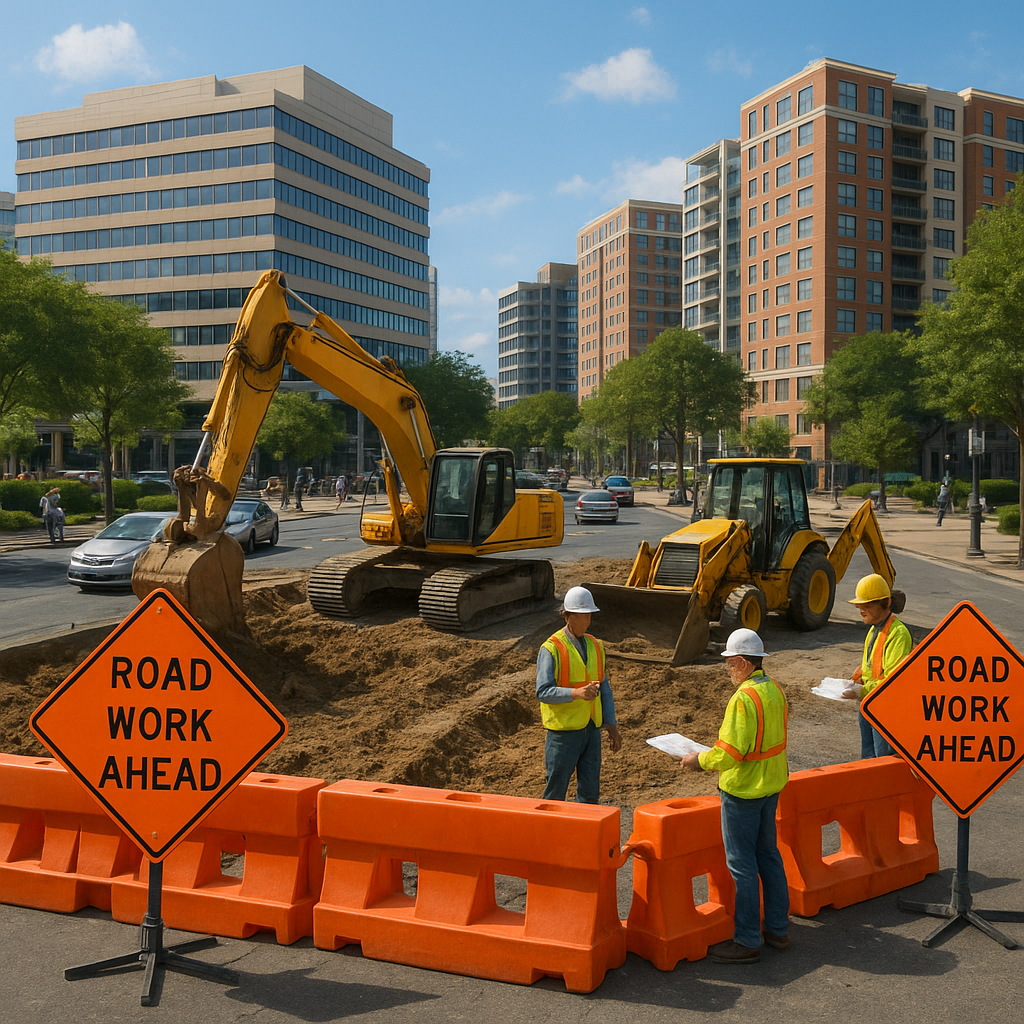
Have you ever noticed a freshly patched strip of asphalt running across your street and wondered how it got there? It likely started with a utility company or a contractor cutting into the road to lay pipes, install fiber optic cables, or repair a water line. While these projects are essential, they also leave behind a scar on our roadways that, if not fixed properly, can turn into a bumpy nightmare, a pothole, or even a safety hazard.
That’s exactly why Arlington County, Virginia, has put a sharper focus on something called a road cut bond. If you’re a contractor, a developer, or a homeowner planning a project that touches the street, this new bond requirement is something you’ll need to wrap your head around. Even if you’re just a resident who loves smooth roads, understanding this rule helps you see how the county protects our shared infrastructure. Let’s break it all down in plain, everyday language.
So, What Exactly Is a Road Cut Bond?
Think of a road cut bond as a promise in the form of money. It’s a financial guarantee that if you dig up a public road, you’ll put it back in excellent condition. If you don’t, the county can use that bond money to hire someone else to do the job right. It’s like a security deposit on an apartment. You get your deposit back only if you leave the place clean and undamaged. Here, you get your bond released only after your patch job passes inspection and holds up over time.
In Arlington County, the road cut bond isn’t just a casual handshake agreement. It’s an official, legally required surety bond tied to a specific permit. You open the pavement, you post the bond. Simple as that. The concept is not brand-new in Northern Virginia, but Arlington has tightened and standardized the process to keep up with the county’s growing demands and to ensure every restoration meets a high bar.
Why Is Arlington Rolling Out a “New” Focus on This Bond?
You might be asking, “Haven’t road cut bonds existed for years?” Yes, they have. But Arlington, like many growing communities, is seeing a surge in utility work. The arrival of high-speed fiber internet, ongoing gas line replacements, and new mixed-use developments means the streets are being opened more than ever. The county realized it needed a more robust, clearly defined system to manage the risk.
The “new” part isn’t about inventing the bond from scratch. It’s about stronger enforcement, clearer requirements for obtaining a bond, and a streamlined process that leaves no room for confusion. The goal? Prevent those annoying, settling trenches that make driving feel like an off-road adventure. Poorly compacted trenches are a pain and a massive expense for the county to fix down the line. The County of Arlington, Virginia is effectively saying: if you benefit from cutting our roads, you bear the full responsibility for making them whole again, for the long haul.
Who Needs an Arlington VA Road Cut Bond?
This isn’t just for huge construction companies. If your project involves disturbing any public right-of-way in Arlington, you’ll likely be involved. The list includes:
- Utility companies: The big players like Dominion Energy or Washington Gas, as well as telecom providers installing 5G or fiber.
- General contractors: Anyone building a new home, a commercial building, or doing a major renovation that requires new or upgraded utility connections dug into the street.
- Plumbers and electricians: When a simple repair on private property necessitates breaking the pavement in front of the house.
- Homeowners: Yep, even you. If you’re managing your own project and pulling a permit to cut the road for a new water line or sewer lateral repair, you’re the one who will need to secure that Arlington VA road cut bond.
Essentially, the person named on the right-of-way permit is the responsible party. The county won’t just take your word that you’ll fix the cut; they want a bond on file.
How Does the Road Cut Bond Process Actually Work?
Let’s walk through a typical scenario without the headache of government-speak. Imagine you’re a contractor about to install a new water tap for a house renovation in Lyon Park.
Step 1: Pulling the Permit
First, you go to the Arlington County Department of Environmental Services to get your right-of-way permit. You’ll submit your plans, traffic control strategy, and the exact location of the cut.
Step 2: The Bond Amount Calculation
This is where the new clarity helps. The county will calculate the bond amount based on the size and type of the cut. It’s not a random number. They typically assess the cost of a full-depth pavement restoration for that square footage, plus a contingency. So, a small 4-foot-by-4-foot cut will require a much smaller bond than trenching 200 linear feet down Wilson Boulevard.
Step 3: Securing the Bond
You’ll need to obtain the VA road cut bond itself. Most contractors get this from an insurance or surety company. You pay a premium—a small percentage of the total bond amount—and the company issues the bond to the county. If you’re a homeowner doing a one-off project, you might not have a relationship with a surety company. In that case, cash bonds or certificates of deposit may be an option, locking up your own funds with the county until the restoration is approved.
Step 4: Do the Work and Restore
After the pipe is laid or the cable is buried, you backfill the trench and perform a temporary patch, usually a layer of cold asphalt. The permanent restoration, matching the surrounding pavement type and grade, must happen within a specified timeframe.
Step 5: The Critical Inspection and Warranty Period
Here’s the part that protects us all. A county inspector comes out to approve the permanent repair. If it’s smooth, level, and properly compacted, you’re on the right track. But the bond isn’t released just yet. Arlington requires a warranty period, often a year or more. They will inspect the patch again after it has survived the extremes of a summer bake and a winter freeze. Only then, when the cut proves durable, does the county release the bond. If it sinks, cracks, or fails, you fix it, or the county calls the bond and uses the money to bring in a fresh crew.
The Big “Why”: Benefits for Everyone
Beyond the bureaucratic steps, why should the average Arlingtonian care about this county of Arlington, Virginia rule?
Protecting Your Ride and Your Wallet: Every pothole or sunken trench repair paid for by the county comes from our tax dollars. By holding the excavator financially accountable from day one, the county shifts the repair cost away from the general fund and back to the entity that created the mess. That means our taxes stretch further.
Safer Streets: A poorly patched road cut can create a dangerous situation for cyclists and motorcyclists. Ensuring a smooth, lasting restoration isn’t just cosmetic; it’s a core safety measure.
Upping the Quality of Work: When a contractor knows their money is on the line for a full year, they suddenly become very, very good at compacting backfill. The financial incentive guarantees a higher quality of work the first time around. No more quick, sloppy patches that crumble in six months.
Cutting Through Common Confusion
It’s easy to mix up different requirements. Let’s clear up a few points.
Is this the same as my contractor’s license bond? No. A contractor’s license bond is a blanket bond that protects consumers from poor workmanship or code violations on your private property. The road cut bond is specifically for disturbances within the public right-of-way and is held by the county.
What if the cut is an emergency? Let’s say a water main bursts at 2 a.m. Utility crews jump into action without a permit in hand. They still must obtain a retroactive permit and post the appropriate bond as soon as practically possible. The urgency of the repair doesn’t excuse the long-term liability. The county is practical about emergencies but inflexible on ultimate responsibility.
How can I check if a project near me has a bond? The county’s permit records are public. If you’re concerned about a cut that looks poorly done, you can contact the Department of Environmental Services and reference the location or any active permit plates displayed at the site. Arlington is proactive, but resident eyes are a huge help.
A Smooth Road Ahead
Look, no one loves bureaucracy for its own sake. But a well-crafted bond requirement is essentially a neighborhood protection tool. Arlington County’s refined approach to the Arlington VA road cut bond is a straightforward deal: you can use our public space to make necessary improvements, but you must leave it in as good as, or better, condition than you found it.
For contractors, it’s now a predictable line item in the cost of doing business, one that ensures a level playing field where quality doesn’t get undercut by corner-cutting. For residents, it’s an invisible shield that keeps our streets smooth and our emergency funds available for actual emergencies, not shoddy patch jobs.
Next time you navigate a seamless piece of pavement knowing full well the ground underneath was recently opened, you’ll have a quiet appreciation for that financial promise—the one making sure the road stays smooth, year after year.