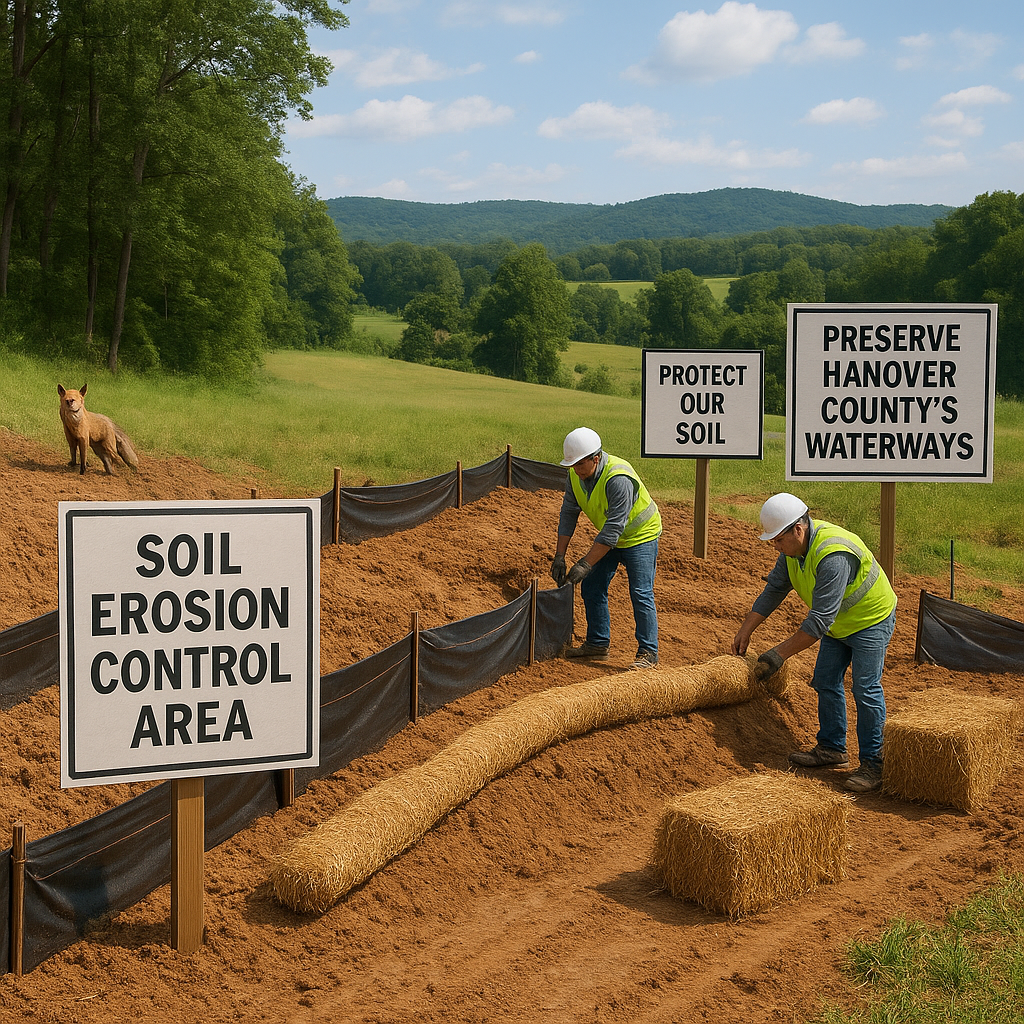
Have you ever watched a heavy rainstorm wash away a patch of bare dirt in your yard? That messy, muddy water isn’t just a nuisance — it’s a sign of soil erosion, and it can cause serious problems downstream. Now imagine that on a much larger scale: a new subdivision clearing acres of land, a road-widening project, or a commercial building site. Without proper safeguards, all that exposed soil can clog waterways, hurt wildlife, and even lead to flooding. That’s exactly why Hanover County, Virginia, has rolled out a fresh approach to keeping its land and water clean. The county is strengthening its soil erosion and sediment control efforts with a new tool: a land disturbing performance bond.
What’s the Big Deal About Soil Erosion and Sediment Control?
Let’s break it down without the technical jargon. Soil erosion happens when wind or water moves dirt from one place to another. A little bit is natural, but when we clear land for construction, farming, or even a big landscaping project, erosion can speed up dramatically. Sediment is the dirt that gets carried away. When that sediment ends up in creeks, rivers, and lakes, it clouds the water, harms fish and plants, and fills in stream channels. Over time, this can make flooding worse and increase the cost of treating our drinking water.
Think of erosion control as putting a protective bandage on the earth. Silt fences, straw blankets, temporary seeding, and retention ponds are all ways to keep soil in place while a project is underway. Many states and counties have rules requiring these measures. Hanover County, long known for its rolling farmland and growing neighborhoods, takes those rules seriously. Their new strategy adds a financial layer of accountability that promises to make a real difference.
Hanover VA Introduces the Land Disturbing Performance Bond
So what’s new in Hanover? The county is now requiring a soil erosion and sediment control land disturbing performance bond for certain projects. If the phrase “performance bond” sounds intimidating, don’t worry — it’s simpler than it sounds. A performance bond is essentially a financial promise. A developer, contractor, or landowner sets aside money (or secures a bond through an insurance company) that acts as a safety net. Think of it like a security deposit when you rent an apartment. If you leave the place spotless, you get your deposit back. If you damage the carpet, the landlord uses the deposit to fix it.
In this case, the bond guarantees that soil erosion controls will be properly installed and maintained throughout the project. If a builder fails to keep silt from washing into the road or a nearby stream, the county can step in and use the bond money to fix the problem quickly — without tapping into taxpayer dollars.
How Does the Bond Work in Real Life?
Picture this: a developer wants to build a new neighborhood with fifty homes in Hanover County. Before they can move a single scoop of dirt, they must submit an erosion and sediment control plan for approval. Once the plan gets the green light, the developer posts a performance bond with the county. The bond amount is calculated based on the size of the disturbed area and the complexity of the project. It’s designed to cover the cost of fixing any erosion-related failures.
During construction, county inspectors visit the site regularly. If they find a silt fence that’s fallen over, a sediment basin that’s overflowing, or a slope that’s washing away, they’ll issue a notice. The developer gets a chance to correct it. But if they don’t — or if they walk away from the job — the county can call on that bond. The money is used to hire a contractor who will come in and make things right. When the project is finished and all disturbed areas are stabilized with grass or other cover, the bond is released. Simple, fair, and effective.
Who Needs a Land Disturbing Performance Bond in Hanover?
Not every backyard gardening project will trigger this requirement. The bond generally applies to larger land-disturbing activities, such as:
- Residential subdivisions and apartment complexes.
- Commercial building sites and shopping centers.
- Road construction and utility line installation.
- Industrial parks and large institutional projects.
- Any land clearing that exceeds a certain acreage threshold (often one acre or more, though smaller sites near sensitive waters may also be included).
If you’re a homeowner putting in a small patio or planting a garden, you likely won’t need a bond. But if you’re a contractor clearing several lots or a farmer converting a large wooded area into pasture, it’s smart to check with Hanover County’s department of public works or community development. They can tell you exactly what permits and bonds apply to your situation.
Why This Strategy Makes Sense for Hanover County
You might be asking, “Doesn’t this slow down construction and add red tape?” It’s a fair question. But when you dig a little deeper, you see the benefits are huge.
Cleaner Water for Everyone — By ensuring erosion controls are in place and working, the bond helps prevent sediment from reaching the Pamunkey River, the Chickahominy River, and the countless creeks that crisscross the county. That means healthier fish habitats, safer places to swim, and lower treatment costs for drinking water.
Flood Reduction — Sediment builds up in drainage ditches and stream channels, making them shallow and more likely to flood during heavy rains. Keeping soil on site reduces that buildup and protects roads, homes, and businesses.
Taxpayer Savings — Before bonds were required, if a developer went bankrupt or abandoned a muddy mess, the county (and by extension, taxpayers) often had to pay for the cleanup. The bond shifts that financial responsibility back where it belongs — on the person doing the disturbing.
Level Playing Field — Reputable builders who always follow the rules no longer have to compete with those who cut corners to save money. The bond makes sure everyone plays by the same set of rules, which rewards quality and responsibility.
An Analogy: Building a House of Cards vs. a House on a Rock
Think of soil like the foundation of our environment. Without solid ground in place, everything else gets shaky — much like building a house of cards on a wobbly table. Sediment washing away is like that table tilting. The performance bond acts as a stabilizer, ensuring the table stays level so the cards (our water quality, wildlife, and community infrastructure) stay standing. It’s a small upfront step that prevents a much bigger collapse later.
What Should You Do If You’re Planning a Project in Hanover?
Whether you’re a seasoned contractor or a local business owner dreaming of a new storefront, a little preparation goes a long way. Here’s a simple roadmap:
- Contact Hanover County early in your planning process. They can walk you through the erosion and sediment control ordinance.
- Hire a qualified professional to design your erosion control plan. This plan will show exactly how you’ll manage stormwater and keep sediment on site.
- Submit the plan for review and approval. The county will check that it meets state and local standards.
- Secure your land disturbing performance bond. Work with an insurance agent or bonding company familiar with these types of bonds.
- Install the controls before you start clearing or grading. Keep them maintained until the site is permanently stabilized.
- Schedule a final inspection once the project is complete and grass or other vegetation is established. Get your bond back!
Following these steps may seem like extra work, but they protect you from fines, stop-work orders, and costly repairs. More importantly, they protect the community you’re building in.
Common Questions About the Hanover VA Soil Erosion Bond
Will this make housing more expensive?
The bond cost is typically a small fraction of the overall project budget and is refundable once the work is done. Any increase is minimal compared to the long-term savings from cleaner water and reduced flood damage. Most developers find that doing it right the first time is far cheaper than cleaning up a messy violation.
What happens if a developer fights the requirement?
The county has the authority to withhold permits or issue stop-work orders. Without the bond, the project simply can’t proceed. This ensures compliance isn’t optional.
Does this apply to farms?
Agricultural activities often have some exemptions, but large-scale land clearing or conversion may still trigger erosion control requirements. Farmers should contact the Hanover County Soil and Water Conservation District for guidance tailored to agriculture.
Looking Ahead: A Greener, Cleaner Hanover
Hanover County is growing, and growth brings both opportunities and challenges. By tying land-disturbing activities to a performance bond, the county is planting seeds for a future where new homes, businesses, and roads can thrive without smothering the natural beauty that makes this part of Virginia so special. It’s a practical, no-nonsense solution that puts the responsibility for soil stewardship squarely on the shoulders of those who benefit from the land.
Next time you see a construction site surrounded by orange silt fencing, you’ll know a little more about the invisible financial safety net backing it up. And if you’re ever planning your own project, you’ll understand why that bond is more than just paperwork — it’s a promise to your neighbors and to the rivers that give Hanover County its charm.
Thinking about breaking ground in Hanover? Touch base with the county’s erosion and sediment control staff first. They’re the real experts, and they’re ready to help you build responsibly.