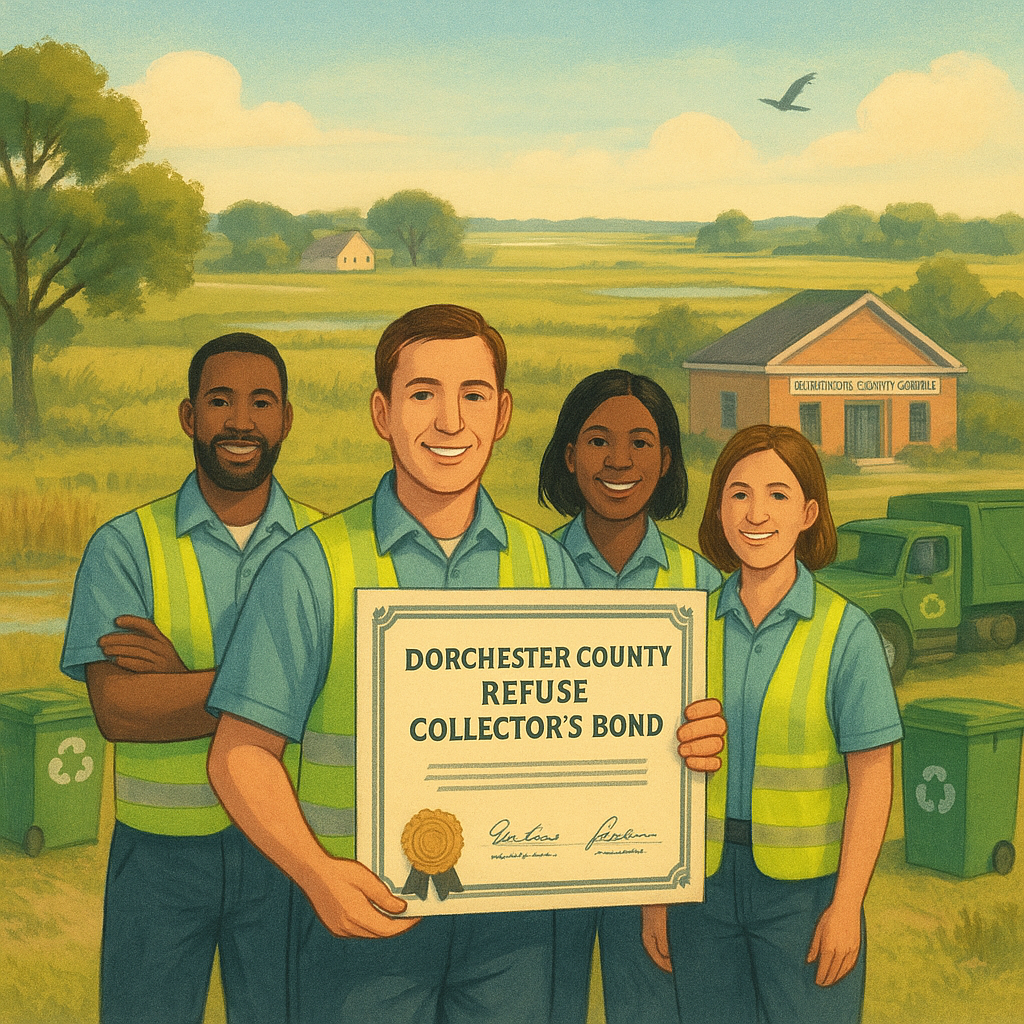
Picture this: you wheel your trash bin to the curb on a crisp Monday morning, confident it will be empty by the time you get home from work. That small ritual relies on a web of trust — trust that the collector will show up, handle your waste responsibly, and obey local rules. In Dorchester County, Maryland, that trust is now backed by something solid: a refuse collector’s bond. The County Council of Dorchester County has taken a smart step to strengthen waste management for everyone who lives and works here. Let’s unpack what that means, why it matters, and how it quietly protects your neighborhood.
What Exactly Is a Refuse Collector’s Bond?
Think of a refuse collector’s bond as a three-way promise. It’s not insurance for the trash hauler — it’s a financial guarantee for you and Dorchester County. A surety company steps in and says, “If this collector doesn’t play by the rules, we’ll make it right.” The bond involves three parties: the refuse collector (who needs the bond), the County Council (who requires it), and the surety company (who backs it).
Here’s a simple analogy. Imagine you lend your lawnmower to a neighbor. You ask for a small deposit just in case they return it damaged. The refuse collector’s bond works the same way, but on a much larger scale. It gives the county and residents a safety net if a collector dumps waste illegally, skips mandatory recycling rules, or vanishes with prepaid service fees. The bond isn’t optional — it’s a ticket to operate legally in Dorchester County.
Why Dorchester County Requires This Bond
You might be wondering, “Why add another requirement for local businesses?” The Dorchester County Council isn’t piling on red tape for no reason. This bond tackles real headaches that can pop up when waste management goes sideways.
Protecting Public Health and the Environment
Improper refuse disposal can leak harmful substances into the Chesapeake Bay watershed, foul our air, and attract pests. A bonded collector has a powerful incentive to handle garbage, recycling, and yard waste exactly as county ordinances dictate. If they cut corners, the bond offers a way to fund cleanup and cover damages without taxpayers footing the bill.
Shielding Residents from Fly-by-Night Operators
We’ve all heard horror stories about a “too good to be true” trash hauling deal. A new company collects months of fees upfront, then disappears. Without a bond, homeowners are left holding the bag — and the stinky bins. The refuse collector’s bond creates financial accountability. If a hauler breaches their contract or breaks the law, residents and the county have a clear path to seek compensation.
Upholding Fair Competition
Honest waste management companies already invest in proper equipment, training, and disposal methods. The bond levels the playing field. It stops shady operators from undercutting prices by ignoring safe disposal laws. When everyone follows the same rulebook, quality rises across the board, and Dorchester County wins.
How the Bond Boosts Waste Management Every Day
You may not notice the bond working, but its ripple effects touch your daily life. Reliable trash pickup isn’t magic — it’s built on a foundation of trust and strict oversight.
Consider how the bond elevates local service. Collectors know that repeated violations can trigger claims, which then raise their bonding costs or even revoke their ability to do business. So they double down on training drivers, maintaining trucks, and sticking to collection schedules. For you, that means fewer missed pickups and less roadside litter caused by overloaded bins or careless haulers.
Beyond curb-side convenience, the bond fuels wider environmental wins. Dorchester County’s refuse disposal rules aim to reduce landfill pressure and boost recycling rates. A bonded collector is financially motivated to separate recyclables correctly and avoid illegal dumping. Over time, that small nudge adds up to cleaner marshes, healthier waterways, and a community that truly lives up to the “Heart of Chesapeake” spirit.
Who Needs a Refuse Collector’s Bond in Dorchester County?
If you’re launching a trash collection business or already operate one in the county, this requirement likely applies to you. The County Council casts a wide net to cover various waste streams. Typically, any person or company that collects, transports, or disposes of residential or commercial refuse within Dorchester County must secure a bond. That includes:
- Curbside garbage and recycling pickup services
- Roll-off dumpster rentals for construction and home cleanouts
- Specialty waste haulers dealing with yard debris or bulk items
The exact bond amount and terms are set by county ordinance. If you’re unsure whether your operation falls under the rule, a quick call to the County Council’s licensing office can clear things up. Better to ask early than risk fines or a stalled business launch.
How to Get a Refuse Collector’s Bond (It’s Simpler Than You Think)
Applying for a surety bond sounds intimidating, but the process has become refreshingly straightforward. Most haulers can secure their Dorchester County refuse collector’s bond in a matter of days.
Here’s the typical path:
- Find a reputable surety bond agency. Look for one familiar with Maryland local government requirements. Many agencies let you apply online.
- Share basic business and personal details. The surety will check credit history and business finances. Don’t panic — bonds for solid waste professionals are often accessible even with less-than-perfect credit.
- Review the premium quote. You won’t pay the full bond amount. Instead, you pay a small percentage, often between 1% and 10% of the total bond value. Your rate depends on credit strength and business experience.
- Receive your bond form. Once approved, the surety issues the official bond document.
- File it with Dorchester County. Submit the bond alongside your license application or renewal. The County Council keeps it on file as your promise to operate responsibly.
Think of the premium as a fee for a powerful credential. It tells customers and regulators, “We stand behind our work, and we’ve got the backing to prove it.”
What Happens If a Collector Violates the Rules?
No system is perfect, and mistakes happen. The bond exists for exactly those moments. Suppose a refuse collector repeatedly misses pickups without refunds, dumps debris in a protected wetland, or ignores Dorchester County’s specific refuse disposal codes. Any harmed party — a resident, another business, or the county itself — can file a claim against the bond.
The surety company then investigates. If the claim is valid, the surety pays out up to the bond’s full limit. That money can cover cleanup costs, unpaid fees, or damages. And here’s the kicker: the collector must pay back every penny of that payout to the surety. This reimbursement model digs deep into a hauler’s wallet, creating a massive incentive to avoid violations in the first place. The bond transforms a vague “be good” guideline into a concrete financial responsibility.
The Bigger Picture: A Safer, Cleaner Dorchester County
The refuse collector’s bond is not a standalone idea. It fits neatly into Dorchester County’s broader mission to elevate waste management and safeguard natural treasures like Blackwater National Wildlife Refuge and Fishing Creek. When the County Council tightens up requirements for refuse haulers, everyone benefits in ways big and small.
For local families, it means quieter confidence that toxic junk won’t end up in a roadside ditch. For businesses, it fosters a landscape where rule-followers thrive and rogue dumpers get weeded out. For the environment, it means less plastic choking our marshes and fewer hazardous chemicals seeping into groundwater. The bond might seem like a bureaucratic checkbox, but it’s truly a quiet guardian that nudges behavior toward the common good.
Next time you see a garbage truck rumbling down your street, remember the invisible promise riding along. Dorchester County and its refuse collectors are bound together — literally bonded — to keep this corner of Maryland beautiful and healthy. That’s a win worth celebrating, right at the curb.