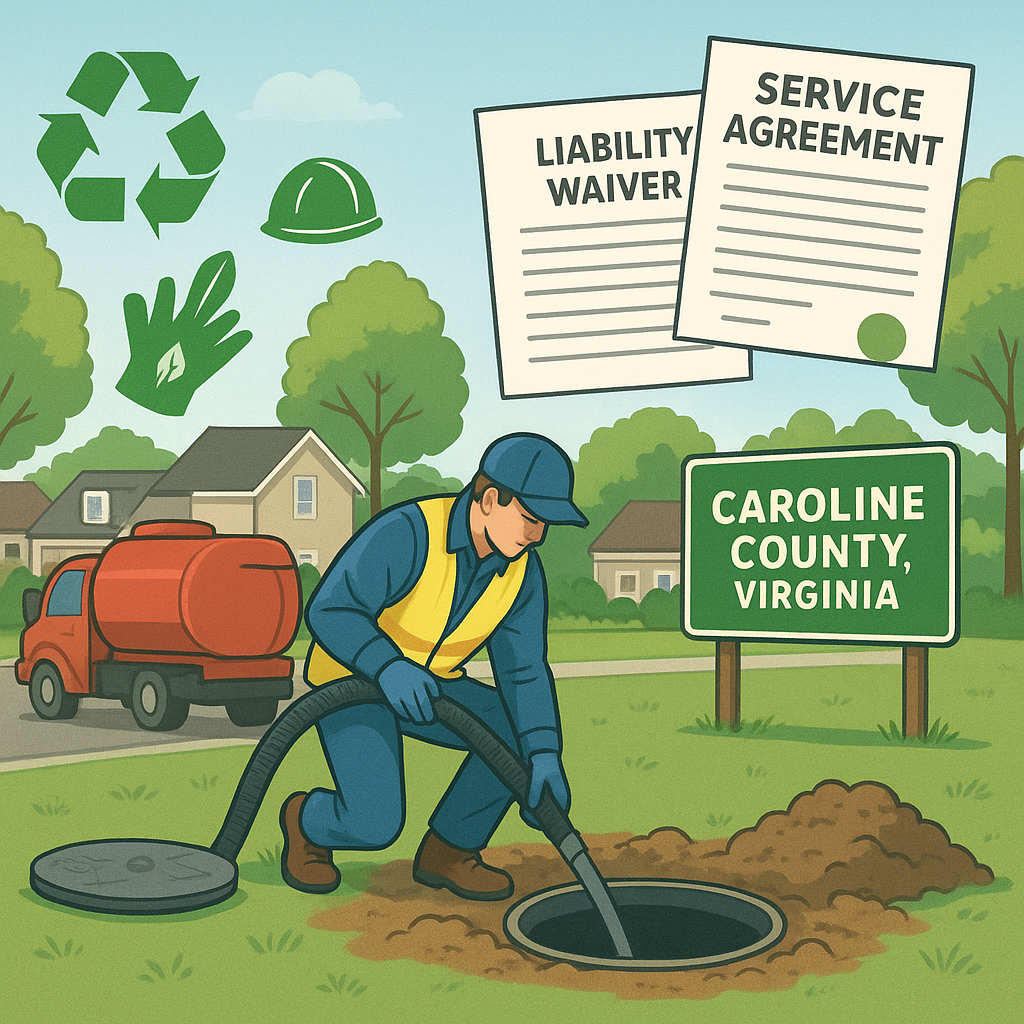
If you’re installing, repairing, or maintaining septic systems in Caroline County, Virginia, you already juggle a lot. Permits, soil testing, tight crawlspaces, and unpredictable weather are part of the job. But there’s one piece of paper that can leave even experienced pros scratching their heads: the Caroline VA Sewage Disposal Services Bond. Maybe you’ve heard it called a septic contractor bond, a license bond, or a third-party liability bond. No matter the name, understanding it is the key to staying compliant and building trust with every homeowner you serve. Let’s break it all down in plain English, no legal jargon required.
So, What Exactly is a Sewage Disposal Services Bond?
Think of this bond as a financial promise, but with three parties involved. It’s a three-way handshake between you (the septic contractor), the County of Caroline (the obligee), and a surety company. Here’s how it works: you purchase the bond from a surety. The bond guarantees that you’ll follow all local rules, codes, and regulations when you do septic work. If you don’t, and someone suffers a financial loss because of it, the bond can pay out to make things right. It’s not insurance for your tools or your truck. It’s a protection net for the public and the county.
To make it crystal clear, picture this: You accidentally damage a homeowner’s drain field during an installation, and the fix isn’t covered by your general liability policy in the way the county requires. Or perhaps you forget to pull a necessary permit, resulting in a fine. The bond can step in to cover those costs up to the bond amount. Caroline County demands this because sewage disposal directly affects public health and the environment. One mistake can contaminate groundwater, and nobody wants that.
A Quick Analogy: The Security Deposit You Already Understand
If you’ve ever rented an apartment, you put down a security deposit. That deposit assures the landlord that if you damage the property or skip out on rent, they have a way to recover some money. A septic contractor bond works the same way, just on a larger, more regulated scale. Caroline County says, “Show us your bond. It’s your deposit to guarantee you’ll do the work safely and legally.” The county doesn’t hold your cash, but they hold you accountable through the bond.
Why Does the County of Caroline, Virginia Require This Bond?
It all comes down to one word: protection. Septic work isn’t like painting a fence. If a mistake stays buried underground, it can lead to untreated sewage leaking into yards, streams, and even drinking water sources. Caroline County is a beautiful rural area, and preserving its land and water is a top priority. The bond requirements, tied to the County of Caroline VA sewage disposal services regulations, create a safety layer that protects:
- Homeowners and property owners: If your work fails, they have a route to seek financial relief without a drawn-out court battle.
- The county itself: Enforcement becomes smoother. The bond gives the county leverage to demand compliance.
- Reputable contractors: It levels the playing field, ensuring all licensed operators carry the same baseline responsibility.
Without this bond, a fly-by-night operator could do shoddy work, take the cash, and disappear. The bond requirement filters out many who aren’t serious about their business.
Who Needs a Septic Contractor Bond in Caroline County?
Pretty much anyone performing sewage disposal services within the county limits will need to provide proof of bonding as part of their licensing or permitting process. This typically includes:
- Septic system installers
- Septic tank pumpers and haulers
- Septic system inspectors
- Contractors doing repairs on drain fields or distribution boxes
If you’re a sole proprietor just starting out, or a long-standing company with a dozen employees, the requirement is the same. Before you can pull a permit for a job in Caroline County, the Planning or Environmental Services department will check that your bond is active and on file. It’s not optional; it’s part of doing business here.
How Does the Bond Protect Homeowners? (The Third-Party Liability Angle)
The phrase 3rd party liability might sound intimidating, but it simply means the bond protects someone other than you and the surety company. The “third party” here is usually a homeowner, a neighbor, or even the county itself. Let’s paint a real-world picture.
Imagine Mrs. Johnson in Woodford hires you to replace her failing septic system. You complete the work, but six months later, the system backs up into her basement during a light rain. An engineer discovers the soil absorption area was undersized, violating county code. Mrs. Johnson now needs a totally new drain field and remediation, costing tens of thousands of dollars. She files a claim on your Caroline VA sewage disposal services bond. If the investigation finds you failed to meet code, the surety pays Mrs. Johnson up to the bond’s full penalty. Then, you must repay the surety every penny. The bond gave Mrs. Johnson a straightforward path to recovery without emptying her savings.
Bond Amounts: What’s the Magic Number?
Caroline County sets a specific bond amount depending on the scope of your work. Many municipalities require a bond in the range of $10,000 to $25,000 for septic contractors, but you’ll need to verify the exact figure with the Caroline County department that regulates sewage disposal. Sometimes the amount is flat, sometimes it’s tiered. It’s your responsibility to know this number before applying. The bond amount is the maximum the surety will pay out for all claims against your bond during the term. It’s not a per-claim pot. If Mrs. Johnson’s claim uses up the entire amount, other claimants that same year may have to wait or pursue you directly. So it’s wise to perform quality work to begin with.
How Much Does a Caroline County Septic Bond Cost?
Here’s some good news: you don’t pay the full bond amount upfront. You pay a small percentage, called a premium. For contractors with good personal credit and a clean business history, the premium often falls between 1% and 3% of the bond amount annually. So if the required bond is $10,000, your out-of-pocket cost to get bonded might be as little as $100 to $300 per year. That is a manageable expense for the peace of mind and licensing clearance it provides. Several factors influence your exact rate:
- Personal credit score: This is the biggest factor. Strong credit = low premiums.
- Business financials: Established businesses may share financial statements to demonstrate stability.
- Experience and claims history: If you’ve had previous bond claims, expect a higher rate.
Even if your credit isn’t perfect, you can almost always get bonded. A specialized surety agency can guide you toward programs that accept lower credit scores, though the premium percentage will be higher.
Step-by-Step: How to Get Your Bond
Obtaining your septic contractor bond for Caroline County VA doesn’t have to be a headache. Follow this simple path:
- Confirm your bond requirement. Reach out to the Caroline County Planning or Environmental Services Department. Get the official bond form, required amount, and any specific language they mandate.
- Gather your details. You’ll need your business name, physical address, contact information, and possibly your VA contractor license number. The bond application will also ask for your social security number for a credit check.
- Work with a bond specialist. Don’t just go to any insurance agent. Look for a surety bond agency that understands contractor license bonds in Virginia. They can shop your application to multiple surety markets to find the best rate.
- Pay the premium. Once approved, you’ll pay a small premium. The surety then issues the bond document. Some can even email a digital copy the same day.
- File the bond with the county. Send the original executed bond form to the County of Caroline as instructed. Keep a copy for your own records. Now you’re clear to pull permits.
What Happens When a Claim is Filed?
Let’s not sugarcoat it—bond claims are serious. If a homeowner or the county files a claim against your sewage disposal services bond, the surety company launches an investigation. They’ll look at the contract, the code, and the work performed. If the claim is valid, the surety typically tries to resolve the issue quickly. They may pay the claimant directly. But here’s the critical part you must remember: a bond is not like insurance where the insurer takes the hit. You are legally obligated to indemnify the surety company. That means you must reimburse them for every dollar paid out on a claim, plus any legal costs incurred.
Claims can damage your reputation and make it harder, and more expensive, to get bonded in the future. The best defense is clear communication, documentation, and standing behind your work. Address small complaints before they snowball into full-blown claims.
Common Myths About Septic Contractor Bonds (Busted)
- “My general liability insurance covers the bond requirement.” No, it doesn’t. Insurance protects you from accidents, like dropping a tool on a client’s foot or fire damage. A bond guarantees compliance with laws and protects against intentional code violations or failure to finish a job per the contract. They serve different purposes, and the county wants both.
- “The bond protects my business if something goes wrong.” Not exactly. The bond pays claims on your behalf, but you must pay the surety back. It’s a credit extension, not your safety net. Your business is ultimately on the hook.
- “Once I’m bonded, I’m covered forever.” Bonds have a term, usually one year. You’ll need to renew it annually and provide updated information. A lapse could halt your ability to work in Caroline County immediately.
Smart Tips for Septic Contractors in Caroline County
Want to avoid bond headaches and keep your business thriving? Keep these practical pointers handy:
- Know the local code inside out. Caroline County’s sewage disposal regulations might differ from neighboring counties. Never assume. Visit the county website or call the department before starting a new design.
- Document everything. Take photos, save email correspondence, and keep detailed logs of soil tests and installation steps. Good records can shut down a false claim before it gains traction.
- Separate your bond and insurance. Work with a surety agency that can also review your general liability coverage. Make sure there are no gaps that leave you exposed.
- Renew early. Mark your calendar 30 days before your bond expires. A last-minute scramble could delay permit approvals and anger clients.
- Build relationships. Homeowners who trust you are less likely to file a bond claim if a minor issue arises. They’ll call you first to make it right.
Frequently Raised, Honestly Answered
Do I need a bond if I’m just pumping tanks?
In many jurisdictions, including Caroline County, septic haulers and pumpers must absolutely carry a bond or demonstrate financial responsibility. Pumping involves transporting sewage—if a spill happens, the consequences are serious. Always check with the county’s Environmental Services staff to confirm.
Can I get bonded with a bankruptcy in my past?
Yes, it’s possible. A bankruptcy won’t automatically disqualify you. Surety companies will look at the circumstances and your current credit situation. You may pay a higher premium, but many agencies have programs for contractors working to rebuild their financial standing.
What if I let my bond lapse but I’m in the middle of a big job?
Do not let this happen. If your bond lapses, any permit you’re working under may become invalid. The county could issue a stop-work order. That means delays, angry clients, and potential legal trouble. Protect your revenue stream by treating bond renewal as non-negotiable.
Wrapping Up: Your Bond as a Business-Building Tool
Instead of viewing the Caroline VA sewage disposal services bond as red tape, reframe it as a marketing asset. Tell your potential customers that you’re bonded. Explain that it’s an extra layer of protection for them, required by the county, and evidence of your professional integrity. In a field where trust is everything, that small piece of paper can set you apart from the competition. Are you ready to secure your bond and get to work? The right surety partner will make the process fast, affordable, and almost painless. Your next septic project in Caroline County starts with that simple, powerful promise.