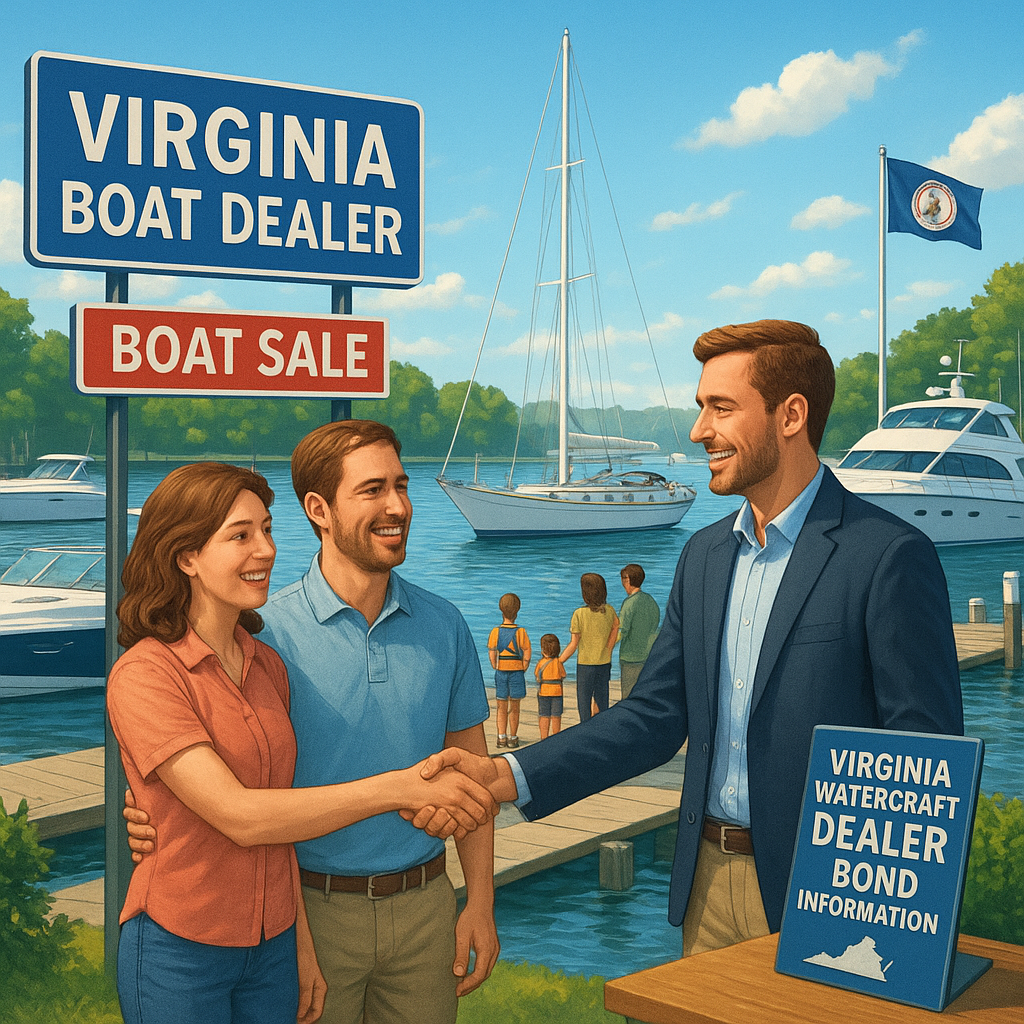
If you’re dreaming of selling boats along the Chesapeake Bay, on the shores of Smith Mountain Lake, or anywhere in the Old Dominion, there’s a piece of paperwork you’ll need to get familiar with. It’s not exactly as exciting as picking out your first hull to sell, but it’s just as important. We’re talking about the Virginia Watercraft Dealer Bond. Think of it as a promise wrapped in a financial safety net—one that protects your customers and keeps your business in good standing with the Commonwealth.
What Exactly Is a Virginia Watercraft Dealer Bond?
Let’s break this down without any confusing legal jargon. A Virginia Watercraft Dealer Bond is a type of surety bond. Now, a surety bond isn’t like your typical car or home insurance policy. Instead, it’s a three-party agreement. You have the dealer (that’s you, the principal), the state agency requiring the bond (the Virginia Department of Wildlife Resources, or DWR, the obligee), and a surety company that backs the bond. The bond guarantees that you will play by the rules. If you don’t, and someone suffers a financial loss because of it, the bond steps in to make things right.
In practical terms, this bond is a legal requirement for anyone who wants to buy, sell, or broker watercraft in Virginia. This includes boats, jet skis, and other personal watercraft. You cannot get your dealer license without it. It’s the state’s way of saying, “We trust you to do business honestly, but we’re going to ask for a backup plan just in case.”
Why Does the Commonwealth of Virginia Require This Bond?
You might be wondering, “Why all the fuss over a bond?” The answer sits squarely on consumer protection. Imagine buying a used bowrider for your family’s summer trips. You hand over a significant chunk of change, only to discover the dealer didn’t actually have the legal right to sell that boat, or worse, they took your money and vanished before delivering the title. That’s a nightmare scenario. The watercraft dealer bond requirement helps prevent that.
The Commonwealth of Virginia uses the bond to enforce its laws and regulations found in the Virginia Administrative Code. If a dealer engages in fraud, fails to pay required taxes and fees, issues bounced checks, or violates other terms of their license, the bond provides a way for wronged parties to recover their losses. It’s a layer of accountability that helps keep the marine industry honest and thriving. It also means you, as a new dealer, are announcing to the world that you stand behind your business practices.
How Does a Boat Dealer Bond Actually Work?
An analogy might help here. Think of the bond as a security deposit held by a trusted friend. You’re the dealer, the state is the friend, and the surety company is the one who actually puts up the cash for the deposit. You pay a small, non-refundable fee (the premium) for this service. As long as you follow the rules, that security deposit just sits there, and you never think about it. But if you break your promises, the state can make a claim on that deposit to repay a customer or settle unpaid fees.
Here’s the crucial part: the bond is not insurance for you. If a claim is paid out, the surety company will come to you to repay every single penny, plus legal costs. So, while the bond protects consumers and the state, it ultimately leaves you on the hook for any missteps. This setup is a powerful motivator to run a clean, transparent dealership.
How Much Bond Coverage Do You Need?
The required bond amount for a Virginia watercraft dealer is set by law. Currently, you’ll need a $20,000 bond. This isn’t how much you pay out of pocket, though. That $20,000 is the maximum amount the surety company will pay out for valid claims against your bond. The amount you actually pay is a fraction of that total.
For a new dealer with decent credit, the annual premium often ranges between $100 and $500. Some companies offer multi-year discounts, which can help with your budget. The exact price depends on your personal credit score, your business financials, and experience in the industry. So, don’t let the $20,000 figure intimidate you—you’re not writing a check for that amount. You’re simply securing a line of financial protection.
Step-by-Step: How to Get Your Virginia Watercraft Dealer Bond
Getting bonded isn’t a complicated maze. You can tackle it in just a few steps. Most boats dealers get their bond within a day or two.
1. Partner with a Reliable Surety Bond Agency
Don’t just pick any bond provider. Look for an agency that specializes in commercial and license bonds. They’ll understand Virginia’s specific watercraft dealer requirements and can guide you through the process smoothly. A knowledgeable agent can also help you find the best rate, even if your credit history has a few bumps.
2. Fill Out a Simple Application
You’ll provide basic information about your business and your personal background. This usually includes your legal business name, address, Social Security number, and an estimate of your yearly sales. The application is short and sweet, often done entirely online.
3. Get a Quick Quote and Pay the Premium
Once you submit your application, the agency runs a soft credit check. In many cases, you’ll get a quote within minutes. If your credit is solid, you’ll likely be approved instantly. You pay the premium, and the bond becomes active. You’ll receive a physical or electronic bond document that you file with your license paperwork.
4. File the Bond with the Department of Wildlife Resources
You don’t just hold onto the bond form. You’ll need to submit it to the DWR as part of your dealer license application package. Without this proof of bond, your application is incomplete.
What Happens If You Let Your Bond Lapse?
Here’s a warning: treat your bond like your business driver’s license. If it expires or gets canceled, you can’t just keep selling boats and hope nobody notices. The surety company will notify the state if your bond cancels for non-payment or any other reason. Your dealer license could be suspended or revoked faster than a bass boat on a plain. Operating without a bond is illegal and opens you up to serious fines and legal headaches. Always set a reminder to renew your bond premium every year before it expires.
How a Watercraft Dealer Bond Impacts Your Reputation
Beyond the legal requirement, having that bond in place sends a quiet but powerful message. Walk a potential buyer through your showroom. They might not know the exact details of a surety bond, but when they see your licensed and bonded status, an unspoken trust builds. They know the Commonwealth of Virginia has vetted you. They understand there’s a mechanism to protect their investment if something goes sideways. It’s a badge of credibility, much like a mechanic’s ASE certification or a contractor’s license. It separates serious, professional dealers from fly-by-night operators.
Would you rather buy a used pontoon from a dealer with no accountability, or from one who has a $20,000 financial guarantee backing up their every transaction? The answer is obvious. The bond helps you close sales by quieting that little voice of doubt in a buyer’s head.
Common Misconceptions About Boat Dealer Bonds
Let’s clear up some confusion that often swirls around these bonds. It’s easy to mix them up with other types of coverage. Here are a few key points to remember.
- It’s Not General Liability Insurance. Your bond does not cover slip-and-fall accidents at your dealership, property damage, or employee injuries. You need separate business insurance for that.
- It’s Not a Dealer License. The bond is a requirement *for* your license, not the license itself. You still need to complete the DWR application, pay licensing fees, and meet all other criteria.
- Personal Credit Matters, but Not Everything. While good credit gets you the lowest premium, poor credit doesn’t automatically disqualify you. Many surety companies offer programs specifically for credit-challenged dealers, though the premium will be higher.
Keeping Your Bond and Your Business Healthy
The best way to manage your bond is to run your dealership with integrity. Keep meticulous records of every transaction. Ensure every title transfer is clean and timely. Pay your state taxes and fees when they’re due. Never let the excitement of a sale rush you into cutting corners. A claim on your bond isn’t just an inconvenience; it can damage your relationship with your surety company, making it much harder and more expensive to get bonded in the future. It can also tarnish your reputation in the tight-knit boating community. Word travels fast in marinas and at boat ramps.
Ready to Launch Your Dealership?
Securing your Commonwealth of Virginia Watercraft Dealer Bond is a straightforward pillar of your business startup journey. It protects your customers, upholds state law, and builds your professional image from day one. By working with an experienced bond provider, you can lock in an affordable rate, file your paperwork, and get back to what you love—helping Virginians get out on the water.
Does the process still feel a little murky? Ask yourself this: Would you rather spend a few hundred dollars now for peace of mind and full compliance, or risk your entire business dream over a missing piece of paper? The choice is clear. Get your bond, get your license, and start making waves in the Virginia boating scene.