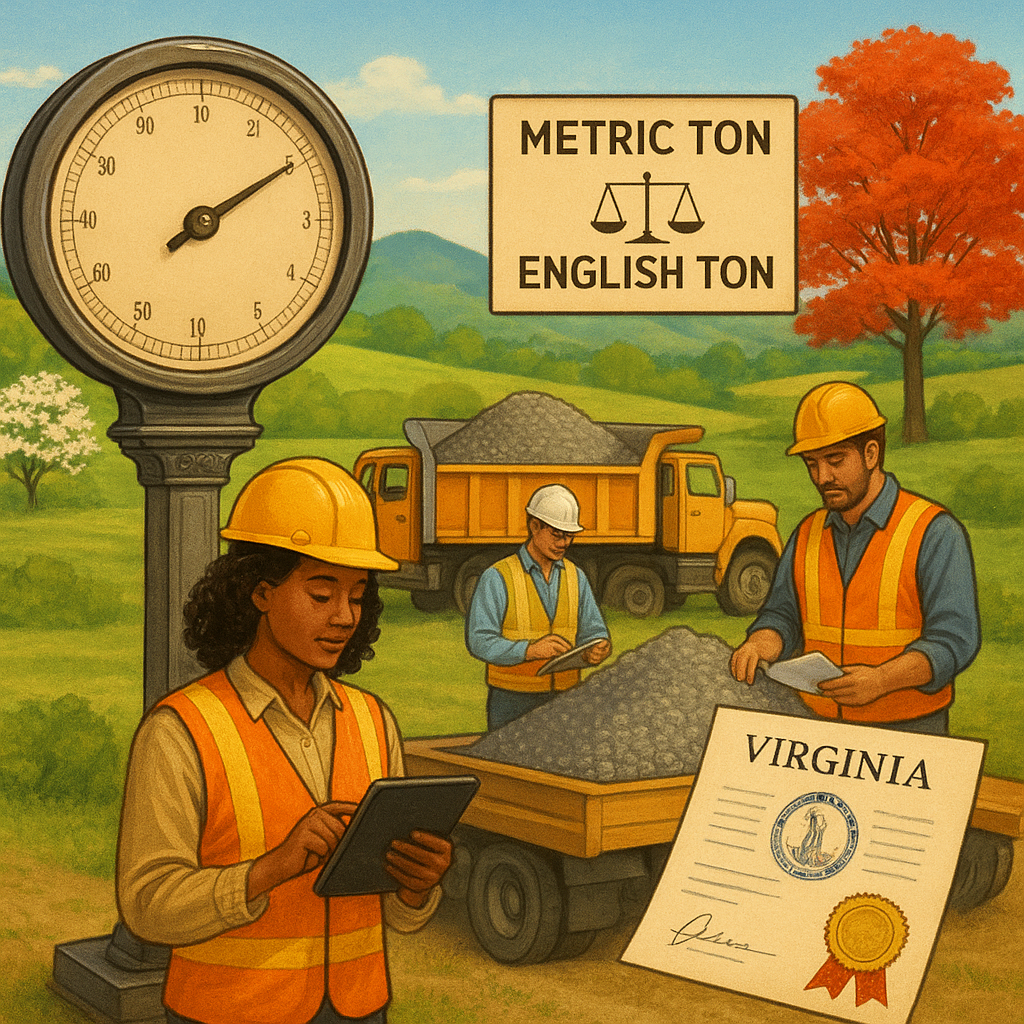
Have you ever pulled onto a giant truck scale, watched the numbers settle, and wondered who makes sure those weights are exactly right? In Virginia, when it comes to public construction materials—like stone, sand, asphalt, or gravel—accuracy isn’t just good business. It’s a legal requirement. For contractors and producers furnishing material by the English ton or metric ton, a special type of financial promise called a Virginia Weighpersons Surety Bond is often at the heart of every load. This guide walks you through everything you need to know in plain, everyday language, so you can stay compliant and keep your operations rolling smoothly across the Commonwealth.
What Exactly Is a Virginia Weighpersons Surety Bond?
Let’s strip away the jargon. A surety bond is not insurance for you—it’s a three-way promise. You have the principal (that’s the weighperson, contractor, or producer), the obligee (the Commonwealth of Virginia, often represented by an agency like the Virginia Department of Transportation), and the surety (the company backing the bond). Put simply, the bond guarantees that if you weigh materials incorrectly—whether accidentally or on purpose—the state and the public are protected financially.
Think of it like a security deposit for honesty. If a truckload of stone is supposed to weigh 20 English tons but your scale readings are off, the state could face a financial loss. The bond steps in to cover that gap, up to the bond amount. You then repay the surety, because ultimately you’re responsible for your work.
In Virginia, this bond is tied specifically to weighpersons who work with material furnished by the English ton (or metric ton). That might sound formal, but all it means is that you’re paid based on the weight of the product you supply or handle—measured either in short tons (2,000 pounds) or metric tons (1,000 kilograms). The bond acts as a layer of trust between you and the Commonwealth, making sure every ton reported is a ton actually delivered.
Who Needs This Bond in Virginia?
You might be asking, “Does this apply to me?” The short answer: it applies if you operate a scale for materials used on state-funded or state-managed projects, and you’re either a contractor performing the work or a producer supplying the aggregate. Common examples include:
- Quarry and aggregate producers who load trucks with sand, gravel, crushed stone, or asphalt and report weights to VDOT or local agencies.
- Paving contractors running their own scale houses for hot mix asphalt furnished by the ton.
- Independent weighpersons hired to operate scales at project sites where material is measured for payment.
- Ready-mix concrete suppliers whose loads are frequently verified by weight, not just volume, on public construction jobs.
If your role involves signing weight tickets, zeroing out a scale, or certifying that a load matches a certain number of English or metric tons for a Virginia public project, there’s an excellent chance a Weighpersons Surety Bond is part of your compliance checklist. Even if you work for a private company, the requirement kicks in because the ultimate customer—the Commonwealth—wants assurance that taxpayer dollars aren’t paying for phantom material.
Why the Commonwealth of Virginia Cares So Much About a Ton
It’s easy to see a ton as just a number on a screen. But on large infrastructure projects, tiny errors multiply fast. Imagine a highway job requiring 50,000 English tons of base stone. If a weighperson’s scale consistently overweighs by just half a percent, the state could overpay for hundreds of tons of material that never existed. Conversely, if the scale underweighs, the contractor might deliver less than promised, and the road’s integrity could suffer.
The bond doesn’t just exist to punish bad actors. It creates a baseline of accountability that protects everyone—the taxpayers, the construction managers, and even honest contractors who don’t want their reputations tarnished by competitors who cut corners. Virginia’s approach is proactive: by requiring a surety bond, the state says, “We trust you to do the job right, but we have a safety net in place just in case.”
English Ton, Metric Ton, and Why the Distinction Matters
You’ve probably noticed the phrase “material furnished by the English ton (metric ton)” pop up again and again. Does the difference really affect your bond? Not in the bond amount itself, but it directly influences how you operate day to day.
- English ton (short ton): 2,000 pounds, the standard in most U.S. construction specifications.
- Metric ton (tonne): 1,000 kilograms, roughly 2,204.6 pounds.
If a contract specifies payment per metric ton, you cannot casually flip the switch and bill by the short ton without making proper conversions and disclosures. Misreading the unit can lead to a 10% error, which is far beyond what any auditor would consider acceptable. Your weighperson bond covers you for both scenarios—as long as you’re following the agreed-upon unit of measure. The bond itself is typically issued with a description like “Weighpersons – Material Furnished by the English Ton (Metric Ton)” to signal that you’re authorized to weigh using either system, depending on project terms.
A quick mental shortcut: treat the two tons like miles and kilometers. They both measure distance, but you’d never want to mix them up on a road sign. Your scale tickets need to clearly show which ton you’re using, and your bond confirms that you’ll stick to the truth, whichever system applies.
How Much Does a Virginia Weighpersons Bond Cost?
Here’s some good news: you won’t have to pay the full bond penalty out of pocket. If the state requires a $10,000 or $20,000 bond, that’s the maximum amount the surety might have to pay out in a claim. What you actually pay is a small percentage, called the bond premium. For many weighpersons, annual premiums fall in the range of $100 to $500, depending on factors like the required bond amount, your personal credit score, and business history.
Applicants with strong credit frequently secure rates as low as 1–3% of the total bond amount. Even if your credit has a few bumps, specialized surety programs can usually help you get bonded at a slightly higher rate. Always compare quotes from a bond agency that knows Virginia’s specific weighperson bond forms. The wrong form can delay your approval and hold up a project for days.
Step-by-Step: Getting Your Bond and Staying Compliant
Ready to take action? Here’s a straightforward path to make sure your paperwork is as solid as the material you weigh.
1. Verify the Bond Amount and Obligee
Confirm the required bond penalty with the agency requesting it—usually VDOT or the specific locality. The bond must name the Commonwealth of Virginia as obligee. Don’t guess; a phone call to the project administrator can save weeks of back-and-forth.
2. Gather Your Business Details
You’ll need your legal business name, address, and often your Virginia contractor license number if applicable. Weighpersons may operate under a company name or as individuals, so have your identification documents ready.
3. Apply Through a Licensed Surety Agency
Choose a bonding agency familiar with Virginia statutory bonds. They will walk you through a short application, run a soft credit check, and give you a quote. Most applications take only a few minutes to complete online.
4. Pay the Premium and Sign the Bond
Once approved, you’ll pay the annual premium, sign the bond form, and receive the original document. Keep it safe, but also know that the obligee will likely require a copy.
5. File the Bond With the Proper Authority
Never assume the surety files for you. In many Virginia cases, you must submit the executed bond to the department that asked for it, whether that’s a VDOT district office or a municipal engineering department. File it before your scale opens for business on a public job.
6. Renew on Time, Every Year
The bond is generally continuous until canceled. You’ll receive a renewal notice, and paying the premium annually keeps you compliant. If you let it lapse, you could be removed from approved weighperson lists and face breach of contract consequences.
Common Pitfalls That Trip Up Weighpersons
Even seasoned scale operators can stumble. Watch out for these frequent missteps:
- Forgetting to update the bond after a name change: If your company restructures or you incorporate, a bond issued under the old name may be invalid.
- Relying on verbal approvals: Always get the requirement in writing. Sometimes a small local job won’t need a bond, while the next VDOT project absolutely does.
- Using uncertified scale equipment: The bond covers your honesty, but it doesn’t replace the state’s requirement for regularly calibrated, certified scales. An uncalibrated scale could trigger a claim even if you act in good faith.
- Ignoring the metric ton fine print: As we touched on, mixing up tons can lead to a material discrepancy that prompts an audit and stretches your bond relationship thin.
What If a Claim Is Filed Against My Bond?
Nobody likes to think about it, but claims happen. Usually they start when the state or project owner believes overpayment occurred due to inaccurate weight tickets. The obligee files a claim with the surety, who investigates. If the claim is valid, the surety will pay up to the bond limit. Don’t panic—but do understand that you are ultimately responsible for reimbursing the surety for every penny paid out, plus any legal costs. That’s why prevention is priceless. Double-check tickets, train your staff on proper scale procedures, and keep meticulous records. If a claim hits, respond immediately and provide any evidence that the weighing was correct. Quick, transparent communication can sometimes resolve the issue before the bond is ever tapped.
Making Your Weighing Operation a Trustworthy Machine
Think of your weighperson bond as a badge of reliability rather than a bureaucratic headache. When contractors and project managers see that you’re bonded, they know they’re working with someone who takes accuracy seriously. In a competitive market, that reputational boost can be the difference between winning a bid and getting passed over.
Position yourself as the scale operator who has all the boxes checked: certified, bonded, insured, and ready. That quiet confidence often leads to repeat work and referrals that no amount of advertising can buy. The bond is just one piece of the puzzle, but it’s a piece that signals you’re playing by Virginia’s rules.
Ready to Get Bonded and Get Weighing?
Complying with Virginia’s Weighpersons Contractors and Producers of Material Furnished by the English Ton (Metric Ton) Surety Bond requirement doesn’t have to be confusing. With the right bond partner and a clear understanding of what’s expected, you can be approved in a day and back to what you do best—keeping those scale beams balanced and those trucks moving.
If you’re about to kick off a new project or need to renew an existing bond, take a moment to review your current documentation. Does the bond amount match what the contract demands? Is the obligee listed correctly as the Commonwealth of Virginia? Are you clear on whether your loads are priced per short ton or metric ton? Ticking off these small but mighty details helps you avoid downtime, audits, and uncomfortable conversations.
In the end, the bond is more than paper. It’s a commitment to honest weights and fair dealings that keeps Virginia’s roads, bridges, and buildings safe and properly funded. When your scale tells the truth, everyone wins—and your bond makes sure that truth always has a backup plan.