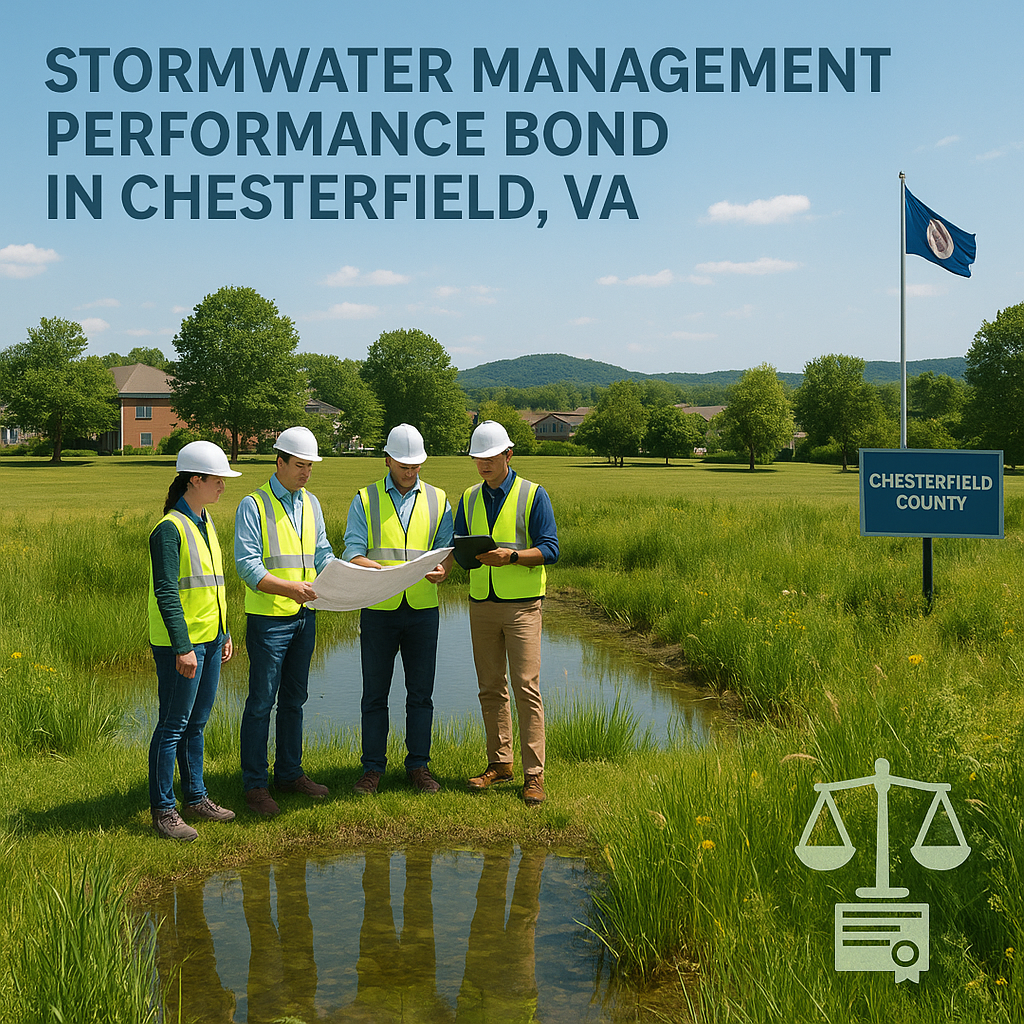
Have you ever watched a new subdivision, shopping center, or office park spring up in Chesterfield and wondered what happens to all the rainwater that used to soak into open fields? Suddenly, there are roofs, parking lots, and pavement—and that water has to go somewhere. Making sure it’s managed safely is a big job, and that’s where something called a SWM/BMP Improvements Performance Bond comes into play. If that sounds like a mouthful, don’t worry. We’re going to break it down in a way that makes sense, and by the end, you’ll see why it’s a quiet hero for our community’s environment and your wallet.
What Exactly Is a SWM/BMP Performance Bond?
Let’s start with the acronyms. “SWM” stands for Stormwater Management, and “BMP” means Best Management Practices. Together, they refer to the systems and techniques developers use to control rainwater runoff—things like retention ponds, underground filters, grassy swales, and special inlet structures. A performance bond is essentially a financial promise. It says, “I guarantee that this stormwater project will be built correctly, according to the approved plan, and will perform as intended for a set period.”
Think of it this way: you’re hiring a contractor to build a rain garden in your backyard. You wouldn’t pay the full amount up front without some assurance that the garden will actually hold water and not turn into a muddy mess, right? Chesterfield County takes a similar approach on a much larger scale. The performance bond is the county’s assurance that if a developer’s stormwater improvements fail or are never finished, money is set aside to fix them—without taxpayers footing the bill.
Why Chesterfield County Requires These Bonds
Chesterfield is a growing, vibrant community, and with growth comes more hard surfaces. Without proper stormwater controls, heavy rains can cause flooding, erode stream banks, and carry pollutants straight into our creeks and rivers. No one wants that. The county’s stormwater regulations exist to keep neighborhoods safe, protect water quality, and meet state and federal requirements. A performance bond takes those regulations from paper promises to enforceable reality.
By requiring a Chesterfield VA SWM/BMP improvements performance bond, the county ensures that private development doesn’t become a public liability. The bond typically remains in effect until the stormwater facilities are built, inspected, and proven functional over a maintenance period—often one to two years. If the developer walks away or the system fails early, the county can call on the bond to complete or repair the work.
How the Bond Protects Everyone Involved
This type of performance bond isn’t just red tape—it’s a three-party safety net. The parties are:
- The Obligee (Chesterfield County): The entity requiring protection. They need to know the project meets standards.
- The Principal (the developer or contractor): The party performing the work. They promise to do the job right.
- The Surety (the bonding company): The financial backer that guarantees the principal’s promise.
So, if a developer is halfway through installing a large detention basin and suddenly goes out of business, the county doesn’t have to scramble for emergency funds. The surety company steps in—either by financing the completion of the work through another contractor, or by paying the county the bond amount so they can manage the fix themselves. For the developer, securing a bond also signals credibility. It tells the county, “We’re serious, we’re backed by a solid surety, and we stand behind our work.”
A Simple Analogy: The Security Deposit You Already Know
If the three-party mechanism sounds abstract, imagine renting an apartment. You pay a security deposit before moving in. The landlord holds it in case you cause damage. If you leave the place spotless and everything works, you get your money back. If you break a window and skip out, the landlord uses your deposit to repair it. The SWM/BMP performance bond works the same way—the deposit just happens to be a bond amount that’s often tens or hundreds of thousands of dollars, and the “landlord” is the county looking out for our shared environment.
The Step-by-Step Process for Developers
If you’re a developer or site contractor working on a project in Chesterfield, you’ll likely encounter this bond requirement early on. Here’s a typical path:
- Plan approval: Your stormwater management design gets the green light from the county’s environmental or engineering department. They’ll specify exactly what BMPs are needed—maybe a bioretention cell, a constructed wetland, or a combination of practices.
- Bond amount calculation: The county estimates the cost to construct those improvements, often adding a percentage for inflation and contingencies. That becomes the required bond amount.
- Shopping for a surety: You contact a surety bond agency, the same kind of professionals who handle construction bonds. They’ll review your company’s financials, experience, and credit. The stronger your credentials, the better your rate.
- Bond issuance: Once approved, the surety issues the bond, and you file it with Chesterfield County before starting land-disturbing activities.
- Construction and inspection: You build the stormwater facilities. County inspectors check the work at key stages.
- Maintenance period and release: After final acceptance, you typically maintain the system for a defined window. If everything performs well through all seasons, the bond is released or exonerated.
It’s a straightforward promise, but one that keeps everyone honest. For developers, fulfilling the bond conditions smoothly can even become a selling point—prospective buyers love knowing the neighborhood’s drainage is built to last.
What Kind of Projects Use This Bond?
You’ll find these bonds behind the scenes in all sorts of Chesterfield developments:
- Residential subdivisions with new streets and shared green spaces.
- Commercial sites like retail centers whose parking lots generate significant runoff.
- Industrial parks that need robust water quality treatment.
- Church or school campus expansions that disturb more than an acre of land.
- Even some residential renovations, when large-scale grading changes the way water flows across property lines.
In each case, the bond ensures that the on-site stormwater BMPs—from simple grass channels to complex underground vaults—aren’t just drawn on paper. They’re actually built, function correctly, and endure through the critical establishment phase.
Benefits for the Local Environment and Community
When you take a walk around Chesterfield’s beautiful streams and reservoirs, the last thing you want to see is muddy water choked with construction sediment. Performance bonds directly support cleaner water because they incentivize developers to get BMPs right the first time. If those systems fail, the bond provides quick, non-taxpayer funding to fix problems fast. That means:
- Less erosion and sediment smothering aquatic life.
- Reduced flood risk for downstream neighbors.
- Greener, more attractive common areas that can even raise property values.
- A sense of trust between residents and local government.
It’s also a forward-thinking tool. As weather patterns bring more intense downpours, our stormwater infrastructure needs to be tougher. Bonds that require extended maintenance periods help guarantee that new facilities can handle that reality before the developer turns responsibility over to a homeowners association or property manager.
Common Questions (and a Few Myths) About the Process
“Isn’t this just expensive paperwork that slows down building?”
It might feel that way when you’re rushing toward a groundbreaking. But the cost of a performance bond is usually a small fraction of the total project budget—commonly 1% to 3% of the bond amount—and it can save enormous headaches later. A failed detention pond can cost far more to repair after the fact, not to mention potential lawsuits from flooded basements downstream.
“My business credit isn’t perfect. Can I still get bonded?”
Yes, many sureties work with developers who have less-than-stellar credit, though the premium might be higher. Some agencies specialize in small and emerging contractors. The key is to work with a knowledgeable bond professional who understands Chesterfield’s specific requirements.
“Once the county signs off, am I done?”
Not quite. Sign-off triggers the maintenance period. During that time, you need to promptly repair any settling, clogging, or vegetation failures. Only after the maintenance period ends successfully is the bond released. Think of it as a warranty period backed by the surety.
Choosing the Right Bond Partner
For developers, navigating the world of surety bonds can feel overwhelming. That’s why it pays to partner with an agency that understands both Virginia’s stormwater regulations and the local Chesterfield landscape. They can help you gather the right paperwork, explain exactly what the county looks for, and even advise you on ways to strengthen your application—such as showing a history of completed similar projects on time and on budget. A good bond agent acts more like a guide than a gatekeeper.
Looking Ahead: Innovation in Stormwater Management
The phrase “innovative improvements” in our title isn’t just buzz. Chesterfield County has gradually embraced greener, smarter stormwater solutions. From permeable pavers that let water soak through parking lots, to rain gardens that double as pollinator habitats, the BMP toolkit keeps expanding. The performance bond remains the financial backbone that gives these innovations room to succeed. It assures that cutting-edge designs aren’t abandoned if they require early tweaks. When a county holds a bond, it can work collaboratively with a developer to fine-tune a feature rather than simply demanding it be ripped out.
This bond, in other words, supports experimentation and resilience—not just rigid enforcement.
Final Thoughts
The next time you drive through a new Chesterfield neighborhood and notice a pond with gentle cattails and a nesting duck, you’ll know there’s probably a performance bond standing silently behind that scene. It’s a promise that turns good engineering into reality, protects our water, and keeps the community’s trust intact. For developers, it’s a mark of professionalism. For residents, it’s invisible peace of mind.
Whether you’re planning a project or simply love this county as much as we do, understanding the role of the Chesterfield VA SWM/BMP improvements performance bond is a small window into how local government, business, and nature can work hand in hand. And that’s something worth celebrating.