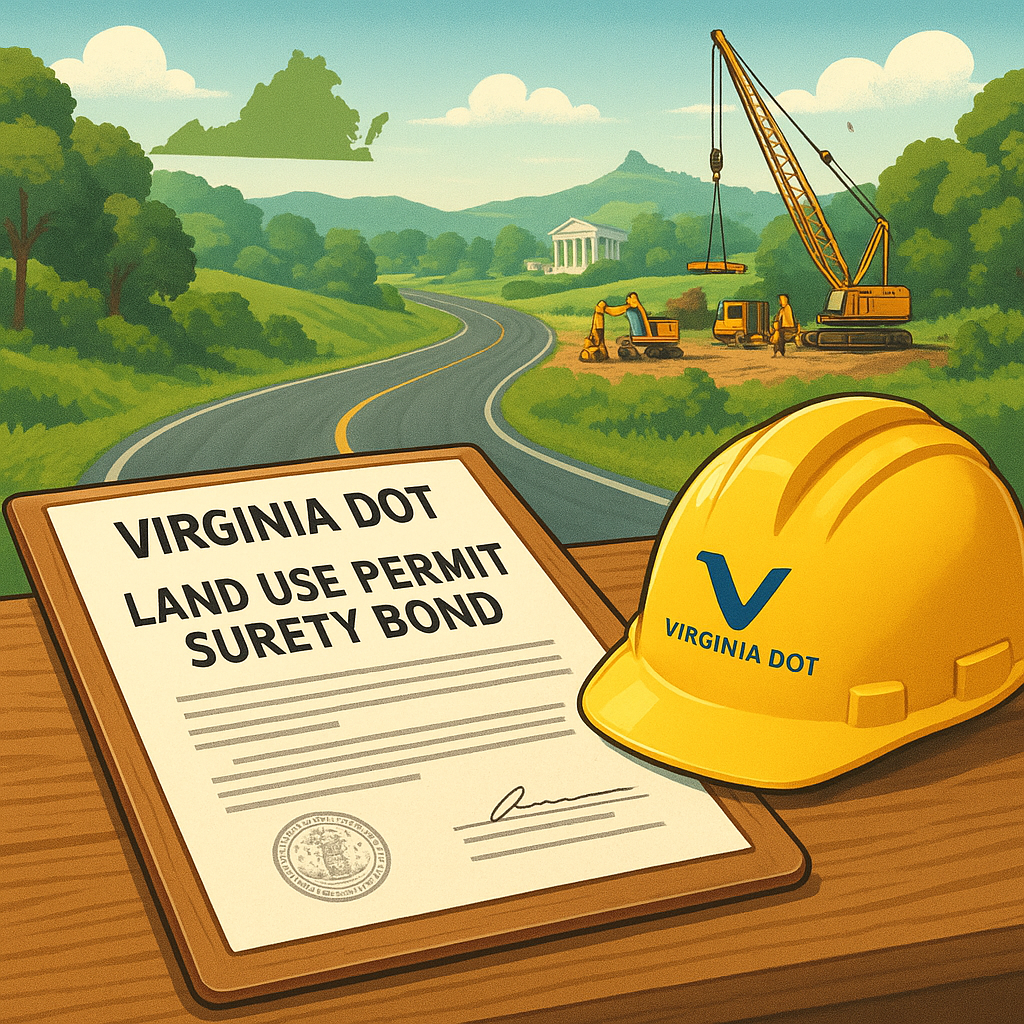
Have you ever driven past a construction crew working along a Virginia highway and wondered how they got permission to dig up the shoulder or install a new utility line? It’s not as simple as just showing up with shovels. Before anyone can disturb a state-owned right-of-way, the Virginia Department of Transportation (VDOT) requires a land use permit—and in most cases, that permit won’t be issued without a Virginia DOT Land Use Permit Surety Bond.
If terms like “right-of-way” and “surety bond” feel a bit intimidating, don’t worry. We’re going to break it all down into plain, everyday language. By the end, you’ll understand exactly what this bond is, who needs it, and why it’s such a smart way to protect both the public and the Commonwealth of Virginia.
What Is a Virginia DOT Land Use Permit?
Think of a land use permit as a permission slip from VDOT. It gives you the green light to work within the state’s right-of-way—the strip of land alongside and underneath public roads that Virginia owns and maintains. This right-of-way isn’t just pavement; it includes grassy shoulders, sidewalks, and the space under the road where pipes and cables often run.
You might need a permit for all sorts of projects:
- Installing or repairing utility lines (water, sewer, gas, electric, fiber optic)
- Building a driveway or private road entrance onto a state-maintained highway
- Landscaping, grading, or drainage work that touches state property
- Setting up construction entrances or temporary road closures
- Installing signs that are close to the road
Without that permit, you’re not allowed to dig, build, or even place equipment on VDOT’s turf. And here’s where the bond comes into play.
So, What Exactly Is a Surety Bond?
Let’s step back for a moment and talk about bonds in general. A surety bond is not insurance—it’s a three-party promise. Picture it like renting an apartment. When you move in, you pay a security deposit. If you damage the apartment, the landlord uses that deposit to fix things. If you leave the place spotless, you get your money back.
A surety bond works similarly, but instead of cash sitting in a landlord’s bank account, a bonding company guarantees that you’ll follow the rules. The three parties are:
- The Obligee: The entity requiring the bond—here, it’s the Commonwealth of Virginia, acting through VDOT.
- The Principal: The person or business that needs the permit and buys the bond—that’s you.
- The Surety: The company that issues the bond and backs your promise financially.
If you (the principal) fail to meet all the requirements of your land use permit, VDOT can make a claim against your bond. The surety pays VDOT up to the bond amount, but then you’re responsible for reimbursing the surety fully. That security deposit analogy? This is like the landlord calling in a guarantee instead of dipping into a pre-paid fund.
Why Does VDOT Require This Bond?
Public roads and the land around them belong to all of us. VDOT’s job is to keep that property safe, functional, and in good repair. When someone digs up a section of right-of-way, installs a utility, or builds a new driveway, a lot can go wrong. The work could damage the pavement, disrupt drainage, leave behind unsafe conditions, or simply never get finished properly.
The Virginia DOT Land Use Permit Surety Bond ensures that if a permit holder doesn’t restore the right-of-way to VDOT’s standards, the taxpayers don’t foot the bill. The bond covers the cost of fixing mistakes, completing abandoned work, or repairing damage caused by the permitted activity. In short, it’s a financial safety net that protects the Commonwealth of Virginia road network you and I use every day.
Real-World Example
Imagine a small telecom company gets a land use permit to lay fiber optic cable along a rural highway in VA. The crew cuts into the road shoulder, quickly runs the cable, and promises to restore the site. But weeks pass, the shoulder stays a muddy mess, and a heavy rain washes out part of the embankment. VDOT steps in, hires a contractor to fix it, and files a claim against the bond. The surety pays for the repairs, and the telecom company repays the surety. Without the bond, those repair costs would either fall on VDOT—meaning taxpayers—or become a long legal battle.
Who Needs a Virginia DOT Land Use Permit Surety Bond?
Not every little project triggers this requirement, but if VDOT tells you a bond is necessary, you can’t skip it. Typically, you’ll need a bond if your permit involves:
- Any excavation or construction within the VDOT right-of-way
- Installing, relocating, or maintaining underground or overhead utilities along state roads
- Grading, filling, or drainage work that could affect the roadway
- New commercial or multi-residential driveway connections onto a state route
- Long-term or complex land use activities that pose a higher risk to public infrastructure
Utility companies, construction contractors, developers, and even private homeowners (if their driveway connects to a state highway and the work is substantial) could be asked to secure this bond. When in doubt, your VDOT district office or a knowledgeable surety bond agency can tell you whether a bond must accompany your application.
How Much Does the Bond Cost?
This is where many people breathe a sigh of relief. When you see a $50,000 or $100,000 bond amount, you might think that’s what you have to pay. Not at all. That number is the maximum coverage—the security deposit amount, if you will. The actual cost to you is just a small percentage of that total.
For most applicants, the premium for a Virginia DOT Land Use Permit Surety Bond ranges from about 1% to 5% of the bond amount. So if VDOT requires a $25,000 bond, you might pay just $250 to $1,250 for a year. The exact rate depends on your personal or business credit, financial strength, and experience. People with excellent credit and a strong track record often get the lowest rates.
What if my credit isn’t perfect? Don’t panic. Many surety companies offer programs for applicants with less-than-ideal credit scores, though the premium might be a bit higher. The key is working with an agency that understands the VA DOT requirements and can shop your application to the right market.
Step-by-Step: Getting Your Bond and Permit
Navigating the permit process might feel like a maze, but breaking it into small steps makes it totally manageable.
1. Determine Your Permit Type and Bond Amount
Contact the VDOT district office where your project is located. They’ll tell you what type of land use permit you need and the required bond amount. That amount is usually based on the estimated cost to restore the right-of-way if something goes wrong.
2. Gather Your Information
You’ll need basic details: business name, contact information, social security number or EIN, and possibly financial statements for larger bonds. A good surety agency will walk you through exactly what’s needed.
3. Apply for the Bond
You can apply through a licensed surety bond provider. Many agencies let you do this online in minutes. After a quick underwriting review—often same-day—you’ll receive a quote and can pay the premium.
4. Receive Your Bond Form
The surety issues a bond form specific to the Commonwealth of Virginia and your VDOT district. This isn’t a generic document; it’s tailored to fulfill the state’s exact requirements.
5. Submit the Bond with Your Permit Application
VDOT won’t issue the land use permit until they have the original signed bond in hand. So make sure you include it with your paperwork. Once approved, you’re free to begin work—within the guidelines of your permit, of course.
Common Questions People Ask
Is this bond the same as insurance? Not at all. Insurance protects you from unforeseen losses. This bond protects VDOT (and the public) from your failure to meet permit conditions. And remember, if a claim is paid, you must reimburse the surety for every penny.
How long does the bond last? Most Virginia DOT Land Use Permit Surety Bonds run concurrently with the permit term, often one year. If your project extends longer or you need to renew the permit, you’ll typically need to renew or extend the bond as well.
Can I get a bond with a low credit score? Yes, many sureties offer bonds regardless of credit, though the premium percentage might be higher. It’s very rare to be completely turned down for this type of bond.
What happens if a claim is filed against my bond? VDOT will notify the surety company of the issue. The surety investigates and, if the claim is valid, pays VDOT up to the bond limit. Then the surety will seek full reimbursement from you. That’s why it’s so crucial to complete your work correctly and keep the right-of-way in good shape.
Making Sense of It All
The phrase “Virginia DOT Land Use Permit Surety Bond” might sound like government gobbledygook, but at its heart, it’s a simple promise: you’ll put the land back the way you found it—or better. By requiring this bond, the Commonwealth of Virginia ensures that even if a contractor falls short, the roads and shoulders we all rely on will be repaired without dipping into public funds.
Whether you’re a seasoned utility company laying miles of fiber, a small excavator putting in a driveway on a state route, or a developer working on a commercial site, this bond is your ticket to legally working in the VDOT right-of-way. It protects your project, satisfies state requirements, and most importantly, keeps Virginia’s road network safe and well-maintained.
So next time you see those orange cones and fresh asphalt on the shoulder, you’ll know there’s a bond in the background making sure everything gets put back just right. And if you’re the one suiting up in a hard hat, now you know exactly how to get started—with clarity, confidence, and the right paperwork in hand.