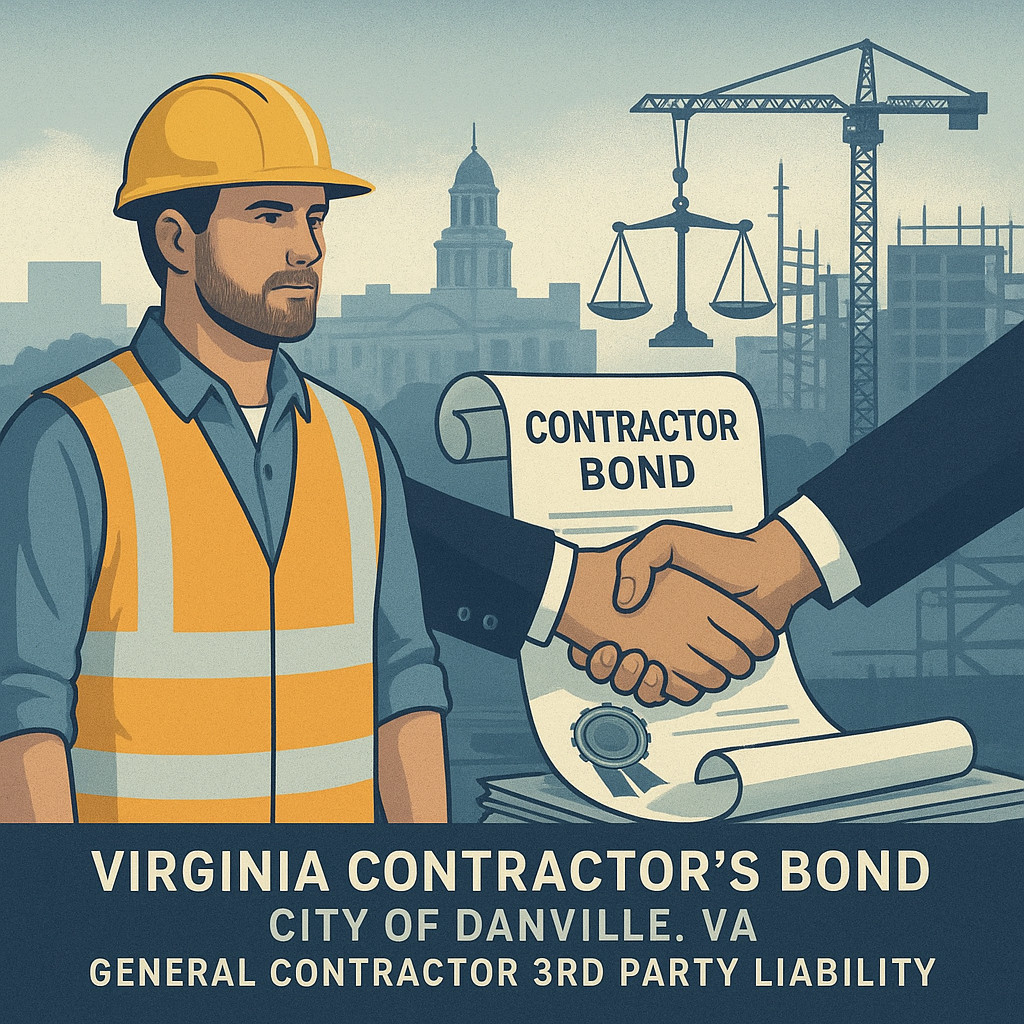
Picture this: you’ve finally decided to build that wraparound porch you’ve been dreaming about. You hire a general contractor in Danville, Virginia, who seems professional, quotes a fair price, and promises high-quality work. But halfway through the project, things go south. The contractor cuts corners, uses substandard materials, or worse—vanishes with your down payment. Who is left holding the bag? This is where understanding the Virginia Contractor’s Bond and the concept of third-party liability becomes your financial safety net.
What Exactly Is a Virginia Contractor’s Bond?
Let’s strip away the legal jargon. A contractor’s bond, often called a surety bond, is essentially a three-way promise. Think of it like a co-signer on a loan, but for construction work. There’s the contractor (the principal), the local government agency that requires the bond (the obligee—in this case, the City of Danville, VA), and the bond company (the surety). The bond guarantees that the contractor will play by the rules.
If the contractor fails to follow local building codes, doesn’t finish the job, or stiffs a supplier, the bond company steps in. They’ll either make sure the job gets done correctly or compensate you for valid losses up to the bond amount. This isn’t insurance for the contractor—it’s protection for you, the public. And in Danville, that protection isn’t just a nicety; it’s a requirement for many general contractors.
Why Does the City of Danville, VA Require Contractor Bonds?
Danville is a city that takes pride in its growth and community safety. When you hire a contractor to build a deck, renovate a kitchen, or construct a new home, you’re inviting them into your property and your life. The local government wants to make sure that every project complies with state and municipal standards. By mandating a Virginia Contractor’s Bond, Danville creates a layer of accountability.
This requirement isn’t just bureaucratic red tape. It’s a proactive measure to weed out unreliable or unqualified operators. Before a contractor even picks up a hammer, they have to prove financial stability and a commitment to ethical work by obtaining a bond. For you, it means peace of mind. You’re not gambling with your biggest asset; you’re backed by a tangible guarantee.
The General Contractor’s Bond: More Than Just Paperwork
In the context of the City of Danville VA, a general contractor’s bond is often a specific type required for those who manage entire projects. Unlike a specialty contractor who might only paint or roof, a general contractor oversees multiple trades. The risk of something going wrong multiplies. The bond ensures that if the general contractor cuts corners—say, hiring unlicensed subcontractors or ignoring setback regulations—the affected party has a clear path to recovery.
Third-Party Liability: Who’s Protecting the Neighbor Next Door?
Now, let’s talk about one of the most misunderstood aspects of contractor bonding: third-party liability. Suppose your contractor’s crew is working on your new addition. One of them accidentally drops a heavy beam onto your neighbor’s car, or worse, damages the shared fence line. Or imagine a visitor trips over construction debris left on the sidewalk and gets injured. Your homeowner’s insurance might cover some things, but the contractor’s liability can get messy.
This is where the phrase “Third Party Liability” inscribed on a Virginia Contractor’s Bond matters immensely. A third party is anyone who isn’t the contractor or the direct client (you). The bond can cover damages or injuries inflicted on innocent bystanders or neighboring properties because of the contractor’s operations. Without this protection, you might find yourself dragged into a legal dispute with an angry neighbor, trying to assign blame. The bond clarifies responsibility and provides a designated fund to make things right.
A Real-Life Scenario: The Sidewalk Mishap
Let’s ground this with a simple story. A Danville family hires a general contractor to redo their driveway. The crew leaves a pile of gravel on the public sidewalk without proper signage at quitting time. A jogger trips on the gravel at dawn, spraining an ankle and shattering a smartwatch. The jogger isn’t the client, nor the contractor. They are a third party. Because the contractor was bonded, the surety company can step in to cover the jogger’s medical bills and the damaged watch, provided the claim is valid. The homeowner doesn’t have to fight with the contractor over who pays, and the jogger gets timely compensation.
How Does a Bond Differ from Contractor Insurance?
This is where many people get confused, so let’s clear it up with a straightforward analogy. Insurance protects the contractor from their own risks—like theft of their tools, damage to their vehicle, or an injury to one of their own employees. The contractor pays the premium and files a claim if something bad happens to them. The payout is for the contractor’s own benefit.
A bond, in contrast, exists almost entirely for the benefit of the public and the project owner. The contractor still pays for it (usually a percentage of the total bond amount), but they cannot make a claim on it themselves. A bond is like a special savings account that only gets touched if the contractor breaks a promise. If a claim is paid out, the surety company will then turn around and seek reimbursement from the contractor. So, the contractor is ultimately on the hook financially, which motivates them to do the job right the first time.
Moreover, the Virginia Contractor’s Bond specifically enforces compliance with state code. General liability insurance might not cover poor workmanship or code violations, but a bond can. That’s a critical distinction for anyone hiring a general contractor in Danville.
What Are the Requirements for a General Contractor’s Bond in Danville, VA?
Virginia state law governs much of the contractor licensing and bonding landscape, but local jurisdictions like the City of Danville can enforce additional obligations. Typically, a general contractor must hold a license from the Virginia Department of Professional and Occupational Regulation (DPOR) and may need to post a bond ranging from a few thousand to tens of thousands of dollars, depending on the project’s scope and value.
To work legally within Danville city limits, a general contractor often pulls a local business license as well, which may trigger a bonding requirement. If a contractor tells you, “I don’t need a bond for this small job,” pause and verify. Even smaller projects can fall under mandatory bonding thresholds when certain permits are involved. A quick call to the Danville Community Development office can save you from a costly assumption.
Checking a Contractor’s Bond Status
You don’t have to take a contractor at their word. Demand to see the bond paperwork. A legitimate contractor will be proud to show it. Look for the bond number, the issuing surety company, and the effective dates. Then, verify with the surety that the bond remains active. This step alone dissuades dishonest operators and confirms that you’re dealing with a professional who respects the City of Danville VA’s rules.
How Much Does This Protection Cost, and Who Pays?
The cost of a Virginia Contractor’s Bond is generally a fraction of the total bond amount. Contractors rarely pay the full face value upfront. Instead, they pay a premium, often between 1% and 5%, depending on their credit score, financial history, and experience. A $10,000 bond might cost the contractor $100 to $500 per year. While the contractor writes the check, the peace of mind transfers to you as the property owner.
What if a contractor wants to bury the bond cost in your estimate? That’s perfectly legitimate and common. A transparent contractor will explain that the bond is part of their overhead, just like their licensing fees or vehicle maintenance. It shouldn’t be a hidden surprise. In fact, a contractor who proudly mentions their bonding is signaling reliability.
What Happens When You Need to Make a Claim?
Let’s say you discover that your newly tiled bathroom floor wasn’t waterproofed properly, leading to a moldy subfloor and a massive repair bill. Your general contractor refuses to answer calls. Here’s your roadmap:
First, document everything. Photos, emails, contract terms, and inspection reports. Next, contact the surety company listed on the bond. They will send a claim form. You’ll provide evidence that the contractor violated state building codes or the terms of the agreement. The surety investigates. If they find your claim valid, they will pay you up to the bond’s penalty sum. Then, the surety goes after the contractor for reimbursement. It’s a powerful tool that turns a helpless situation into a resolvable one.
Building Trust Through Transparency
Homeowners often ask, “Is it really worth my time to check?” Absolutely. A few minutes of verification can prevent months of stress. Remember, the General Contractor – 3rd Party Liability note on a bond is not just fine print. It’s a declaration that innocent neighbors, passersby, and even future buyers of your home are protected from work that falls short of standards.
Choosing the Right Contractor in Danville
When you interview potential general contractors, treat bonding as a non-negotiable item on your checklist. Ask these questions:
- “Are you bonded specifically for work in the City of Danville, VA?”
- “What is the amount of your Virginia Contractor’s Bond, and does it include third-party liability coverage?”
- “Can you provide the surety company’s contact info so I can verify your bond?”
A professional will answer without hesitation. Hesitation, excuses, or dismissal should raise immediate red flags. The bond is your ally; it turns a handshake agreement into a legally enforceable promise.
A Safety Net Woven into the Danville Community
The requirement for a contractor bond in Danville isn’t an obstacle—it’s a carefully thought-out system that dignifies the construction trade and protects families. It keeps everyone honest. It allows homeowners to invest in their homes with confidence, knowing that there’s a clear path to recourse. It also upholds the city’s aesthetic and safety standards, ensuring that one bad project doesn’t lower the quality of life for the whole block.
So, the next time you see “Bonded and Insured” on a business card, you’ll understand exactly what that means. More than a catchy phrase, it’s a promise backed by financial muscle. Whether you’re planning a minor remodel or a major ground-up build, insist on a verified contractor bond. In the charming city of Danville, VA, your dream project deserves nothing less than a foundation of trust—and that’s exactly what a solid contractor’s bond delivers.