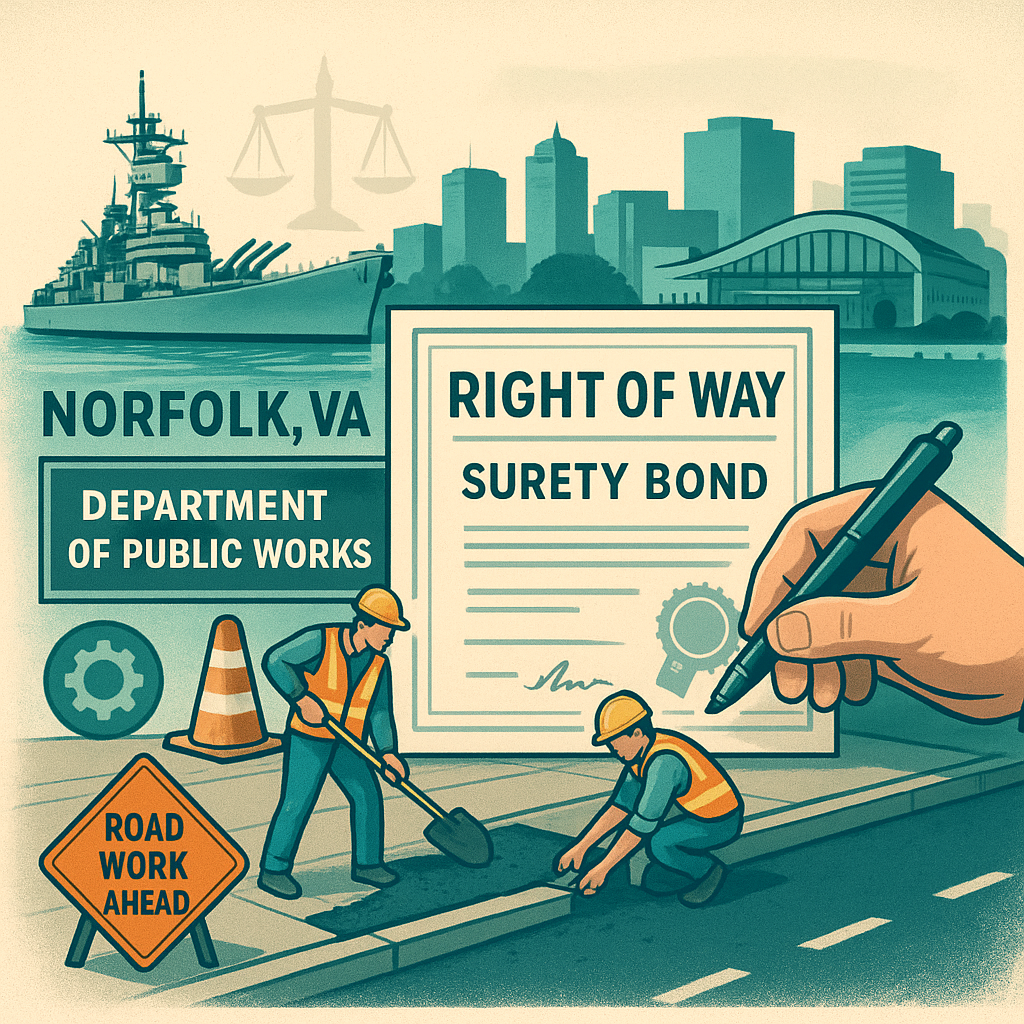
If you’re planning any kind of construction or utility work that touches public property in Norfolk, Virginia, you’ve probably already heard the term “right of way permit surety bond.” It might sound like just another bureaucratic hurdle, but understanding what it is and why the city requires it can save you time, money, and a whole lot of headaches. Let’s walk through everything you need to know in plain, everyday language.
What Is a Right of Way Permit Surety Bond, Exactly?
Think of a right of way permit surety bond as a financial promise. The City of Norfolk Department of Public Works wants to make sure that when someone digs up a sidewalk, cuts into a street, or installs a utility line in the public right of way, the work is done correctly and the area is restored to its original condition—or better. The bond acts like a security deposit, but it doesn’t tie up your cash. Instead, a surety company backs you, guaranteeing to the city that you’ll follow the rules.
In simple terms, a right of way bond is a three-way agreement:
- The Principal: That’s you—the contractor, utility company, or individual doing the work.
- The Obligee: The City of Norfolk, which requires the bond to protect its streets, sidewalks, and public spaces.
- The Surety: The insurance-like company that issues the bond and vouches for your performance.
If you fail to meet the city’s standards, the surety will step in to cover the costs of fixing the problem, and then you’ll need to repay the surety. It’s a safety net that protects taxpayer-owned property without putting the entire financial burden on the public.
Why Norfolk Insists on This Bond
Have you ever driven over a patch of road that was clearly dug up and poorly patched? Potholes, sunken asphalt, and uneven sidewalks aren’t just annoying—they’re safety hazards. The City of Norfolk Department of Public Works takes the condition of its infrastructure seriously. Any work that disturbs the public right of way can weaken pavement, disrupt drainage, or create tripping risks. The bond requirement ensures that the city isn’t left holding the bag if a contractor cuts corners or disappears after the job.
Beyond physical repairs, the bond also helps enforce compliance with local codes, traffic control regulations, and environmental safeguards. It’s a way for the city to say, “We trust you to do the job right, but we’re also verifying that you have the financial backing to fix any mistakes.”
Who Needs a Norfolk VA Right of Way Permit Surety Bond?
Not every project requires a bond, but many do. Typically, you’ll need a Norfolk right of way permit surety bond if:
- You’re excavating in a public street, alley, or sidewalk.
- You’re installing, repairing, or replacing utility lines (water, sewer, gas, electric, telecom) that cross or run under public property.
- You’re doing any kind of construction that obstructs or alters a public right of way, like setting up scaffolding, placing a dumpster, or building a driveway approach.
- You’re a contractor working on behalf of a utility company or a private developer with work that extends into the public right of way.
The permitting department decides on a case-by-case basis, so it’s always smart to check with the City of Norfolk Department of Public Works before you start. Even small jobs—like replacing a sewer lateral from the house to the street—can trigger the bond requirement.
How the Bond Works Hand-in-Hand with Your Permit
Getting the right of way permit and the bond often go together. You can’t receive your permit to break ground without proof of the bond. The city sets the bond amount based on the scope and location of the work. For a small sidewalk repair, the bond might be a few thousand dollars. For major utility work spanning several blocks, it could reach hundreds of thousands. The bond amount reflects the estimated cost to restore everything if things go sideways.
Once you have the bond in place, you’ll submit it with your permit application. The city then reviews everything and, if approved, issues your right of way permit. The bond stays active for the duration of the project plus a maintenance period—often one or two years—to ensure the restored area holds up. If no claims are filed during that time, the bond simply expires, and your obligation ends.
What Does the Bond Cost You?
Here’s some good news: you don’t have to pay the full bond amount upfront. You pay a small percentage, called the premium, to the surety company. For most contractors with decent credit, premiums run between 1% and 5% of the total bond amount. So, if the city requires a $10,000 bond, your out-of-pocket cost might be as low as $100 to $500 per year. Factors like your personal credit score, business financials, and experience in the industry can push that rate up or down.
Think of it like renting a safety net. You put up a small fee, and in exchange, the surety provides the city with the full assurance it needs. It’s a far cry from having to set aside $10,000 in cash or a letter of credit that ties up your working capital.
Step-by-Step: Getting Your Bond in Norfolk
Navigating the process doesn’t have to be intimidating. Let’s break it down:
- Talk to the City First. Contact the Department of Public Works to understand your permit requirements. Ask what bond amount they’ll need and if there are any special forms.
- Find a Reputable Bond Agency. Work with a surety bond provider who understands Virginia municipal bonds. They can help you compare rates and get approved quickly, even if your credit isn’t perfect.
- Complete the Application. You’ll need basic business and personal information. In many cases, you can do this entirely online in just a few minutes.
- Receive and Pay Your Quote. Once the underwriters review your application, they’ll give you a premium quote. Pay the premium, and the bond is issued.
- File the Bond with Norfolk. The surety company will typically send the original bond document directly to you or to the city, depending on the city’s preference. Make sure the Department of Public Works receives it before your permit is finalized.
- Track Your Bond’s Expiration. Diarize the renewal date. If your project extends, the bond may need to stay in force until the city releases it.
What If Something Goes Wrong? Claims Explained
Nobody plans on a claim, but it’s important to know how the protection works. Suppose your crew digs a trench in a Norfolk street and the asphalt patch sinks six months later. The city may inspect the site, determine that the restoration didn’t meet their standards, and file a claim against your bond. The surety company then investigates. If the claim is valid, the surety pays the city the amount needed to fix the problem—up to the full bond penalty. Then the surety comes to you for reimbursement of every dollar they paid out, plus legal costs if any.
This is why it’s critical to do the job right the first time. The bond isn’t insurance for you—it’s a guarantee to the city. Your reputation and your wallet will thank you for avoiding claims altogether.
Common Pitfalls and How to Avoid Them
Even experienced contractors can stumble. Here are a few tips to keep your Norfolk right of way permit surety bond experience smooth:
- Don’t underestimate the bond amount. The city often calculates restoration costs based on prevailing wage rates and materials. Make sure you understand how they arrived at the figure so you’re not caught off guard.
- Wait for written approval. Starting work before the permit is officially in hand—even if the bond has been sent—can lead to fines and stop-work orders. Patience pays off.
- Keep records. Document the condition of the work site with before-and-after photos. If a claim ever arises, those records can be your best defense.
- Renew on time. Letting a bond lapse can put your permit in jeopardy and might trigger a claim by itself. Set reminders well in advance.
Why This Bond Matters to the Whole Community
It’s easy to view the right of way permit surety bond as just another expense. But when you step back, you can see the bigger picture. This requirement helps keep Norfolk’s streets safe, walkable, and attractive. It levels the playing field so that responsible contractors who do quality work aren’t undercut by those willing to cut corners and leave the mess for taxpayers. In a way, the bond system strengthens the entire community’s trust in the people working beneath its feet.
The next time you’re filling out a bond application, remember that you’re part of a long-standing process that balances progress with protection. By meeting these requirements, you’re not only complying with the law—you’re helping to preserve Norfolk’s public spaces for everyone.
Frequently Asked Questions
Can I use the same bond for multiple projects?
Typically, no. Each right of way permit often requires its own bond, or sometimes a blanket bond can be provided if you’re a utility doing regular work. The city will specify which format they accept. Don’t assume a bond from a previous job will carry over without checking.
How long does it take to get bonded?
For small bonds with straightforward underwriting, you can often get approved and receive your bond the same day. Larger bonds or those requiring more financial scrutiny might take a couple of business days.
What if my credit isn’t great?
Surety companies look at more than just a credit score. Many offer programs for individuals with less-than-perfect credit, though the premium may be a bit higher. The key is to be upfront and work with an agency that specializes in bonds for all credit types.
Does the bond cover damage to private property?
No. The right of way permit surety bond specifically protects the public right of way—streets, sidewalks, curbs, and other city-owned land. Damage to private property would need to be handled through your liability insurance.
Final Thoughts
Understanding Norfolk’s right of way permit surety bond requirements might not be the most exciting part of your project, but it’s one of the most important. With a little preparation and the right partner, securing your bond can be fast, affordable, and stress-free. And once it’s done, you can put your energy where it belongs—on getting the job done right. If you have questions about your specific situation, reach out to the City of Norfolk Department of Public Works or a trusted surety bond professional. They can walk you through the details so you can dig in with confidence.