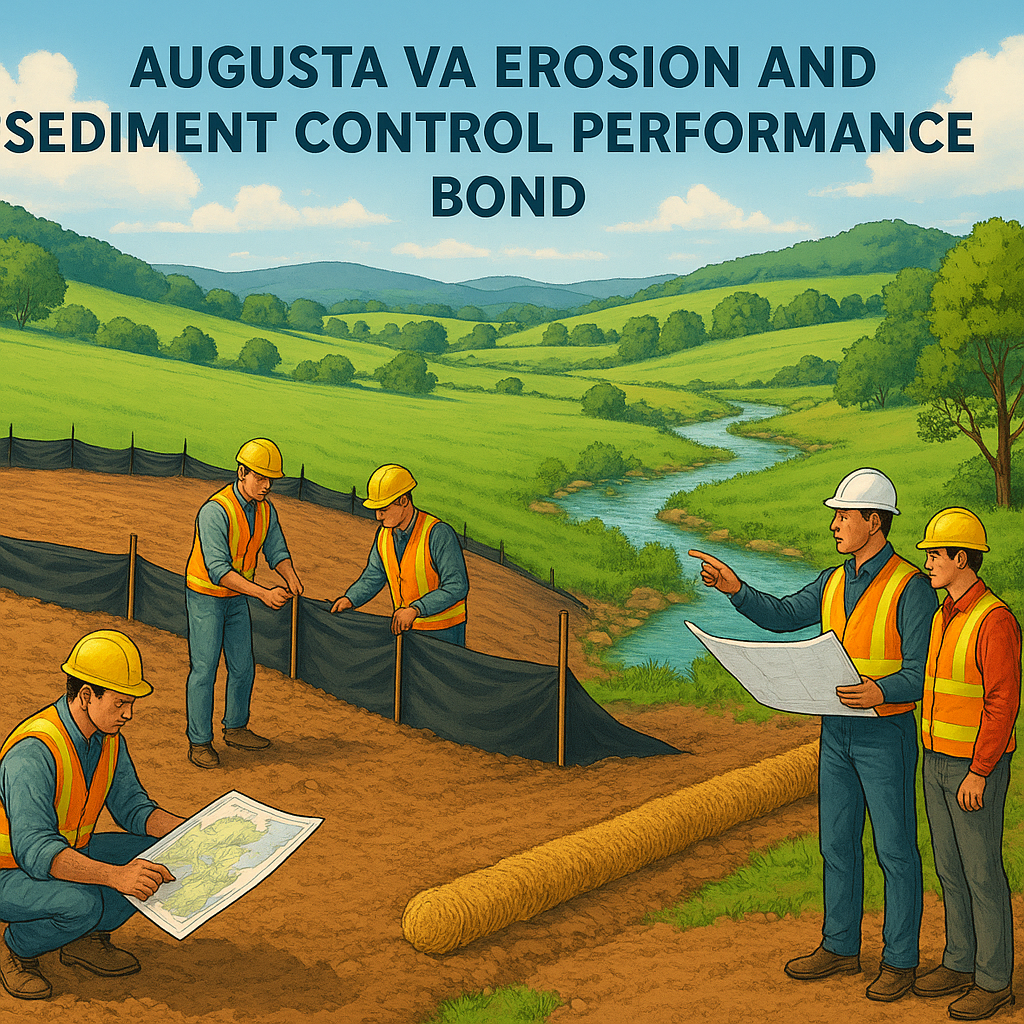
Have you ever driven past a construction site after a heavy rain and noticed muddy water rushing into the street? That’s exactly the kind of situation local officials in Augusta County, Virginia work hard to prevent. If you’re a developer, contractor, or landowner preparing to break ground on a project, you might need something called an erosion and sediment control performance bond. It sounds complicated, but it’s simpler than you think. Let’s break it down together.
What Exactly Is an Erosion and Sediment Control Bond?
Picture a promise sealed with a financial safety net. An erosion and sediment control bond is a guarantee that a specific piece of land-disturbing work will follow all the local rules meant to keep soil in place and waterways clean. If the work isn’t done correctly, the bond provides a pot of money to fix the problems. This bond involves three parties: the project owner or developer (that’s you), the county (Augusta County), and a surety company that backs the bond financially.
It’s not insurance for your project. Instead, it protects the community and the environment. Think of it like a security deposit on a rental car—you’re promising to return the landscape in good condition, free of ruts, gullies, and sediment-clogged streams.
Why Augusta County Takes Soil and Water So Seriously
Augusta County is known for its rolling hills, farmland, and the headwaters of several important Virginia rivers. When soil washes off a construction site, it doesn’t just disappear. It clogs storm drains, smothers aquatic habitats, and can even increase flood risks downstream. Local and state regulations require anyone disturbing a certain amount of land to have an erosion and sediment control plan—and often a performance bond to back it up.
Without these bonds, a developer could start grading a site, leave exposed dirt for months, and walk away after a major storm causes damage. The bond ensures there’s money reserved to step in and do the cleanup, even if the original contractor vanishes.
Who Needs This Bond in Augusta, Virginia?
Not every backyard garden project will trigger the requirement. Typically, you’ll need an erosion and sediment control performance bond if your project disturbs a larger area—often 10,000 square feet or more—or is part of a commercial, industrial, or subdivision development. Even smaller residential projects can fall under the county’s rules if they’re in sensitive areas or near steep slopes.
Let’s say you’re building a new housing development on a hillside outside of Staunton. Before the first shovel hits the dirt, the county will ask for a bond to cover the cost of installing and maintaining silt fences, sediment basins, and stabilization measures. The bond stays active until vegetation takes hold and the site is stable, which can take months or even a year.
How Does the Bonding Process Actually Work?
Securing a bond might feel like paperwork gymnastics, but it follows a clear path. Here’s what you can expect:
Step One: Prepare Your Erosion Control Plan
You’ll need a plan stamped by a professional engineer or a certified plan designer. This document shows exactly how you’ll manage runoff, where silt fences will go, and how you’ll stabilize exposed soil. The county reviews it and calculates a cost estimate for the control measures. That estimate becomes the bond amount.
Step Two: Request the Bond from a Surety Company
You’ll reach out to a surety bond agency that works in Virginia. They’ll look at your financial strength, credit history, and project experience. Don’t worry if your credit isn’t perfect—many agencies understand that construction is a cash-heavy business. They may offer programs that don’t rely solely on your personal credit score.
Step Three: Pay the Premium and File the Bond
Once approved, you pay a small percentage of the total bond amount as a premium. For example, if your bond is $50,000, your premium might be between $500 and $2,000 depending on your qualifications. The surety issues the bond document, and you file it with Augusta County. Then, your permits can move forward.
Understanding the Cost Without the Headaches
One question we hear all the time: “How much does an erosion and sediment control bond cost?” The bond amount is set by the county—typically the full estimated cost to install all erosion controls. The premium you pay is a fraction of that, often 1% to 3% for well-qualified applicants. If your project involves complex grading or sensitive streams, the bond amount rises. The good news is that you don’t need to tie up your entire cash flow; the bond lets you keep working capital free for other expenses.
It’s also helpful to know that the premium is usually a one-time payment that covers the bond’s term. If the project extends beyond the initial timeframe, you might need a bond extension, which comes with a modest additional fee.
What Happens if Something Goes Wrong?
No one starts a project hoping for a claim, but it’s good to understand the safety net. If your site causes off-site sediment damage or you fail to install the promised controls, the county can make a claim against your bond. The surety company will investigate. If the claim is valid, the surety pays the county up to the bond amount to fix the problem. But here’s the critical part: you have to pay the surety back. A bond is a form of credit, not a free pass. That’s why it’s so important to follow your erosion control plan from start to finish.
A proactive approach saves everyone stress. Walk your site after storms, repair silt fences promptly, and keep the ground covered with mulch or grass as soon as possible. Little actions like this make a huge difference.
Real-Life Example: A Hillside Home Site in Augusta County
Imagine a family buying a few acres on a gentle slope to build their dream home. The driveway alone will disturb over 10,000 square feet. The county requires a simple erosion control plan and a performance bond of around $8,000. The homeowners qualify easily and pay a $160 premium. They install a gravel construction entrance and a silt fence along the downslope edge. After grading, they quickly seed and mulch the exposed areas. Months later, the grass is thick, the bond is released, and they’ve protected the creek that runs toward their neighbor’s pasture. Everyone wins.
Do Bonds Differ from Other Virginia Counties?
Virginia follows statewide erosion and sediment control regulations, but each locality can add its own flavor. Augusta County’s program is straightforward and coordinated through the Department of Community Development. Neighboring localities like Rockingham County or the City of Waynesboro have similar requirements, but bond thresholds and costs can vary. Always check with the specific planning department before assuming anything.
Frequently Asked Questions (In Plain English)
“Is this the same as a land disturbance permit bond?” Not exactly, but they’re closely related. The permit allows the activity; the performance bond guarantees the erosion control measures are built and maintained. Often, you can’t get the permit without the bond.
“How long does the bond last?” Until the county inspects the site and gives you a certificate of completion or bond release. That typically happens once vegetation is established and all temporary controls are removed.
“Can I use cash instead of a surety bond?” Some localities accept a letter of credit or a cash escrow. Augusta County may allow alternatives, but a surety bond is the most common because it doesn’t tie up your capital.
“What if I hire a really good grading contractor—do I still need a bond?” Yes. The bond is tied to the project permit, not just the contractor’s reputation. The county wants the financial guarantee regardless of who is doing the work.
Tips for a Painless Bonding Experience
- Start early. Don’t wait until the week you want to move dirt. Bond approvals can take a few days to a week.
- Get your paperwork in order. A complete plan, accurate cost estimates, and a clean application make the process glide.
- Work with a bond agency that knows Virginia. Local expertise saves time because they understand Augusta County’s specific requirements.
- Communicate with the county. If weather or other delays push your timeline, let them know. They’re often willing to work with you.
- Don’t skimp on maintenance. A little effort throughout the project keeps the county inspector happy and prevents claims.
Wrapping It Up: A Tool for Responsible Growth
Erosion and sediment control bonds in Augusta, Virginia might seem like just another hoop to jump through. In reality, they’re a tool that helps the community grow without sacrificing the clean streams and green hills that make this part of the Shenandoah Valley so special. Whether you’re building one home or a whole neighborhood, understanding how these bonds work puts you in control. You protect your project, your wallet, and the natural beauty around you—all with one surprisingly simple financial product.
So, next time you see a silt fence flapping in the breeze along a construction site, you’ll know there’s a bond standing guard behind it, making sure the dirt stays where it belongs.