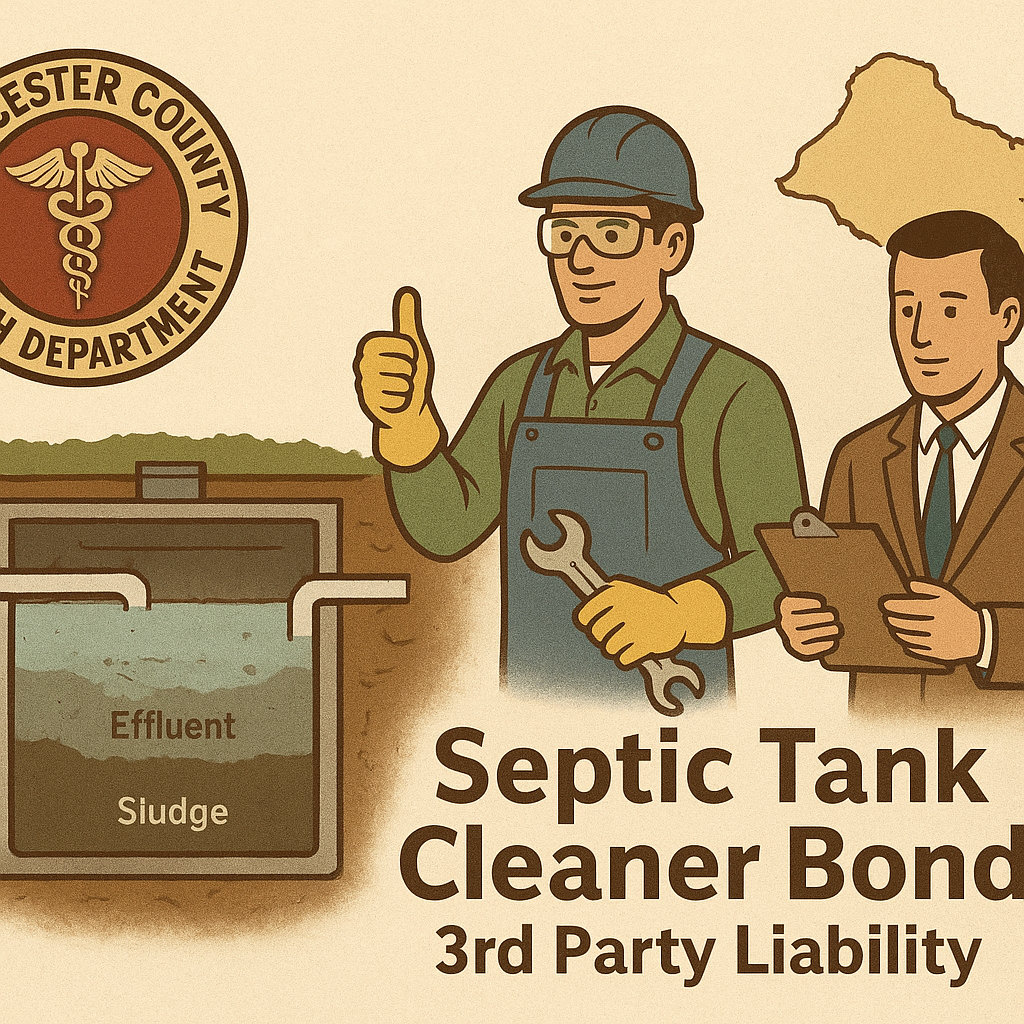
Have you ever stopped to think about what happens after you flush? If you’re like most homeowners in Gloucester County, Virginia, you probably don’t give your septic system a second thought—until something goes wrong. But when it does, you call in a professional to pump, clean, or repair your tank. What you might not realize is that behind every trustworthy septic truck that rolls up your driveway, there’s often an invisible safety net called a septic tank cleaner bond. If that phrase sounds a bit puzzling, don’t worry. You’re about to learn exactly what it is, why the Gloucester County Health Department requires it, and how it protects you, the homeowner.
What Exactly Is a Septic Tank Cleaner Bond?
Let’s strip away the industry jargon. A septic tank cleaner bond is a type of surety bond. Think of it as a three-way promise between the septic contractor, a bonding company, and the Gloucester County Health Department. The contractor buys the bond as a guarantee that they’ll follow all local rules and do their job right. If they don’t—if something gets damaged or they violate health codes—the bond can step in to cover costs. It’s not insurance for the contractor. It’s a financial shield for the public.
You can compare it to a security deposit on a rental apartment. Just like a landlord holds a deposit in case you damage the property, the Health Department requires this bond in case a septic cleaner causes harm. The money doesn’t sit in a shoebox under someone’s bed, of course. It’s backed by a surety company that promises to pay out valid claims up to a certain amount.
Why Does Gloucester County Require This Bond?
Gloucester County is a beautiful place with rolling farmland, waterfront views, and plenty of homes that rely on septic systems rather than public sewer lines. With that independence comes responsibility. The local Health Department’s number one job is to protect public health and the environment. A poorly handled septic job can lead to groundwater contamination, raw sewage spills, and costly property damage.
By requiring a septic tank cleaner bond, the county creates a layer of accountability. No contractor wants to see a claim filed against their bond. It would hurt their reputation and make it harder to get bonded again. So this requirement acts as a powerful motivator to do clean, honest work. Plus, it gives the county a straightforward way to handle disputes without lengthy legal battles. Homeowners and business owners benefit because they aren’t left footing the bill for someone else’s mistake.
How Does the Bond Protect Homeowners?
Imagine this scenario. You hire a septic pump truck to come out to your home in Hayes, Virginia. While maneuvering their heavy truck across your lawn, the driver accidentally cracks your underground irrigation system or damages your drain field. Without a bond, you might have to fight the contractor or your own insurance to cover the repair. With a bond in place, you have a direct route to compensation.
The bond is specifically designed as third-party liability protection. That means if you—the property owner—suffer financial loss because the contractor didn’t follow regulations or acted negligently, you can file a claim against the bond. It might cover things like:
- Repairing damaged property, such as lawns, driveways, or underground pipes.
- Cleaning up environmental spills caused by improper waste handling.
- Correcting code violations that the contractor was supposed to address.
This protection doesn’t replace the contractor’s general liability insurance. It works alongside it, filling in specific gaps related to regulatory compliance. The Gloucester County Health Department takes this seriously because they know a clean environment keeps everyone safe, from kids playing in the yard to fishermen out on the York River.
The Role of the Gloucester County Health Department
You might wonder, “Why is the Health Department involved in septic cleaning bonds?” It’s a great question. In Virginia, local health departments oversee on-site sewage systems to prevent disease and pollution. The Gloucester County Health Department issues permits, inspects installations, and licenses septic contractors and pumpers. Requiring a bond is just one more tool in their belt to enforce standards.
When a septic tank cleaner applies for a license or permit to operate in the county, the Health Department checks that they’ve secured the proper bond. The bond amount and terms are usually spelled out clearly. If a complaint comes in about a contractor harming property or ignoring rules, the Health Department can investigate and guide the homeowner through the claims process. In essence, they act as a watchdog, making sure the bond serves its purpose.
Who Needs to Get This Bond?
Not every handyman with a shovel needs a bond. This requirement specifically targets professional septic tank cleaners and pumpers who transport and dispose of septage. If you run a septic service business in Gloucester County—whether you’re a one-person operation or a larger company—you’ll likely need to show proof of your bond before you can legally operate. It’s a credential that tells customers, “I’m approved, monitored, and backed by something more than just my word.”
If you’re an aspiring septic contractor, the process might sound daunting. But acquiring a bond is often simpler than you’d think, and it’s a one-time (or renewable) step that opens doors to more jobs and greater trust.
How Much Does a Septic Tank Cleaner Bond Cost?
Here’s some welcome news. When you hear the word “bond,” you might picture thousand-dollar price tags. But surety bonds work differently. You don’t pay the full bond amount upfront. Instead, you pay a small percentage—often between 1% and 10% of the total bond coverage—based on your credit score and business history.
For a typical septic tank cleaner bond in Gloucester County, the required amount might be $10,000 or $25,000. Your annual premium could be as low as $100 to a few hundred dollars. That’s a manageable investment for a business that wants to prove its credibility. And if you maintain good practices and a clean record, that cost usually stays stable year after year.
So why is the bond amount set at a certain level? It’s meant to reflect the potential risk of property damage or environmental cleanup. The county doesn’t want to burden small businesses with excessive costs, but they do want enough coverage to handle realistic problems.
How to Get a Gloucester County Septic Tank Cleaner Bond
Ready to take the next step? The process is pretty straightforward, much like shopping for car insurance but with a few extra forms. Here’s a quick walk-through:
- Check the exact requirement with the Gloucester County Health Department. They’ll tell you the bond form you need, the required amount, and any specific language that must appear on the bond.
- Contact a surety bond provider. Many independent agents specialize in bonds for septic contractors. Provide basic information about your business and personal credit history.
- Get a quote. If you have decent credit, you’ll receive an affordable premium figure almost instantly. Even with less-than-perfect credit, options are available, though the rate may be slightly higher.
- Pay the premium and sign the paperwork. Once approved, the surety company issues the bond. You’ll forward the original document to the Health Department.
- Keep your bond active. Most bonds last one year. Mark your calendar so you don’t let it lapse, or you could jeopardize your license.
For homeowners, this means when you hire a bonded contractor, you can ask to see proof of the bond. A reputable professional will be happy to show it. In fact, many advertise their bonded status right on their website or truck door.
Common Questions About Septic Tank Cleaner Bonds
Is a bond the same as insurance?
Not exactly. Insurance protects the contractor from daily risks like vehicle accidents or worker injuries. A bond protects the public and the county from a contractor’s failure to follow the rules. If a claim is paid from a bond, the contractor must repay the surety company. With insurance, they don’t have to pay back a claim.
What happens if I need to file a claim?
Start by documenting the damage with photos and notes. File a complaint with the Gloucester County Health Department, and then notify the surety company listed on the bond. The surety will investigate and, if the claim is valid, will compensate you up to the bond’s limit. Remember, it’s not a guaranteed windfall—it’s designed to make you whole for actual losses.
Can a contractor operate without a bond?
In Gloucester County, no. Operating as a septic tank cleaner without the required bond could result in fines, license revocation, and legal trouble. For customers, hiring an unbonded contractor means taking on extra risk. It’s like hiring an electrician who isn’t licensed. The immediate price might be lower, but the potential consequences can be far more expensive.
Why This Matters to Every Resident
Even if you’ve never pumped your own septic tank, the health of our community’s soil and water touches you. A neighbor’s improperly cleaned system can contaminate a shared well. A spill near a creek affects wildlife and recreational spots. Bonds aren’t just boring paperwork—they’re one link in a chain that keeps Gloucester County clean and safe.
Think of the septic truck driver like a chef in a restaurant kitchen. The health inspector makes sure the chef follows food safety rules. The bond is like a posted certificate that says, “If this chef makes a critical mistake, you have a way to be compensated.” It builds trust quietly, behind the scenes, so you can enjoy the meal—or in this case, the comfort of your home—without worry.
Putting It All Together
A septic tank cleaner bond in Gloucester County, VA might not be something you talk about at a dinner party, but it’s quietly working in your favor. It holds contractors to a high standard, gives homeowners peace of mind, and helps the Health Department protect our shared environment. Whether you’re a contractor looking to get bonded or a homeowner wondering what that certificate on the wall really means, understanding this small piece of the puzzle makes you a smarter, more confident member of the community.
Next time you see a septic service truck at a neighbor’s house, you’ll know there’s more to the story than a tank full of sludge. There’s a bond behind it—a promise written in ink and backed by dollars, all to keep Virginia’s Middle Peninsula thriving.