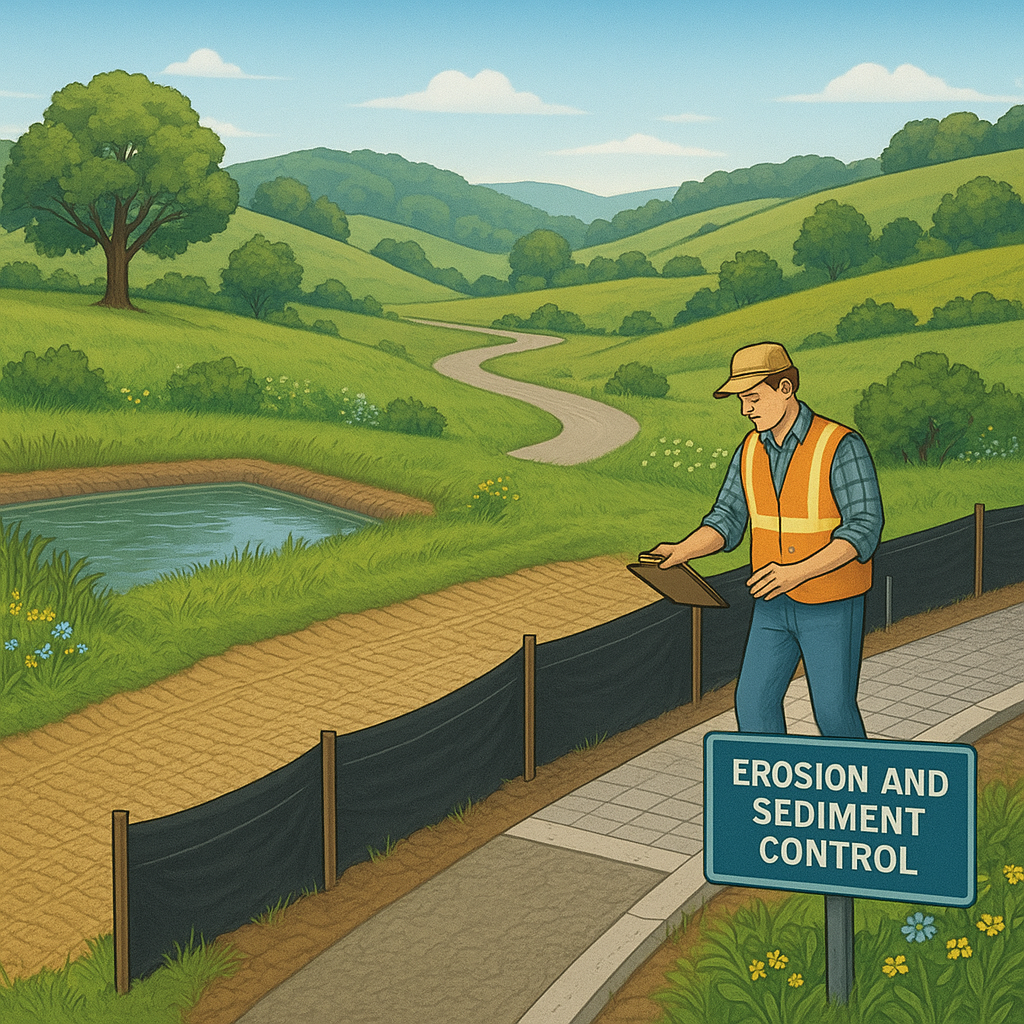
If you’re planning to move dirt in Botetourt County, Virginia — whether for a new subdivision, a commercial site, or even a larger residential project — you’ve probably heard the term “performance bond” tossed around. It might sound like complex financial paperwork, but at its heart, it’s a simple promise. The county wants to make sure that once the earth is disturbed, the soil stays put and the water runs clean. Let’s unpack everything you need to know about Botetourt County’s erosion and sediment control, and stormwater management bond requirements in a way that actually makes sense.
What Exactly Is an Erosion and Stormwater Management Performance Bond?
Think of a performance bond as a safety net — or better yet, a security deposit you’d put down on a rental apartment. When you start a land-disturbing project, the county asks you to set aside a financial guarantee. If you complete all the required erosion and sediment control measures properly, and your stormwater management system works as designed, the bond disappears. If you don’t, the county can use that money to fix any problems without chasing you down for funds. In Botetourt County, this bond covers two closely related areas: erosion and sediment controls (keeping soil from washing away) and stormwater management (handling the extra runoff that comes from paving over natural ground).
Why Botetourt County Cares So Much About Dirt and Water
You might wonder, “It’s just a little dirt moving — why all the fuss?” The answer hides in the streams and rivers we all share. Botetourt County sits in the beautiful Roanoke Valley watershed, where rain can carry loose soil, chemicals, and debris straight into local waterways. Sediment clouds the water, harms fish, and fills up storm drains. That costs everyone money down the road. Stormwater problems can also cause flooding on neighboring properties. The performance bond requirement isn’t red tape for the sake of bureaucracy; it’s a practical tool to protect the community’s water quality and to keep construction sites responsible from day one.
Who Needs This Bond in Botetourt County?
Not every backyard gardening project triggers a bond. Generally, you’ll run into this requirement when you need a land-disturbance permit from the county. Here’s who typically falls under the bond umbrella:
- Developers building new residential subdivisions or commercial plazas.
- Home builders working on a lot within a subdivision that has a shared stormwater management plan.
- Contractors handling site work for schools, churches, or industrial buildings.
- Property owners planning a major addition, a large driveway, or a pond that disturbs more than a certain square footage of land — often 10,000 square feet or more, but thresholds can vary.
If your project touches a certain threshold of land disturbance, you’ll likely need a permit, and with that permit comes the bond conversation. The county’s environmental or engineering department can confirm your specific trigger, but it’s safe to assume that any significant grading, clearing, or paving work will land you here.
How the Performance Bond Process Works, Step by Step
Navigating a new process can feel like learning a dance. Here’s the rhythm for Botetourt County:
1. You Submit Your Plans for Approval
Before any dirt turns over, you’ll need an erosion and sediment control plan, along with a stormwater management plan, stamped by a professional engineer or a qualified design professional. The county reviews these to ensure they meet Virginia’s Erosion and Sediment Control Law and the local stormwater ordinance.
2. The County Calculates the Bond Amount
Once your plans are approved, county staff will estimate the cost of installing and maintaining all those control measures. They look at things like silt fences, construction entrances, sediment basins, temporary seeding, and the permanent stormwater management facility — perhaps a retention pond or a bioretention area. The bond amount is typically set to cover the full cost of completing that work if the county ever has to step in. This isn’t a penalty; it’s just the realistic price tag.
3. You Obtain the Bond
You’ll work with a surety company or an insurance agent who provides performance bonds. The county will tell you the required amount, and you’ll pay a small percentage (more on costs later) to secure that bond. In some cases, Botetourt County may accept other forms of financial security, like a letter of credit or a cash deposit, but a performance bond is the most common.
4. The Bond Stays Active Until the Project Is Complete
Here’s the important part: the bond doesn’t vanish the moment the building goes up. It typically remains in place until vegetation is established, erosion controls have done their job, and the permanent stormwater facility passes final inspection. In many cases, there’s a maintenance period after construction — often 12 to 18 months — during which the developer must ensure everything still works. The bond covers that phase, too.
5. Release of the Bond
When the county inspector gives a thumbs-up and signs off on all stabilization and stormwater requirements, you can request a bond release. The county processes the paperwork, and your obligation disappears. If you’ve done the work correctly from the start, this is a smooth and satisfying finale.
How Much Does a Botetourt County Performance Bond Cost?
Let’s get to the numbers, because that’s often the first question. The bond amount — the coverage — is based on the estimated cost of the required controls. For a small single-family lot in a subdivision, you might see a bond in the range of $5,000 to $15,000. A large commercial project could easily see figures over $100,000. But here’s the good news: you don’t pay that full amount out of pocket. You only pay a premium, which is a small percentage of the total bond amount.
For well-qualified applicants with good credit, the premium might be 1% to 3% of the bond amount annually. So, if your required bond is $20,000, your out-of-pocket cost could be as little as $200 to $600 per year until the bond is released. Factors that influence your premium include your personal or business credit history, the size of the project, and the overall financial picture you present to the surety company. Think of it like a small insurance premium to demonstrate your commitment to doing the job right.
What Happens If You Don’t Get a Bond — Or If Something Goes Wrong?
Skipping the bond isn’t really an option if your permit requires it. Without a bond, you won’t get your land-disturbing permit, which means no excavation, no clearing, and no construction. Now, what if a storm hits, erosion controls fail, and the county finds sediment smothering a nearby creek? The county will first notify you and give you a chance to fix the problem. If you don’t respond promptly, the county may make a claim against your bond. The surety company would then either pay for a contractor to complete the work or reimburse the county for doing it themselves. Importantly, you’ll need to repay the surety company for any claims — a bond is not insurance for you; it’s protection for the county and the environment.
Simple Tips to Smooth Out the Bonding Process
No one wants surprises or delays. Here’s how to keep things moving with Botetourt County’s requirements:
- Start early. Don’t wait until the week you want to break ground. Bond applications can take a few days or even a couple of weeks to process.
- Work with a local surety expert. An agent who understands Virginia erosion bonds can help you gather the right paperwork and find the best rate.
- Keep your plans thorough. The county can’t calculate an accurate bond amount if your erosion and stormwater plans are vague. Detailed, precise plans lead to a fair bond figure and fewer mid-project arguments.
- Communicate with county staff. Botetourt County’s environmental technicians and engineers are there to help you succeed. If something feels confusing, ask. A quick phone call can save weeks of head-scratching.
- Maintain your site diligently. Walk your site after every significant rain. Fix small issues before they become big claims. The healthier your erosion controls, the faster you’ll reach bond release.
Common Questions People Ask
You might be nodding along but still have a few lingering curiosities. You’re not alone. Here are some questions that pop up regularly:
Does every single lot in a subdivision need its own bond? Often, the master developer secures a single big bond to cover the entire subdivision’s infrastructure and shared stormwater features. Individual builders might then need a lot-specific bond or provide a letter of credit to the developer. It varies, so clarify this early in your planning.
Can I use a cash deposit instead of a bond? Some localities allow a cash escrow or an irrevocable letter of credit. Botetourt County may accept alternatives, but a performance bond is usually the most straightforward and least capital-intensive option. Check with the county for their current accepted forms of surety.
What if my project takes longer than expected? Bonds typically run for a specified term, often one or two years, with the option to renew. If your project timeline stretches, you’ll need to extend or renew the bond. Your surety agent can guide you through the renewal, which usually involves paying the premium for another year.
Moving Forward with Confidence
Botetourt County’s erosion and stormwater management performance bond might feel like one more hoop to jump through, but reframing it helps. See it as a tool that keeps your project accountable and protects the landscape we all love — the rolling hills, the clear creeks, and the neighbor’s property downstream. When you handle the process thoughtfully, the bond becomes a quiet partner in your project’s success, not a hurdle.
If you’re preparing for a land-disturbing venture, reach out to the county early, engage a knowledgeable surety professional, and build those erosion controls with pride. Your reward will be a clean site, a clean conscience, and a bond release that marks the true completion of your hard work.