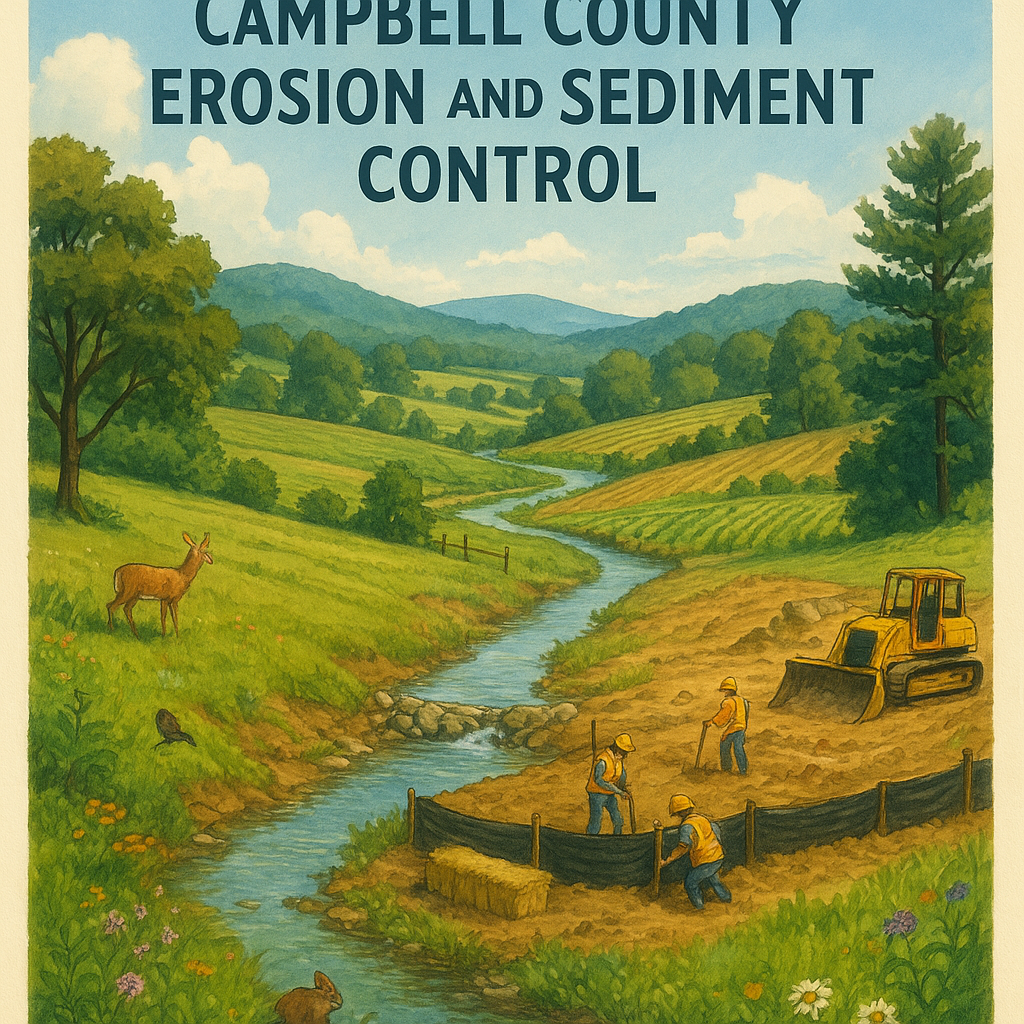
If you’ve ever watched rainwater carve tiny rivers through a construction site, you’ve seen just how quickly things can get messy. Dirt doesn’t just stay put. It moves, and when it moves into our streams, roads, and neighbors’ yards, it becomes a problem that no one wants to deal with. That’s exactly why Campbell County, Virginia, has been turning up the dial on its soil erosion and sediment control measures. The recent updates aren’t just about paperwork. They’re about protecting the land, keeping waterways clean, and making sure development happens responsibly.
What Exactly Is Erosion and Sediment Control?
Think of erosion as nature’s way of relocating earth. Rain hits bare soil, wind sweeps over exposed land, and gravity does the rest. Sediment control is the fence we build to catch that moving dirt before it runs off into places it shouldn’t go. For any construction project, from a single-family home to a large commercial site, keeping soil on-site is a must. Without proper controls, what starts as a small trickle of muddy water can turn into clogged drainage systems, damaged wildlife habitats, and expensive headaches for the whole community.
So, what does good control look like? Imagine a kitchen colander. When you pour pasta in, the water drains out, but the spaghetti stays. Sediment control tools work the same way. Silt fences, sediment basins, and gravel construction entrances are all designed to let water pass while holding back soil. It’s simple science, but when done right, it saves rivers and wallets.
Why Bonds Enter the Picture
Now you might be wondering, “Where does a bond fit into all this dirt talk?” It’s a fair question. A bond is basically a financial promise. Campbell County uses an erosion and sediment control bond as a safety net. Before breaking ground, developers and landowners are often required to post a bond. This isn’t a punishment. It’s a guarantee. If the project fails to install or maintain the necessary erosion controls, the county can tap into that bond to fix things without spending taxpayer money. Once the project successfully passes inspections and the land is stable, the bond is returned. Think of it like a security deposit on an apartment. Leave the place in good shape, and you get your money back.
Campbell County Takes a Fresh Look at Local Needs
Campbell County isn’t just copying what other localities do. The county has looked closely at its own rolling hills, farmlands, and growing neighborhoods and asked a tough question: Are we doing enough to keep our soil where it belongs? The answer led to enhanced measures that speak directly to the challenges of the region. Virginia weather can be unpredictable. A sudden downpour on a cleared slope in Campbell County can undo days of work in minutes. By strengthening requirements and clarifying the bond process, the county is building a system that works with the local landscape, not against it.
The updated approach encourages project planners to think ahead. Instead of reacting after a muddy mess flows into a creek, the county pushes for prevention. This might mean phasing land clearing so that only small sections are exposed at any one time. It could involve reinforcing vegetative cover before seasonal rains hit. Every requirement serves the same goal: stop erosion at the source. And if the source isn’t managed properly, the bond provides a path to swift correction.
Breaking Down the Bond Requirement
Let’s simplify the bond process, because it can sound frightening if you’ve never dealt with it. In Campbell County, the erosion and sediment control bond amount is typically calculated based on the scale of the land-disturbing activity. A small residential lot will have a different bond than a large subdivision. The county evaluates the plan, estimates the potential risk, and sets a bond value that reasonably covers the cost of fixing things if the developer or landowner steps away without completing the controls.
Here’s a practical breakdown of how it might look on the ground:
- Plan Submission: A certified plan for erosion and sediment control is submitted along with the building or grading application. This plan shows exactly where silt fences, inlet protection, and stabilization measures will go.
- Bond Calculation: County staff reviews the plan and calculates a bond amount that reflects the scope of work. This figure isn’t random. It’s based on the actual costs to install or repair the necessary controls.
- Posting the Bond: The applicant provides the bond in an approved format, such as a surety bond, letter of credit, or cash escrow. The county holds it as security throughout the project.
- Inspections and Maintenance: The site is inspected regularly. If something isn’t working – a torn silt fence or an overflowing basin – the responsible party must fix it promptly.
- Release: Once the land is permanently stabilized and all temporary controls are removed, the bond is fully released. The project ends, and the land stays put.
Does this add a step for builders? Yes. But it also adds a layer of protection for everyone downstream. That neighbor whose property has never flooded during a storm might never realize how much they owe to a properly bonded construction site uphill.
Why Enhanced Measures Make Everyday Life Better
It’s easy to file this under “government regulations” and tune out. But the benefits show up right in your backyard. Clearer creeks mean healthier fish and safer places for kids to wade. Stable banks prevent property loss. Roads that don’t wash out save the county from expensive emergency repairs. Every time erosion control measures work, the community saves money and protects the natural beauty that makes Campbell County a great place to call home.
What does that look like in a real-world scenario? Let’s say a family is building a new home on a sloped lot. Without proper control, a heavy spring rain could send half their topsoil sliding into the road and the storm drain below. Not only would the builder lose valuable material, but the family might also face an angry town and a bill for cleanup. With the enhanced measures and bond in place, the site includes sturdy silt fencing, a rocked construction entrance to knock mud off tires, and quick-seeding of exposed areas. The rain comes, the controls hold, and the soil stays. That’s peace of mind.
The Ripple Effect on Water Quality
Soil erosion isn’t just about losing dirt. When sediment runs into local waterways, it carries nutrients, heavy metals, and whatever else might be clinging to the soil particles. This clouds the water, blocks sunlight, and smothers aquatic life. Campbell County feeds into watersheds that eventually flow into the Chesapeake Bay. Every ton of soil kept on land is a ton that doesn’t contribute to pollution miles away. It’s a connected system, and enhanced local measures create ripples that travel far beyond county lines.
Can one silt fence really make that big of a difference? On its own, maybe not. But hundreds of small, well-managed sites across the county create a collective shield. The bond requirement ensures that shield doesn’t have holes. If a control fails and the responsible party can’t or won’t fix it, the county steps in immediately using the bond funds. The water quality downstream never has to suffer through delays.
How Does This Affect Someone Starting a Project?
If you’re planning to build anything that disturbs the ground in Campbell County, the first step is to talk to the county early. Don’t wait until you’ve bought the land and drawn up the plans. Reach out and ask about the current erosion and sediment control bond requirements. The county staff can help you understand what’s needed, how much the bond might be, and what kinds of conditions will allow your bond to be released quickly.
Many people assume the bond is a fee, but it’s not. It’s a temporary security that you get back. And the erosion control plan itself? That’s just good sense. A well-designed plan can actually save you time and money because you’re not constantly repairing washed-out slopes or dealing with stop-work orders. The goal is to keep your project moving while respecting the land.
Common Misconceptions Worth Clearing Up
- “Bonds are only for huge developments.” Not true. Even modest projects may require a bond if they involve significant land disturbance. The amount simply scales to the job size.
- “Once I post the bond, I’m off the hook.” Actually, you remain responsible for maintaining controls. The bond is a last-resort safety net, not a substitute for doing the work right.
- “Waiting for bond release takes forever.” It takes as long as it takes to achieve stable vegetation and proper site closure. Plan for that from day one, and you’ll avoid surprises.
Simple Steps You Can Take Right Now
What if you’re not a developer, but you still care about erosion on your property? There are easy, low-cost habits that reflect what Campbell County is doing on a larger scale. Plant ground cover on bare spots. Redirect downspouts onto grassy areas instead of pavement. Use mulch to protect garden beds from heavy rain. These small actions mirror the county’s philosophy: prevent the problem instead of paying to fix it later.
And if you see a construction site with broken silt fences or muddy water flowing into the street, say something. The county relies on observant community members to be extra eyes. Erosion and sediment control is a shared responsibility, and when everyone watches out, the whole community wins.
Looking Ahead with Stronger Ground Beneath Our Feet
Campbell County’s enhanced erosion and sediment control measures are more than just updated rules. They’re a statement about what the community values. By pairing practical field requirements with a sensible bond system, the county is nurturing growth that doesn’t leave behind a mess for future generations to clean. It’s forward-thinking, it’s neighborly, and it just makes sense.
So the next time you drive past a cleared field wrapped in orange fencing, you’ll know there’s a whole strategy at work. That fencing, those basins, and even the financial bond sitting quietly behind the scenes are all part of a promise: the dirt stays where it’s needed, the water runs clear, and Campbell County remains a place of lasting beauty.